


HPV vaccines have transformed cervical cancer prevention, but the next generation of vaccines must better reflect regional disease patterns, including the HPV35 genotype prevalent in Africa.
The recent WHO Global Status Report on Cancer paints a sobering picture. Among the many challenges, human papillomavirus, or HPV, is one of the world’s most serious infectious causes of cancer.
Cervical cancer kills hundreds of thousands of women each year, with the greatest burden falling on lower-income countries and regions where screening and treatment are less accessible. Yet much of this disease is preventable. HPV vaccination, combined with screening and treatment, gives the world a credible path toward the elimination of cervical cancer as a public health problem. But elimination efforts will not be equitable or effective if the vaccines available to the highest-burden populations are not designed around the HPV types driving disease in those populations.
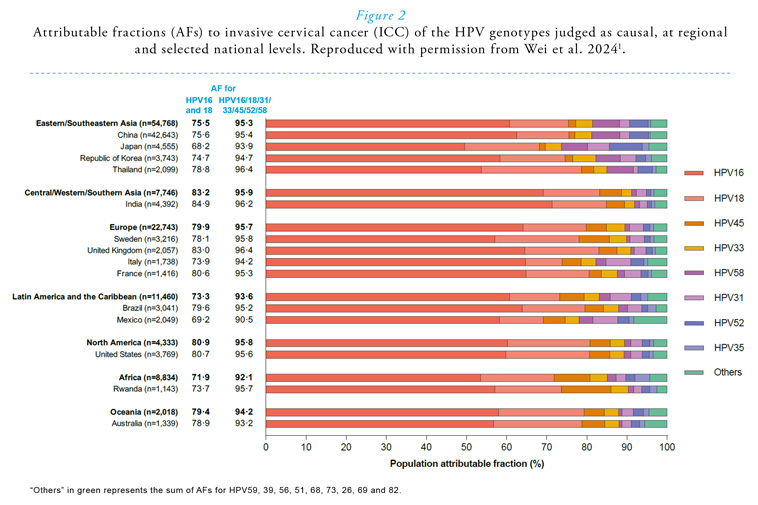
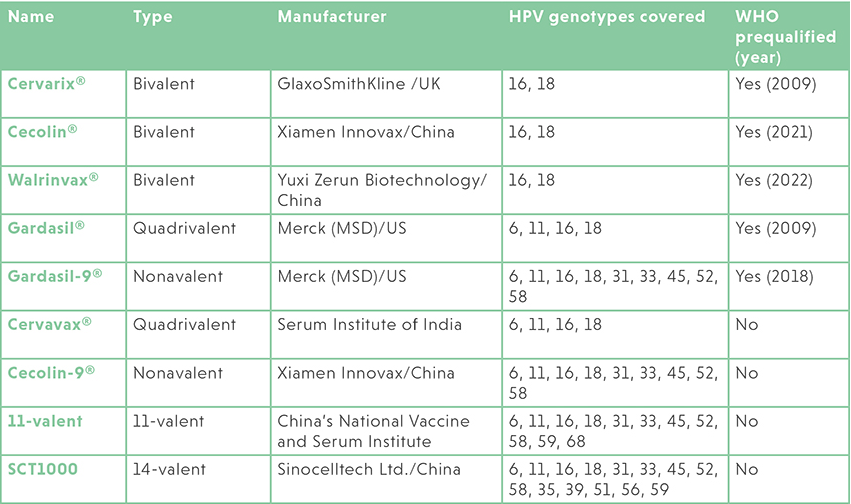
The first HPV vaccines focused on a small number of the most important cancer-causing HPV types. The current 9-valent vaccines have expanded protection and increased potential impact. But HPV genotypes are not distributed evenly across regions. In parts of Africa, particularly southern Africa, the HPV35 genotype appears to be an important contributor to cervical cancer, and disproportionately affects people living with HIV. Yet the HPV vaccines currently used in Africa are not specifically tailored to HPV35. Equity requires more than access to any HPV vaccine; it requires vaccines that are appropriate to the disease patterns of the populations most affected.
Beyond the universal vaccine model
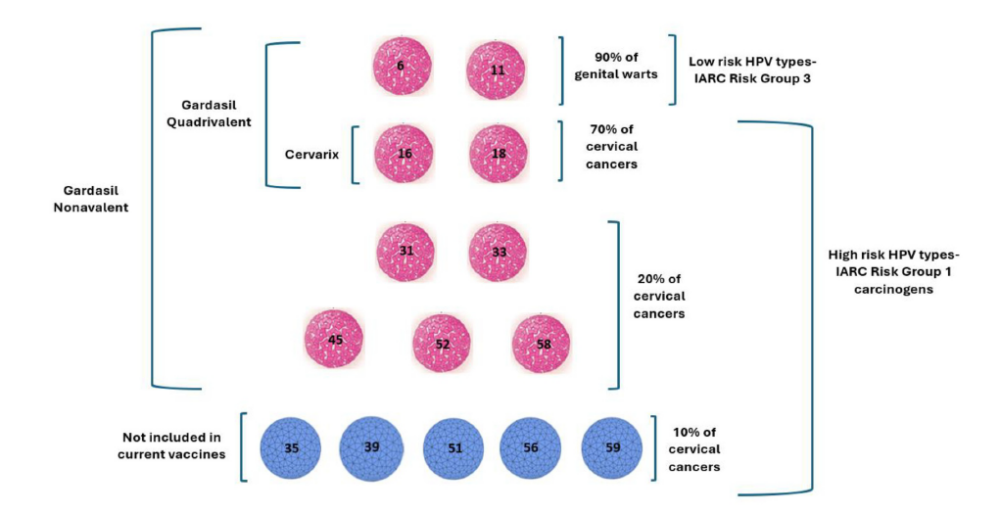
The default answer in vaccine development has often been to aim for a universal product: one vaccine composition, many countries, and broad coverage. This approach has obvious advantages: easier production, regulation, procurement and introduction into national immunization programs. But universality is not always optimal. More valencies are not automatically better if they do not include the types that matter most in a specific region. That is why a more regionally-tailored approach to HPV vaccine design deserves serious attention.
For Africa, that could mean prioritizing a vaccine that includes HPV35, rather than assuming that the best next product must be a high-valency vaccine designed for every market at once. For other regions, the composition might look different. The principle is straightforward: vaccine design should be guided by the disease burden in the population that will use it.
This is not an argument against broad-spectrum HPV vaccines, but for asking what protection is needed, where, and for whom, and then building the scientific, manufacturing and regulatory pathways that allow those needs to be met.
Start with better evidence
The first requirement is better surveillance. We need better data on HPV genotype distribution across regions, especially in places where cervical cancer incidence and mortality are high. Better surveillance would show where HPV35 and other genotypes are driving disease, making vaccine composition more responsive to disease burden rather than market assumptions.
The second requirement is a manufacturing model that can support regional priorities. Much of the HPV vaccine market has been shaped by large multinational manufacturers. More recently, Indian and Chinese manufacturers have shown growing interest in HPV vaccines, including multivalent products. This is welcome. More suppliers can improve affordability, security of supply and access.
But the regional approach also intersects with the post-COVID-19 push for local manufacturing, particularly in Africa. Efforts to expand African vaccine manufacturing raise a practical question: what sustained public health products should that capacity produce? A regionally relevant HPV vaccine, including HPV35 where appropriate, could provide a practical use case for building durable manufacturing capacity.
Turning regional priorities into viable products
This will require a clear pathway to be put into place: clear demand signals, priority product profiles, procurement commitments, risk-sharing finance and well-defined regulatory requirements. Here, immunogenicity becomes key. Regulators and developers should work toward allowing immune response data to serve as a surrogate for protection, where scientifically justified. If a vaccine candidate induces an immune response comparable to that seen with existing, protective HPV vaccines, and if the manufacturing quality is robust, this could provide a more feasible route to approval. The regulatory question is how to define the evidence package clearly so developers can invest with confidence.
Manufacturing quality will remain essential. Any regional or locally manufactured HPV vaccine must meet rigorous standards for good manufacturing practice, consistency, validation and quality control. Regionalization cannot become a euphemism for second-tier products. The goal is exactly the opposite: high-quality vaccines designed around the needs of the people who will receive them.
Three priorities for the future
The future of HPV vaccination should therefore move on three tracks at once.
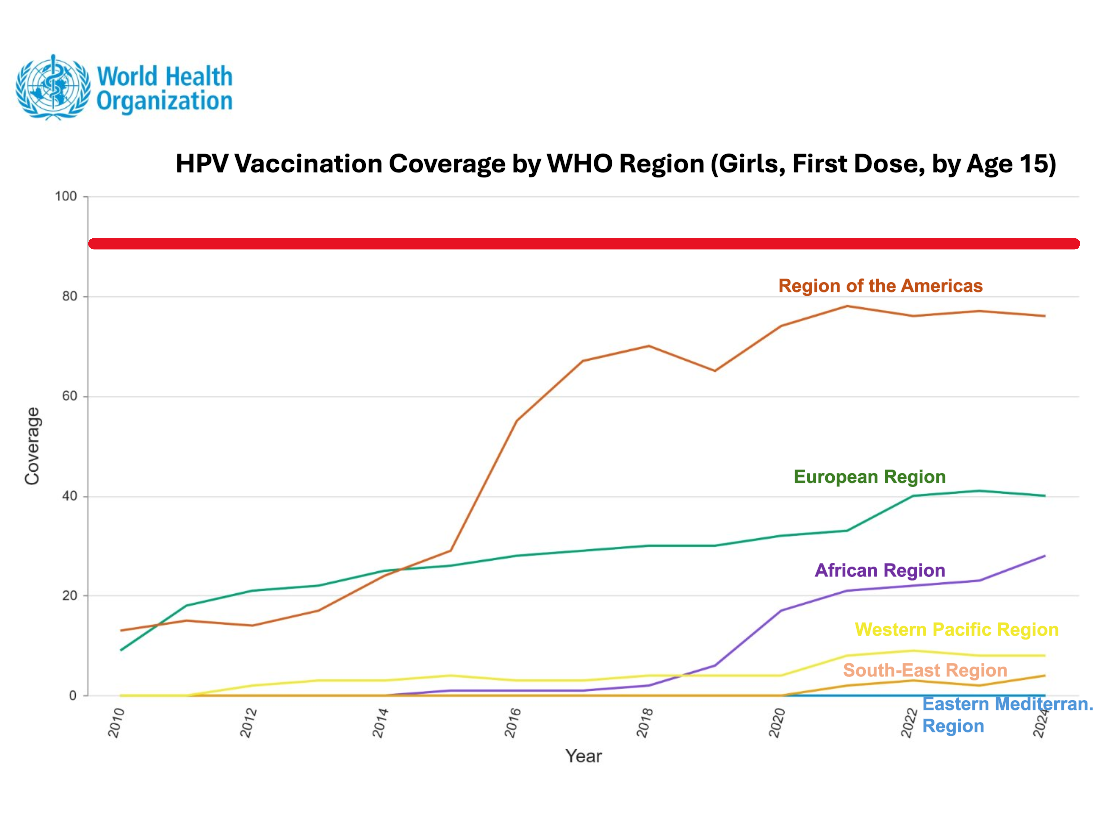
First, scale up what we already have. Too many girls and young people still do not have access to HPV vaccination. The immediate priority remains expanding coverage through increased financing, procurement, delivery, community trust, and integration into national immunization programs.
Second, improve the evidence base. Better genotype surveillance, especially in Africa and other high-burden settings, should guide future vaccine composition. HPV35 should be treated as a serious priority for Africa.
Third, create a development pathway for regionally appropriate vaccines. That means aligning manufacturers, governments, regulators, funders and public health agencies around realistic product strategies, including African manufacturing capacity where appropriate.
A smarter and more equitable approach
The world has an opportunity to be more ambitious and more practical at the same time. HPV vaccines have already shown what prevention can do. The next step is to make sure that vaccine innovation is smarter: driven by the goals of equity and impact, grounded in regional disease patterns, supported by sustainable production, and enabled by rigorous regulatory pathways that are not unnecessarily slow.
Cervical cancer elimination also requires education, infrastructure, screening, treatment, political will and financing. But vaccine design is key. If HPV35 is helping drive cervical cancer in parts of Africa, future HPV vaccines for Africa should be designed accordingly. The right to health demands more than access to any vaccine; it requires access to prevention tools that are effective, high quality and appropriate to the people and places where the burden is greatest.

Dr Marco Cavaleri, Head of Public Health Threats, European Medicines Agency.
Image Credits: Nadia Marini/MSF , Wei F, et al, The Lancet, August 3, 2024, Murahwa et al, Reviews in Medical Virology, 33 March 2026, HPV World , WHO.
Combat the infodemic in health information and support health policy reporting from the global South. Our growing network of journalists in Africa, Asia, Geneva and New York connect the dots between regional realities and the big global debates, with evidence-based, open access news and analysis. To make a personal or organisational contribution click here.
Africa,Africa CDC,African Medicines Agency,African Union,Cancer,Content type,Drug & Diagnostics Development,European Medicines Agency,European Union,Health Equity,Health Systems,Hepatitis & Sexually Transmitted Infections,Infectious Diseases,Inside View,Institutions,Medical Innovation,Medicines & Vaccines,News,Non-Communicable Diseases,Public Health,Regional Policy,Sexual & Reproductive Health,Uncategorized,Women’s Health,cervical cancer,HPV vaccination,HPV35,women#Regional #Approach #HPV #Vaccine #Design #Advance #Equity #Cervical #Cancer #Elimination1783961193
