



When 175 countries unanimously voted in Nairobi in March 2022 to negotiate a legally binding treaty to end plastic pollution, the move was hailed as the most significant step in global environmental negotiations since the Paris climate accord.
Now, a year to the day after two weeks of talks and a 24-hour final negotiating marathon to get a deal over the line collapsed in the halls of the United Nations complex in Geneva, the process is paralysed with no clear way forward.
A new draft text setting the stage for the next phase of negotiations was shared this week by Ambassador Julio Cordano of Chile, appointed to break the deadlock after his predecessor resigned in the wake of the failure of the Geneva talks. Billed as an “Aid to Negotiations” — an informal reference document rather than a negotiated text — it is intended as the basis for closed-door discussions between countries in Bangkok next month.
A Health Policy Watch analysis of the new draft found roughly half of its 31 articles are substantively unchanged from the text rejected in Geneva. Where it does differ, the changes largely move in the wrong direction, civil society advocates say.
“This is as bad as the one that was rejected on the last day of the Geneva negotiations,” Dharmesh Shah, a senior campaigner at the Centre for International Environmental Law (CIEL), told Health Policy Watch. “If this is the basis of the negotiation, then we have a huge problem.”
Scientists and civil society groups have broadly condemned the draft as a step backwards, with environmental law groups warning it reflects the interests of major polluters rather than the mandate to end plastic pollution.
The text contains no limits on plastic production, the core driver of the crisis, which, left unchecked, is set to at least triple by 2060. It sets no controls on the toxic chemicals used in plastic manufacturing, no financing provisions, and nothing actionable regarding health.
Provisions that were previously accepted have been reopened. A standalone health article, pushed by dozens of countries in Geneva as central to the treaty’s purpose, has been dropped. Chemicals of concern — including phthalates and BPA, endocrine disruptors linked to infertility, hormone disorders, neurodevelopmental harm and hundreds of thousands of cardiovascular deaths — have been reduced to a single bracket noting the “risks” they pose.
If the Chair’s text were adopted as a legally binding treaty, nations’ legal obligations would be thin, and self-policed. Countries would be required to manage plastic waste in an “environmentally sound manner” and report on their efforts. They would be encouraged — not required — to develop national plans, improve product design and address problematic plastic products “as appropriate” and “in accordance with national circumstances.”
Cordano calls it a “no surprises” text. David Azoulay, director of environmental health at CIEL, said that is precisely the problem.
“It is indeed no surprise that a text developed behind closed doors, following a meeting where production, chemicals, and decision-making were kept off the formal agenda, and observers were kept out of the room, fails to reflect the science on what it will take to address the plastics crisis,” he said in a statement.
“This text seems designed with one objective in mind: to stay sufficiently empty to ensure the biggest polluters won’t reject it. This is what happens when the countries most invested in delay get to help set the agenda.”
UN Plastics Treaty Talks Fail Again After Overnight Deadlock
Waste management solutions for a production crisis
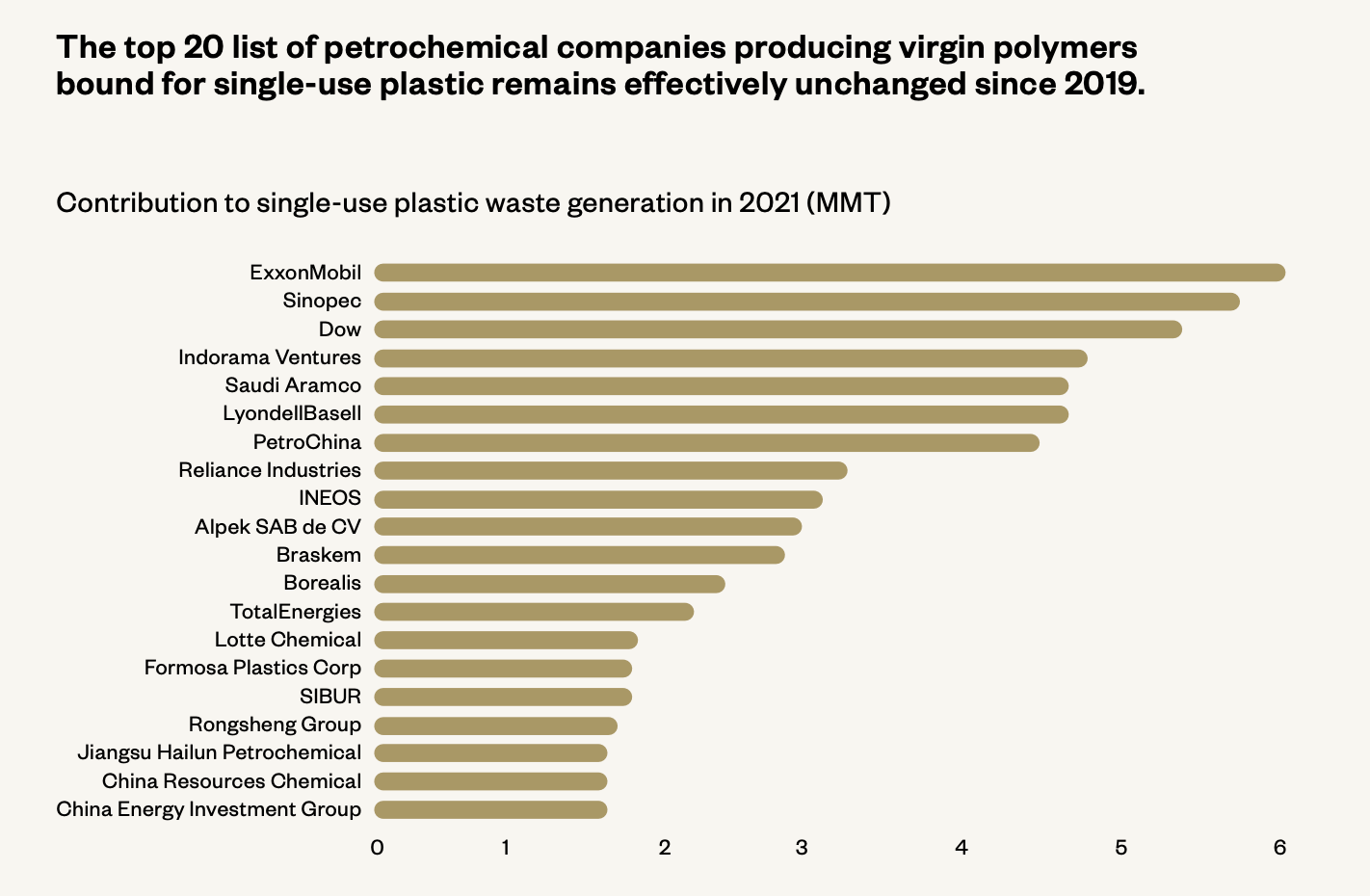
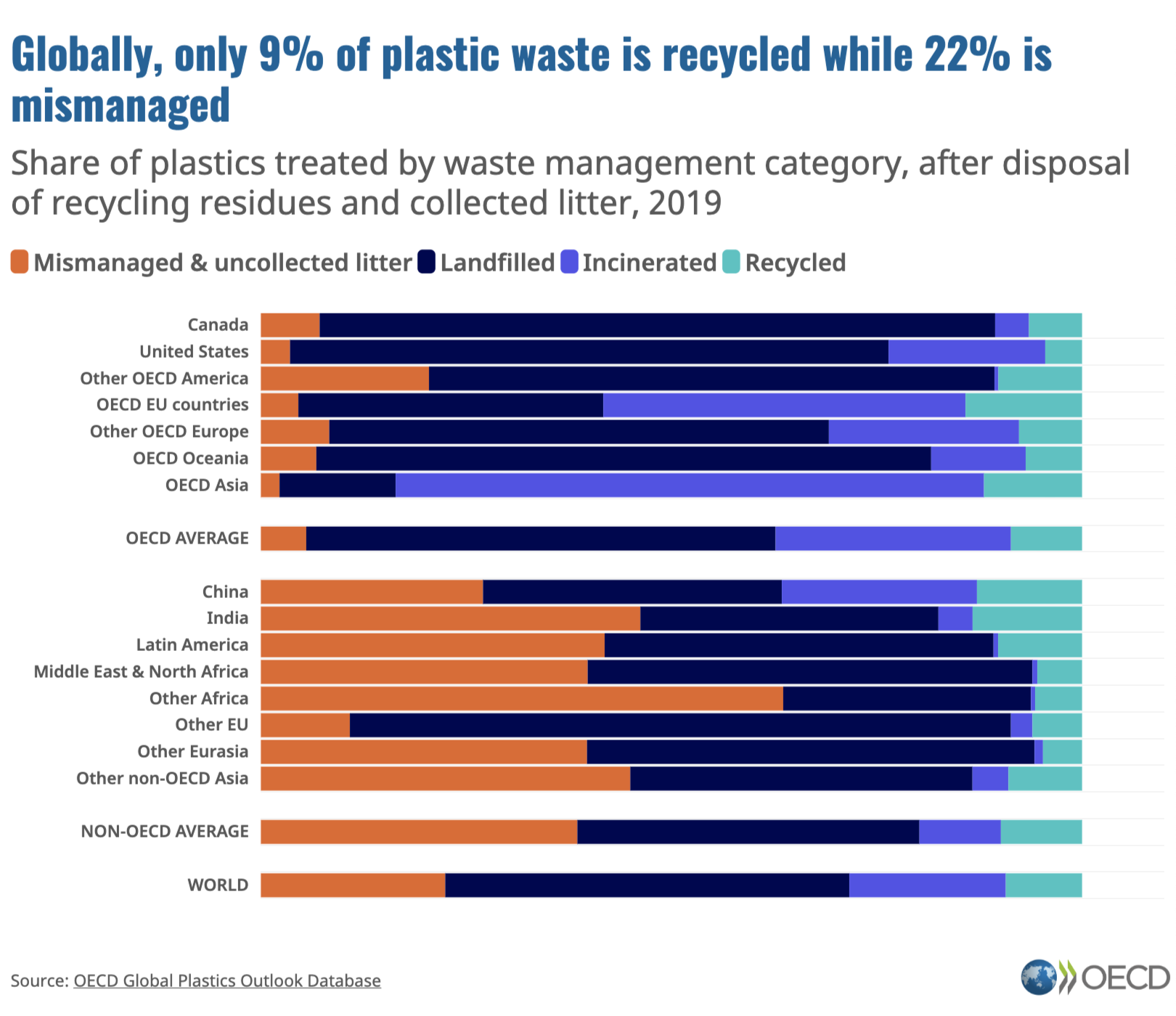
In the four and a half years since countries agreed to negotiate, approximately 1.9 billion tonnes of new plastic have been produced. Less than a tenth will ever be recycled. Production — 98% derived from fossil fuels — is on track to triple by 2060.
The text as it stands would amount to a voluntary, nationally determined waste management agreement: countries writing their own plans on their own terms, with no mechanism to reduce the volume of plastic entering the system. The countries blocking upstream measures — Saudi Arabia, Russia and the United States — recycle just 3–4%, 5–12% and 5–6% of their own plastic waste respectively.
“If nothing is done to regulate production volumes, in 2060 we will have four times as much plastic on the planet as we had when negotiations started,” Theresa Karlsson, a science advisor at the International Pollutants Elimination Network (IPEN), told Health Policy Watch. “That will mean four times as much waste, four times as many chemicals and four times as many health impacts.”
“The plastics treaty is a crucial moment to ensure global, health-protective measures,” Karlsson added. “We really can’t afford not to.”
Where the text does gesture at health, it says countries should take “appropriate measures” to address “hazardous chemicals” posing “unacceptable risks” to human health. None of those terms are defined in the draft.
“The Chair’s text in its present form is very weak and potentially counterproductive. It risks prolonging the harm caused by plastics rather than providing a meaningful basis for addressing it,” Rico Euripidou, a campaigner at Groundwork, a South African environmental justice organisation, told Health Policy Watch.
“But what are ‘appropriate measures’, ‘hazardous chemicals’ and ‘unacceptable risks?’” Euripidou said. “If these terms are not defined, their interpretation will ultimately be left to individual countries. Circular economy is also mentioned without the qualification ‘non-toxic’. This opens the door to a ‘toxic’ circular economy.”
All intersessional meetings have all been closed to civil society, with Cordano declining to admit observers to any substantive session, despite civil society groups offering to self-organise and send limited delegations.
“There is no transparency,” Shah said. “He wants no observers at all.”
The Health Crisis That Could Make or Break the UN Plastics Treaty
A planetary health experiment
Plastic particles have now been found from the deepest ocean trenches to the summit of Everest, in Arctic ice cores and in remote mountain rainwater. Of the more than eight billion tonnes of plastic ever produced, over six billion have been discarded into the environment.
Researchers have identified over 16,000 chemicals used in plastic production, at least 4,200 of them classified as highly hazardous. Around 5,000 are complete unknowns, never sufficiently studied to assess their toxicity. Just 6% are regulated by any international treaty.
A single plasticiser chemical — DEHP, a phthalate found in food containers and medical equipment — was linked to over 356,000 cardiovascular deaths globally in 2018, accounting for 13.5% of all heart disease deaths among people aged 55 to 64.
A separate Lancet study found that BPA, another common plastic chemical, contributed to 5.4 million cases of heart disease and 346,000 strokes in 2015. The estimated health costs of plastic chemicals run to $250 billion annually in the United States alone.
Microplastics have been detected in human blood, lungs, breast milk, placentas and brains. By some estimates, humans ingest as much as five grams of plastic per week. Scientists have identified a new condition — “plasticosis” — in which particles alter cellular behaviour in internal organs.
The full consequences for human bodies, for ecosystems, for the climate remain largely unknown, not because the research has not begun, but because scientists still do not know what the particles entering our bodies are made of.
“The health gap is fundamental,” Shah said. “The treaty’s purpose cannot be to manage plastic waste more efficiently, which is where this is going. Prevention [of] exposure to hazardous chemicals and production reduction at source — those are ultimately the key to having a health-protective treaty. In the absence of those two fundamental things, any mention of health is only superficial.”
Who’s blocking the treaty?
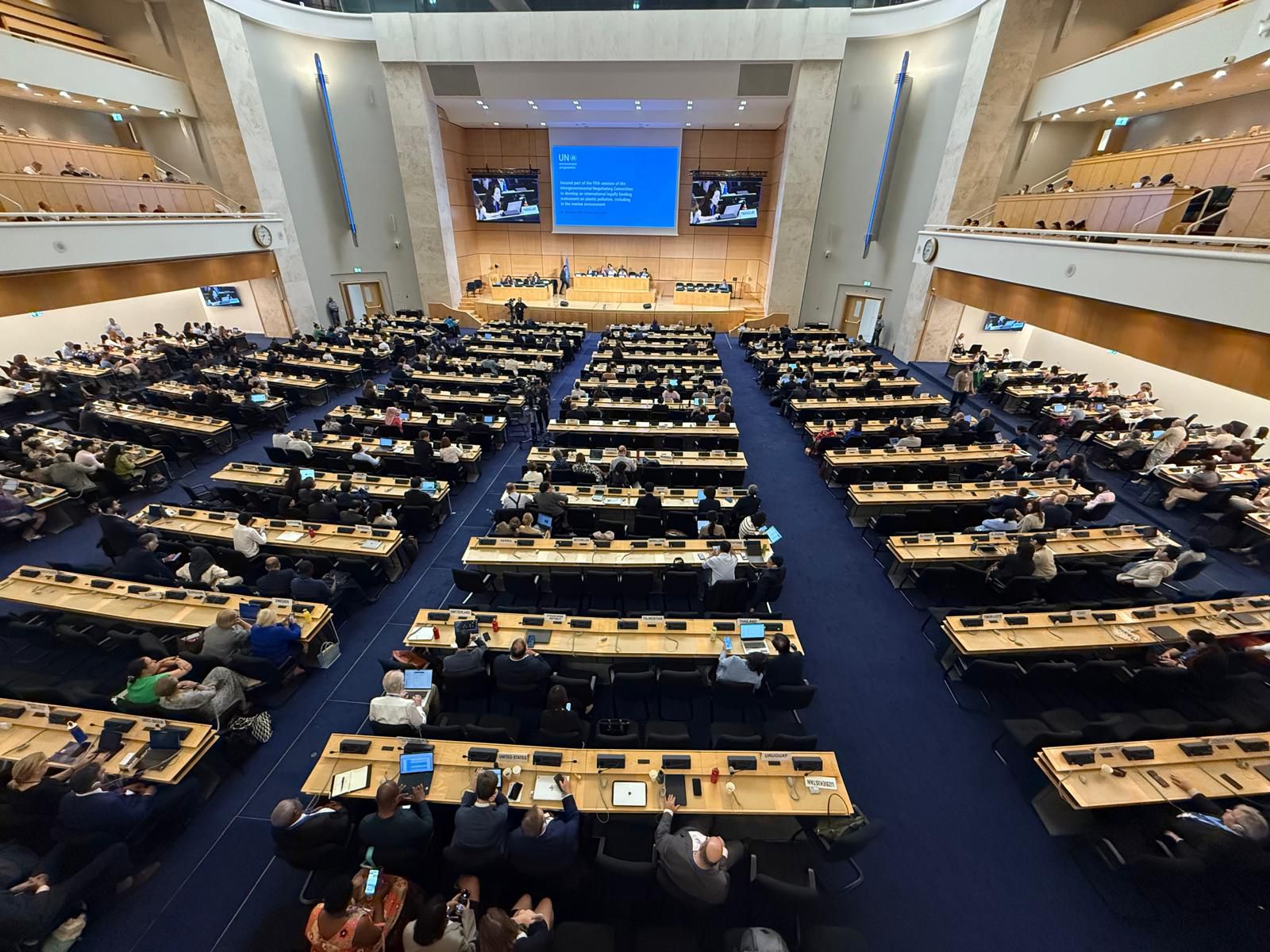
The geopolitical dynamics that torpedoed the Geneva talks remain largely intact. The United States and the Gulf petrochemical bloc continue to push for a treaty focused exclusively on waste management, flanked by nations like Egypt, Brazil, South Africa, India and Iran.
The nations fighting hardest for an ambitious treaty — Fiji, Palau and the other Pacific Island states of the Alliance of Small Island States — collectively have fewer people than France, less than 1% of global emissions, and a combined economy smaller than a single oil major’s annual revenue. Under the consensus rules governing the process, any one petrochemical superpower can veto what all of them want.
Meanwhile, Norway and Japan each hosted informal meetings of high-ambition countries over the past year to develop bridging proposals on the treaty’s most contested issues, which delegations brought to a heads-of-delegation meeting in Nairobi in early July under a roadmap Cordano set out in March. The next meeting of high-ambition nations is set for early September, in a bid to coordinate negotiating positions and strategy ahead of the heads of delegation meeting in Bangkok.
What’s next?
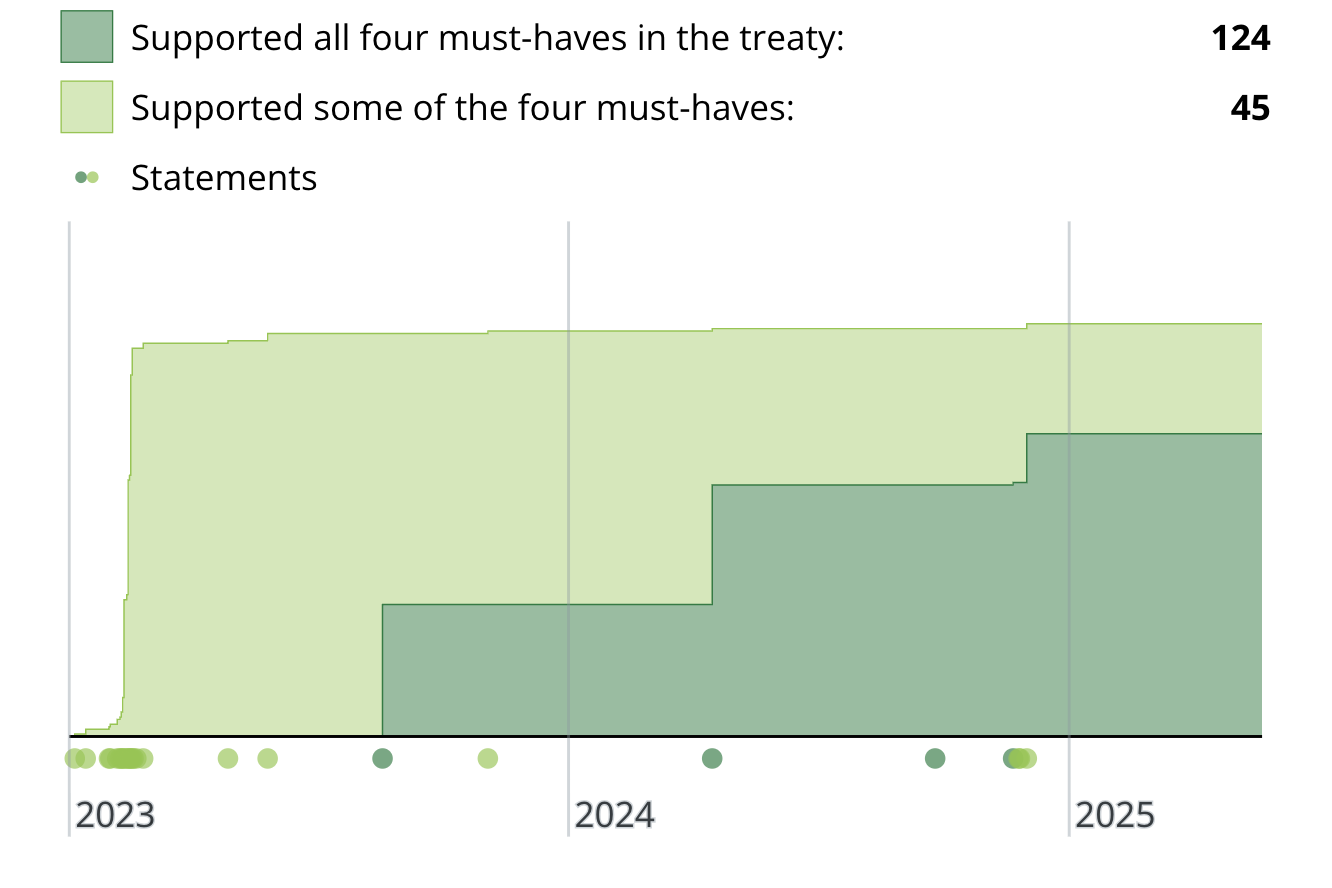
Though the process appears paralysed, the journey from Nairobi to Paris, Ottawa, Busan and Geneva has moved the needle. What began as a coalition founded by Rwanda and Norway in 2022 has grown to over 100 countries backing a high-ambition treaty, with ministerial-level support for a legally binding instrument.
Capping global plastic production — once dismissed as a moonshot proposition of environmental campaigners — now has the support of more than 100 nations.
The negotiations have also exposed, in full public view, exactly who is blocking action on the plastics crisis and why, as the fossil fuel industry pivots to plastics as a hedge against falling demand for oil and gas in an accelerating green energy transition.
Saudi Aramco plans to channel a third of its oil output into petrochemical-based products, including plastics, by 2030. The global petrochemical industry, valued at $638 billion in 2023, is heading toward $1 trillion by the end of the decade. At the Geneva talks, 234 fossil fuel and petrochemical lobbyists attended — outnumbering expert scientists three to one.
Whether the plastics treaty process will join the ranks of permanently deadlocked UN negotiations remains to be seen. Closed-door talks resume in Bangkok in the last week of September, where countries will try to forge a path to the next summit. Formal negotiations are set to resume at INC-5.4 in March 2027, with the venue yet to be confirmed.
“We should remember that the ultimate goal of this process is not to deliver any treaty just for the sake of an agreement,” Azoulay said. “It’s to deliver a treaty that ends plastic pollution.”
Image Credits: Stefan Anderson.
Combat the infodemic in health information and support health policy reporting from the global South. Our growing network of journalists in Africa, Asia, Geneva and New York connect the dots between regional realities and the big global debates, with evidence-based, open access news and analysis. To make a personal or organisational contribution click here.
Climate and Health,Climate change,Content type,Health & Environment,News,environment and health,plastics,plastics treaty#Year #Collapse #Geneva #Plastics #Treaty #Negotiations #Remain #Paralysed1786730130
