


This story was originally published by The New Humanitarian.
The response to the Ebola outbreak in the eastern Democratic Republic of the Congo (DRC) must be rooted in the country’s local health structures and avoid “asymmetrical” suffering by treating those in state-controlled and rebel-run areas the same, says a leading Congolese virologist.
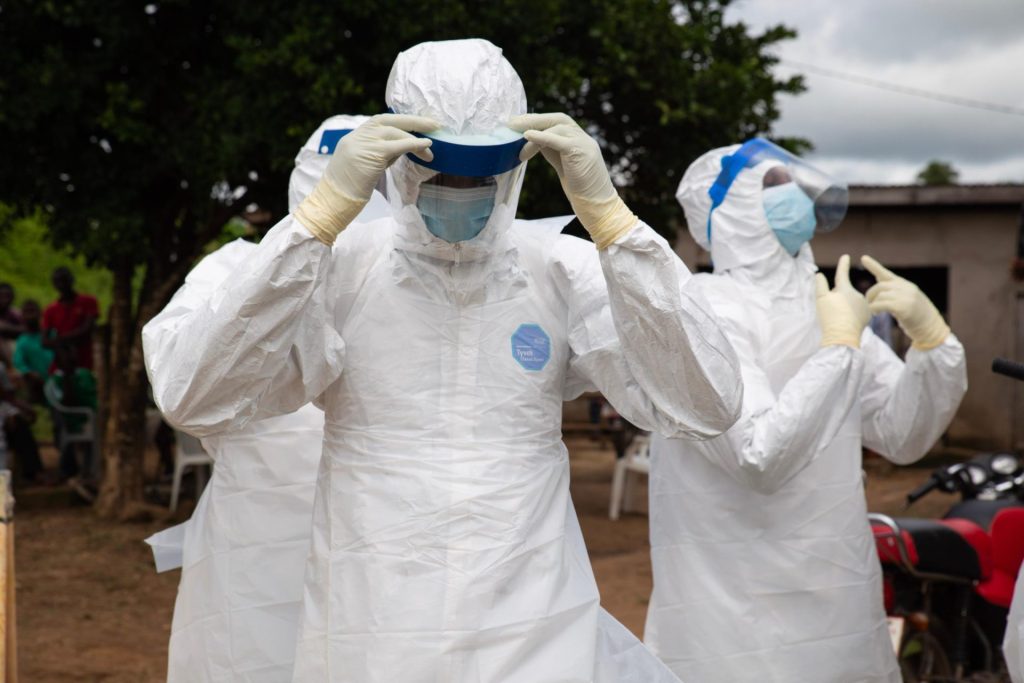
The current epidemic involves the less fatal Bundibugyo strain of the virus, but there is no vaccine yet for this variant and the outbreak is unfolding in an area of armed conflict between government forces and the Rwanda-backed M23 rebel group.
“The most important thing for us is to know that these are Congolese people, on both sides,” Jean-Jacques Muyembe, Director General of DRC’s National Institute of Biomedical Research (INRB), said. “Therefore, if there are sick people on that side, they must also receive proper care so that the suffering is not asymmetrical. Everyone has the right to healthcare.”

The World Health Organization (WHO) declared the outbreak a Public Health Emergency of International Concern, or PHEIC, on 17 May, warning that although it didn’t meet the criteria of a pandemic emergency, there was significant risk of local and regional spread.
Centred in Ituri province, but also now reported in North Kivu, South Kivu, and neighbouring Uganda, the outbreak has resulted in 608 confirmed cases and 102 deaths, as of 8 June. Nineteen cases and two deaths have been confirmed in Uganda, but the vast majority of cases have been in 25 health zones in eastern DRC.
On 5 June, the WHO and the Africa Centres for Disease Control and Prevention (Africa CDC) launched a joint $518 million plan to tackle the epidemic from June to November, focused on emergency response coordination, surveillance, laboratory analysis, infection prevention and control, clinical care, and community mobilisation.
The 2018-2020 Ebola outbreak centred on North Kivu – the first to unfold in an active conflict zone – became the second-worst outbreak in history, with 2,280 fatalities from the more lethal Zaire strain. The response was marked by militarisation, which drove community mistrust, but also by the bypassing of local health structures.
To find out more about the state of the current response and the challenges it faces, we spoke to Muyembe, co-discoverer of the Ebola virus in 1976 and special adviser to the director general of the Africa CDC. The following interview has been edited for length and clarity.
What progress has been made in recent weeks to contain the outbreak?
Jean-Jacques Muyembe: The outbreak is now better defined. The numerous suspected cases initially reported were largely linked to other illnesses such as malaria or typhoid fever. The response will therefore focus on confirmed cases and those that may appear subsequently.
We have strengthened our diagnostic capacity by deploying new laboratories, such as in Mongbwalu, which allows us to quickly analyse reported cases in the epicentre of the outbreak. Contact tracing has also improved, the population is more aware, and working conditions are better.
The Bundibugyo strain is less lethal than the Zaire strain. To date, we have… a case fatality rate of approximately 17%. This means that a large proportion of patients survive. However, we shouldn’t overemphasise cases of spontaneous recovery. If the public believes it’s possible to recover without medical care, some might choose to keep patients at home instead of taking them to the hospital. Hospitalisation remains essential. It allows for the treatment of symptoms associated with the disease, improves the chances of recovery, and limits the transmission of the virus.
How do you assess the initial mobilisation efforts against the epidemic, especially given the context of global cuts to humanitarian aid?
Muyembe: For the first time, I saw the Congolese government quickly release significant funds to launch the response. This is a strong signal that the DRC can be proud of. Added to this is the support of partners like the WHO, UNICEF, and the Africa CDC, which are contributing significantly to the response.
What is your assessment of research and development efforts to identify therapies and vaccines?
Muyembe: This is not the first time we have faced an outbreak of the Bundibugyo strain. In 2012 already, we managed to bring it under control thanks to public health measures. Research efforts are ongoing, but they take time. With the WHO, we are planning clinical trials soon on two or three products that are not yet approved. Regarding vaccines, progress could be made in three months. Therefore, we must not rely exclusively on these solutions. The priority remains working with communities and the rigorous application of public health measures.
Is the DRC’s health system well-positioned to manage the current epidemic? Have there been sufficient sustainable investments made during previous epidemics?
Muyembe: As in many African countries, the health system has weaknesses, particularly in surveillance. However, Ituri province already faced a major epidemic in 2018. With the same staff, comprised of both national teams from Kinshasa and local teams, we managed to control it. We believe we can do the same today. However, it is essential that the population trust the teams deployed on the ground.
Previous responses to Ebola outbreaks were criticised for being over-militarised, and of operating within a parallel health system. How can lessons from the past inform the current response?
Muyembe: Yes, we must learn from the past. During the 2018 epidemic, basic health structures were insufficiently involved. Conversely, the response to the COVID-19 pandemic was more integrated into the health system. This is the approach we want to strengthen today, anchoring the response in existing structures, particularly the Provincial Health Divisions (PHDs) and the affected health zones. This also allows for the sustainable strengthening of the health system.
The epidemic is centred in areas controlled by the DRC government, but there are also cases in M23 territory. How does this affect coordination?
Muyembe: The most important thing for us is to know that these are Congolese people, on both sides. Therefore, if there are sick people on that side, they must also receive proper care so that the suffering is not asymmetrical. Everyone has the right to healthcare.
Many commentators say that the rapid spread of the virus and the immediate challenges of the response are directly linked to cuts in US funding. Do you agree?
Muyembe: The reality is more complex. The Congolese government set an example by mobilising significant resources from the outset of the response, and partners supported this effort. At this stage, the main challenge is not a lack of funding, but rather on-the-ground organisation and community engagement in response measures.
Where would you like to see more investment to prevent and contain these epidemics in the future?
Muyembe: In a word, it’s research. Preparedness must take place during inter-epidemic periods. At the INRB, we have developed numerous diagnostic innovations. Previously, samples had to be sent to the United States or South Africa, and results could take up to a week.
Since 2008, we have acquired the capacity to perform these diagnostics locally, including through rapid tests that can be used in remote areas without access to electricity. We have also developed a monoclonal antibody recognised by the US FDA (Food and Drug Administration) as a specific treatment for the Zaire strain of Ebola.
Furthermore, we monitor viruses circulating in wild animals, typically mice, as well as pathogens present in wastewater and toilet water from aircraft arriving in the DRC. This work helps us better understand the circulation of viruses and bacteria with epidemic potential.
You were recently appointed special adviser to the Director General of the Africa CDC. What does this mean for the DRC’s Ebola response?
Muyembe: This role extends well beyond the DRC. Africa CDC is an African Union body responsible for disease surveillance across the continent. Nevertheless, this appointment strengthens ties between Africa CDC and the DRC, while also facilitating the mobilisation of increased support for the fight against the current Ebola Bundibugyo outbreak.
The New Humanitarian puts quality, independent journalism at the service of the millions of people affected by humanitarian crises around the world.
Content type,Ebola,Infectious Diseases,Interview,Uncategorized,DRC,Ebola Bundibuglo,Muyembe,the new humanitarian#Muyembe #DRCs #Ebola #Response #Anchored #Locally1781027493
