


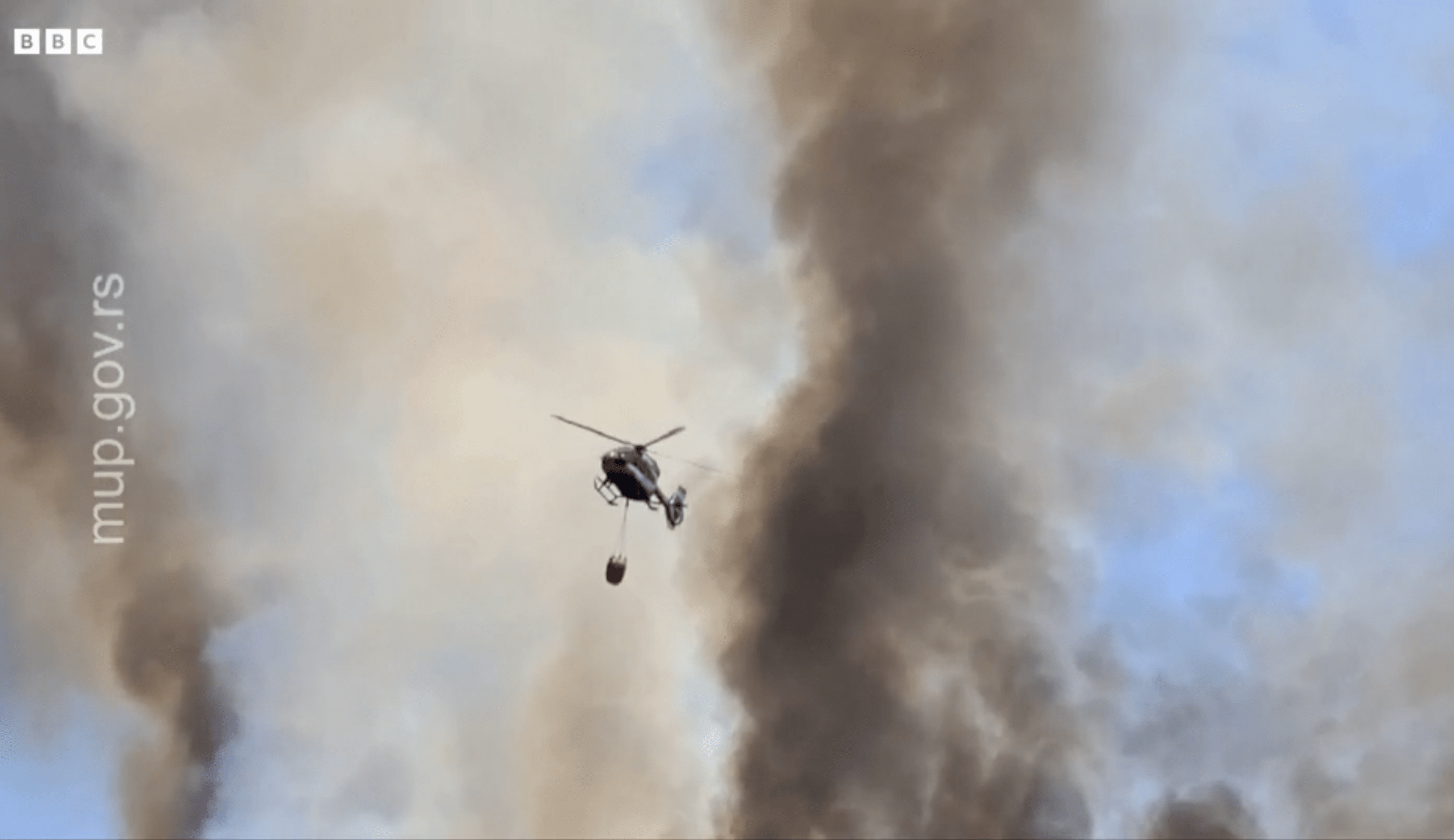
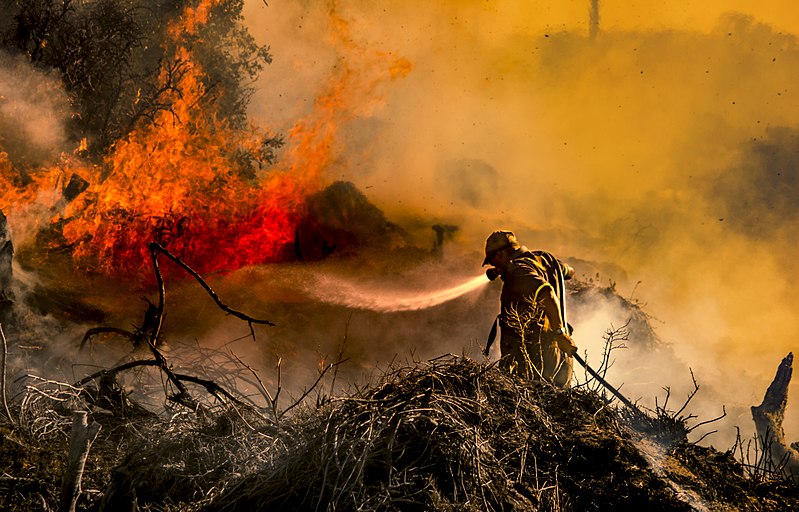
As Europe sweats through the hottest week on record for June, the continent faces the looming spectre of wildfires – just one year after last year’s deadly events in Turkiye and Southern Europe.
But wildfire season is no longer episodic. It has evolved into a year-long threat, fueled by a warmer climate and its side effects.
Increased temperatures, prolonged droughts and unpredictable weather patterns are creating more fire-prone conditions, and countries around the world are feeling the consequences, whether they are in the direct path of fires or thousands of miles away.
Anyone who has experienced a wildfire can attest to the immediate terror and heartache wildfires inflict on families, communities and economies. According to the United Nations, wildfires caused an estimated $106 billion in economic losses and $74 billion in insured losses globally between 2014 and 2023.
But their impact spreads beyond the fire line and lingers long after they burn out. A recent report in Nature projects up to 1.4 million wildfire smoke-related premature deaths annually by the end of the century, driven by climate change, ageing populations and longer fire seasons.
That’s nearly six times current levels. And the impacts will be experienced unevenly around the world. Fire-related death rates in Africa, for example, are expected to increase eleven-fold.
As countries prepare for climate negotiations in Türkiye at COP31, we must act urgently to ensure wildfire smoke is treated as a climate and health agenda item, not just an economic or land management threat, and receives the coordinated response it deserves.
If we don’t act fast enough, we will undo decades of hard-won clean air progress in the United States and Europe. The consequences carry a real human toll.
How wildfire smoke harms health
Air pollution is already the second leading risk factor for premature death, with wildfire smoke contributing to its lethality. Wildfire smoke contains hazardous compounds.
Exposure to PM2.5, for example, or fine particulate matter, penetrates the lungs and bloodstream, can result in lung cancer and other respiratory diseases like asthma, cardiovascular disease and neurological diseases, all of which drive increased emergency department visits, hospitalizations, medication use, and death.
When wildfires burn homes, office buildings and other structures, toxic compounds like lead and arsenic are mixed with fine particles. Critically, vulnerable groups are impacted the most – children aren’t able to go to school, pregnant women are told to stay indoors for weeks, many older adults can’t open their windows in the summer, and outdoor workers who can’t stay indoors for economic reasons face some of the highest risks from long periods of breathing in smoke.
Even without wildfire smoke, Europe already faces a severe air-quality crisis. Long-term exposure to PM2.5 above World Health Organization (WHO) recommendations was associated with an estimated 206,000 premature deaths in Europe in 2023, and nine out of 10 Europeans are exposed to air pollution at concentrations considered unsafe for human health.
Wildfire smoke compounds the problem and its fine particles can travel thousands of kilometers across borders and into population centers far removed from the flames.
New research suggests that conventional assessments may substantially understate the specific threat posed by wildfire smoke. A 2025 Lancet Planetary Health study attributed an average of 535 deaths each year to short-term exposure to wildfire-derived PM2.5. Using a generic PM2.5 risk estimate based on different sources of pollution may result in an underestimation of health risks and understate wildfire-smoke deaths by a whopping 93%.
New era of wildfire risk in Europe
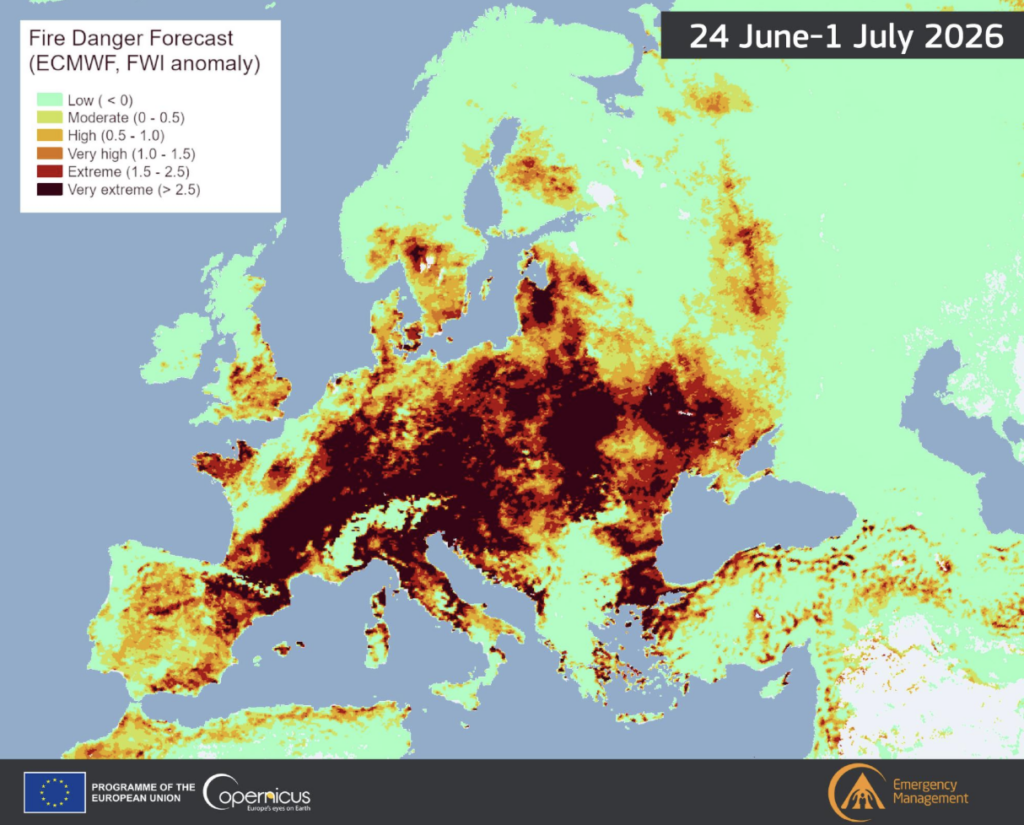
The last few years have provided a stark preview of Europe’s future as climate change accelerates or, at the very least, continues to follow these trends.
Southern Europe has experienced a succession of severe wildfire seasons over the past several years. In 2023, the Evros wildfire in Greece burned 93,880 hectares and killed 20 people, making it the largest single wildfire ever recorded in the European Union.
In Portugal, the 2024 fire season was the country’s most destructive since 2017. More than 1,370 square kilometers burned, 16 people were killed and estimated damages reached €180 million. Then, in 2025, Spain experienced one of its worst fire seasons in decades. Approximately 380,000 hectares burned, making it Spain’s fifth-largest burned-area year since records began in 1961.
The scale of the 2025 fires in Spain and Portugal demonstrates how quickly extreme wildfire conditions can become a regional crisis. Consequences of fire must be tracked by more than burned areas, including fire intensity and spread. Small fires can also have large impacts on human health, economy and climate.
Approximately 260,000 hectares burned in Portugal during the season, nearly five times the average for that point in the year. Together, fires in Spain and Portugal consumed approximately 640,000 hectares, an area equal to about 1% of the Iberian Peninsula, with most of the damage occurring within just two weeks .
Across Europe, approximately one million hectares had burned by that point in the season, the highest total since European Forest Fire Information System records began in 2006. During Portugal’s damaging 2024 season, approximately 480 square kilometers of protected areas and Natura 2000 habitats burned and a 50-square-kilometer fire entered Madeira’s laurel forest, a UNESCO World Heritage site.
Fires are not simply larger, but more frequent. A 2025 analysis found that the extreme fire-weather conditions behind the Spain and Portugal fires are now expected approximately once every 15 years. Before human-caused warming, comparable conditions would have been expected less than once every 500 years.
Wildfires are undermining air quality progress

Though many countries are making progress on reducing pollution by investing in clean transport, renewable energy and tighter controls on industrial emissions, wildfire smoke can erase these gains. According to a 2024 National Academies of Sciences Engineering and Medicine report, pollution from wildfires is actively undermining net-zero targets globally.
In 2023, Canada’s wildfire smoke pollution was so extensive that it released enough greenhouse gases to make Canada the largest polluter of all but three countries that year: China, the US and India. In 2020, California’s wildfire season resulted in twice the pollution that was reduced from clean energy progress.
According to estimated biomass burning emissions from the Copernicus Atmosphere Monitoring Service (CAMS), implemented by the European Centre for Medium-Range Weather Forecasts for the EU, intense fires in the Iberian Peninsula in summer 2025 resulted in Europe’s highest annual total emissions since the start of systematic monitoring in 2003. Governments simply cannot meet their clean air goals without addressing wildfire smoke.
Strategy over silos: Coordinating the response
The solutions exist, but they require a fundamental shift from responding and reacting to, to planning for and preventing catastrophic fires.
That requires not only a strategic shift, but leveraging newly available data and coordinating clean air standards, climate mitigation plans, and fire management strategies so they work together and not in silos. Predictive science is working to identify which fires will explode into megafires and which can be managed or left to burn.
Early detection systems can get the right response to the right fire, and air quality alerts can get people the information they need to make informed choices for their health and the health of their families. Yet few of these new tools and solutions will succeed if their use isn’t coordinated.
Across Greece, Portugal and Spain, governments have begun to move wildfire policy beyond emergency suppression toward prevention and preparedness, but the transition remains incomplete and uneven.
Greece has adopted a National Forest Strategy for 2018–2038, launched a National Reforestation Plan for 2020–2030 and created the Ministry of Climate Crisis and Civil Protection in 2021 to improve coordination among agencies responsible for managing climate risks. Yet the OECD concludes that Greece still lacks an overarching national wildfire-management strategy and that wildfire prevention remains divided among more than 45 agencies and public bodies.
Portugal made a more structural shift after its catastrophic 2017 fires, creating an Integrated Rural Fire Management System and a dedicated coordinating agency to support a whole-of-government approach. It also increased its emphasis on fuel and ecosystem management, including prescribed burning and strategic fuel breaks designed to limit the spread and intensity of fires. Spain, too, has made measurable progress.
Its average annual burned area declined substantially between 2006 and 2024, due, in part, to improved prevention measures and tougher penalties for people who start fires. But the 2025 fire season demonstrated the limits of that progress under the continued pressure of a hotter and drier climate.
Together, these reforms show meaningful movement in the right direction, but wildfire management still tends to be divided across forest management, emergency response, climate adaptation, land-use policy and public-health protection rather than organized as a unified strategy.
Integrated fire management
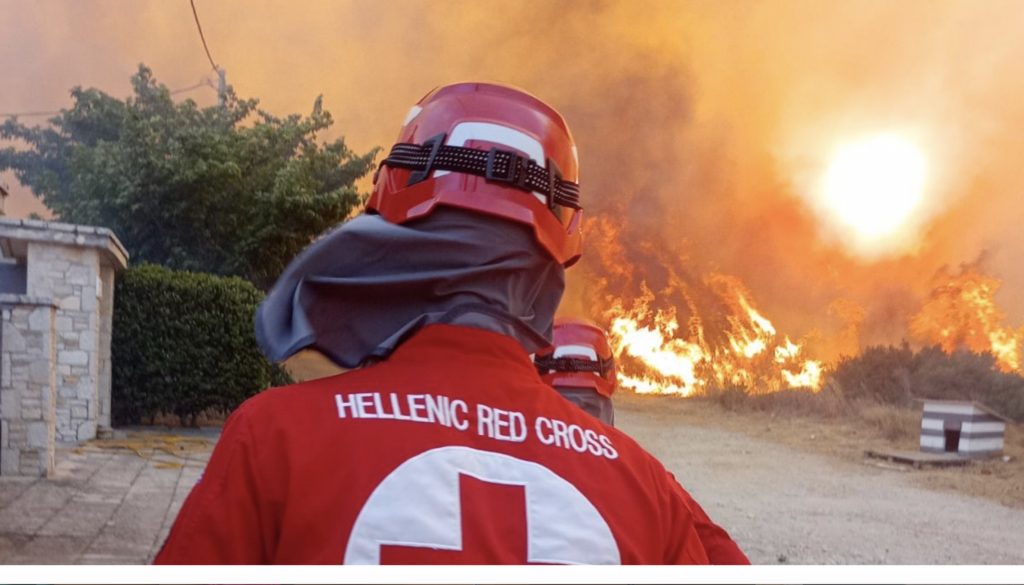
Some countries and regions are already embracing a coordinated approach. The G7 Kananaskis Wildfire Charter called for integrated fire management, enhanced science and technology and international cooperation to tackle the wildfire crisis.
Signed by over 50 countries, Brazil’s Call to Action on Integrated Fire Management and Wildfire Resilience calls for a paradigm shift in fire prevention and response. Brazil recently launched an innovative Integrated Fire Management Law, and Brazil’s new air quality law identifies integrated fire management as an air quality tool for mitigating emissions from this critical source of pollution.
Building on these efforts, there is no more powerful platform for advancing European wildfire response than a COP hosted in Europe.
As world leaders prepare to gather in Türkiye for COP31, key elements of the COP30 Call to Action on Integrated Fire Management can offer a foundation for this new approach: one that fully shifts from reaction to prevention.
This approach draws on cutting-edge science that integrates climate data, fire technology and air quality and health data, innovating policy ambition to advance public health, land use and climate goals; and strengthens cross-ministerial governance structures and alignment while empowering and including local actors.
Wildfires respect no boundaries and present grave threats to the health of people and our environment, with unsustainable costs to society. This demands a new approach to planning, prevention, and preparation; new models of governance and solutions that deliver on the triple bottom line: healthy forests, healthy environments, and healthy people.

Angela Churie Kallhauge is the executive vice-president of impact at the Environmental Defense Fund. Prior to joining EDF, she served as head of the Secretariat of the Carbon Pricing Leadership Coalition (CPLC) at the World Bank.
Image Credits: BBC, Commons Wikimedia, Copernicus.
Combat the infodemic in health information and support health policy reporting from the global South. Our growing network of journalists in Africa, Asia, Geneva and New York connect the dots between regional realities and the big global debates, with evidence-based, open access news and analysis. To make a personal or organisational contribution click here.
Air Pollution,Climate and Health,Content type,Health & Environment,Health, Climate & SDGs,Inside View,Air pollution,air quality,climate change,climate change and health,COP31,Europe,fire,heatwave,turkiye,wildfires#Wildfire #Smoke #Health #Emergency #Urgently #Seat #Climate #Table1782408250
