


Introduction
This report provides the latest available data on donor government resources provided to address HIV in low- and middle-income countries, reporting on disbursements made in 2025. It is part of a collaborative tracking effort between UNAIDS and KFF that began almost 20 years ago, just as new global initiatives were being launched to address the epidemic. The analysis includes data from all 34 members of the Organisation for Economic Co-operation and Development (OECD)’s Development Assistance Committee (DAC), as well as non-DAC members who report data to the DAC. Data are collected directly from donor governments, UNAIDS, the Global Fund, and Unitaid, and supplemented with data from the DAC. Of the 34 DAC members, fifteen provide 98% of total disbursements for HIV; data for these donors are presented individually. For the remaining 19 DAC members, data are provided in aggregate. All totals are presented in current U.S. dollars (amounts are not adjusted for inflation). Totals include both bilateral and multilateral assistance. Multilateral assistance for HIV includes disbursements by donors to the Global Fund and Unitaid, adjusted for an estimated HIV share, and to UNAIDS. Overall trend data are provided for the 2002 to 2025 period). Disaggregated data on bilateral and multilateral amounts are provided starting in 2011 (see methodology for more detail).
The data for 2025 represent one of the first assessments of the financial impact of major changes made by the United States starting last year, including a freezing and then canceling of numerous global HIV projects, eliminating the U.S. Agency for International Development (USAID), and introducing a new approach, the America First Global Health Strategy, with plans to significantly scale-down U.S. support for countries over the next few years.
Findings
Total Funding
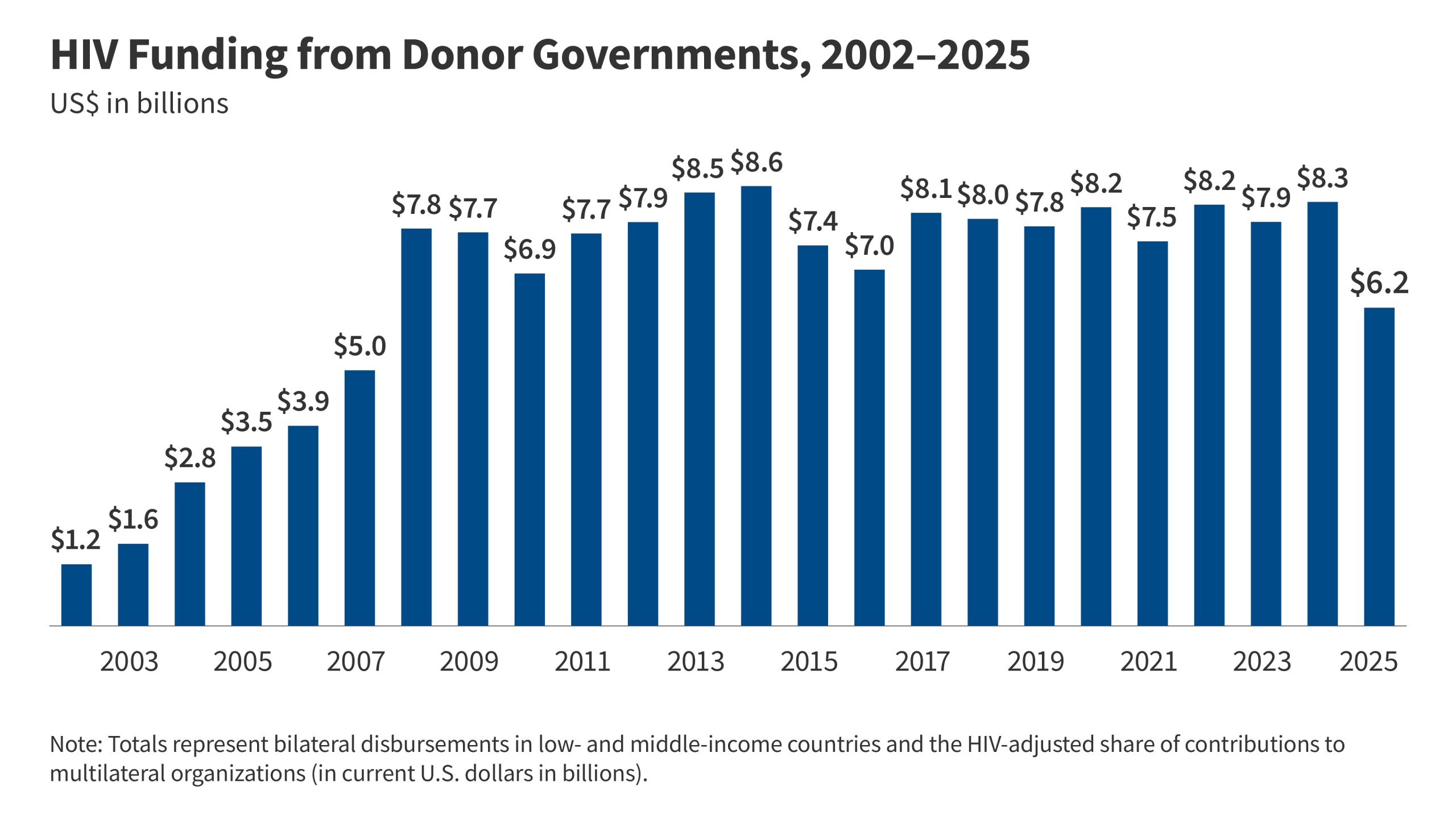
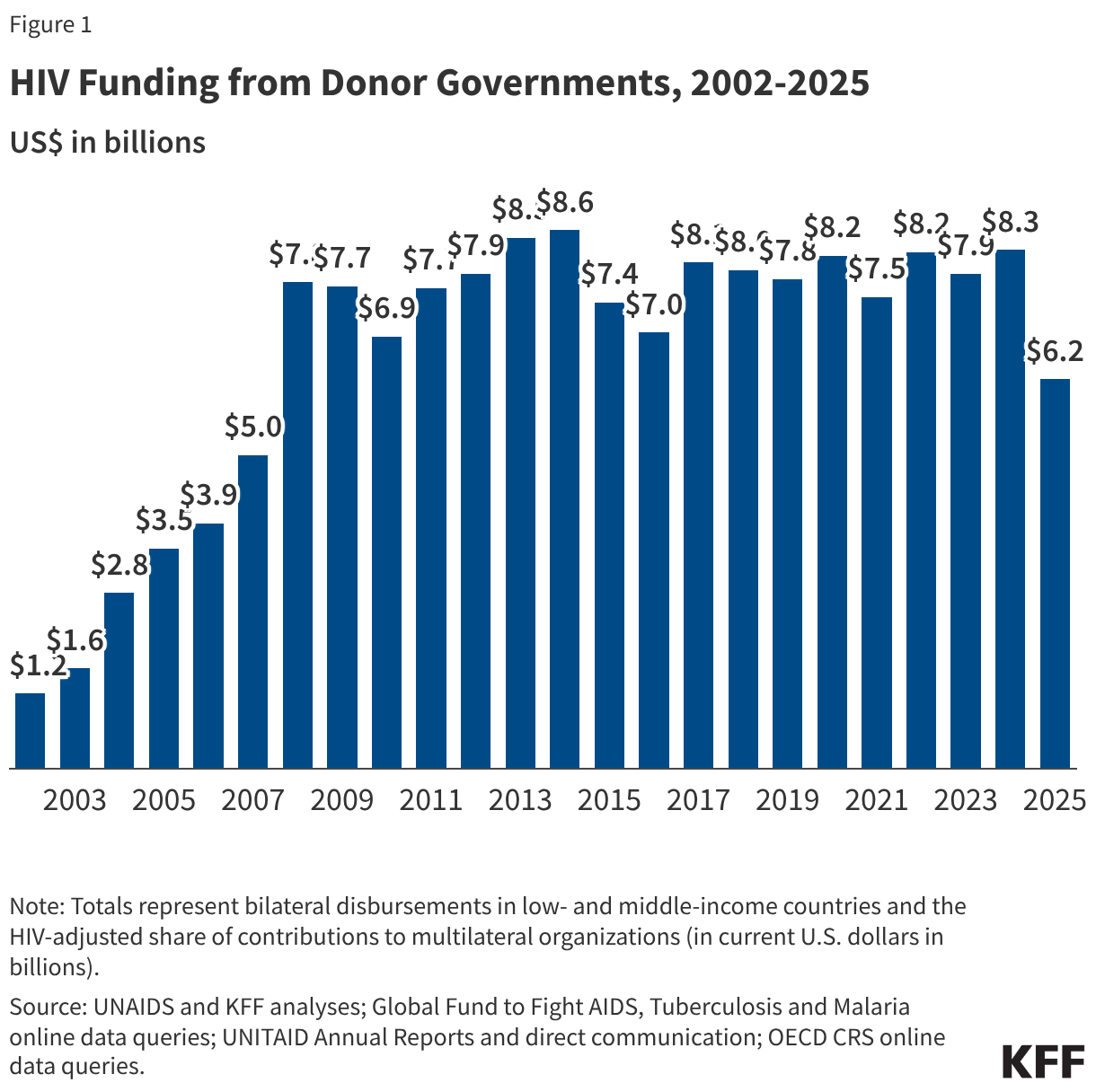
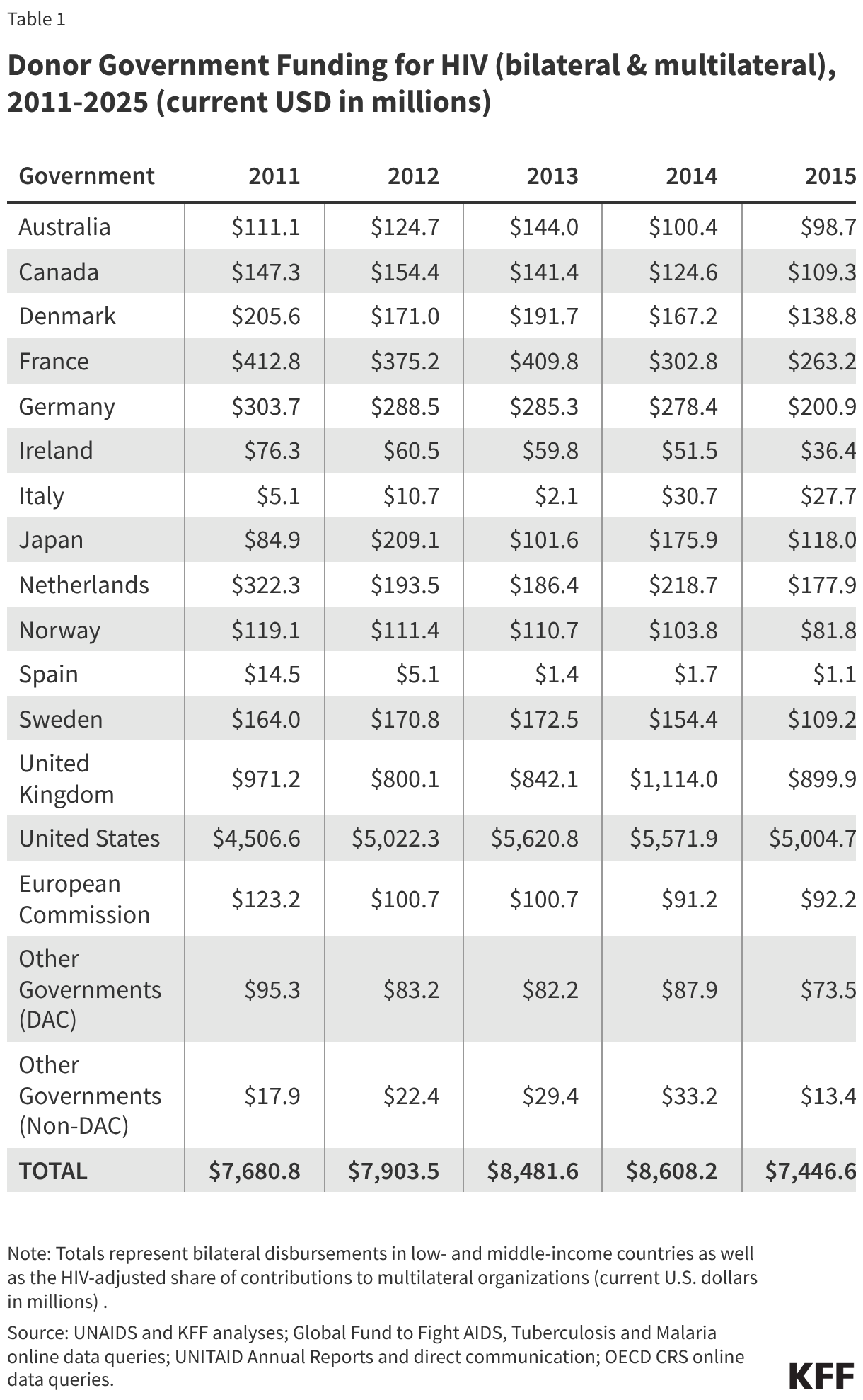
In 2025, donor government funding for HIV through bilateral and multilateral channels totaled US$6.2 billion in current USD.4 This is a decrease of US$2.1 billion (25%) compared to 2024 (US$6.2 in 2025 compared to US$8.3 billion in 2024), marking the largest drop since the donor government funding scale-up began and the lowest level of funding since 2007 ($5.0 billion) (See Figure 1 and Table 1). Donor governments accounted for more than one-third of the UNAIDS estimated US$17.6 billion made available from all sources to address HIV in 2025, an 18% decline compared to the total resources available in 2024.5,6
The decrease in 2025 was due to a decline in disbursements, or payouts, by the United States following the current administration’s actions that fundamentally altered U.S. foreign assistance programs. Collectively, these actions temporarily halted, and then slowed, U.S. HIV disbursements in 2025. Although, these declines in U.S. HIV disbursements were not as steep as overall decreases in U.S. development assistance as reported by the OECD DAC.7 At the same time, the U.S. Congress has continued to appropriate funding for HIV at steady levels, meaning that additional funding remains in the U.S. pipeline and could be spent in the future. Still, the extent to which the administration will spend these funds is unknown and the administration’s America First Global Health Strategy calls for significant scale-down in U.S. funding for countries in the future, including an estimated $7.3 billion decline over the next five years, compared to the prior five-year period.
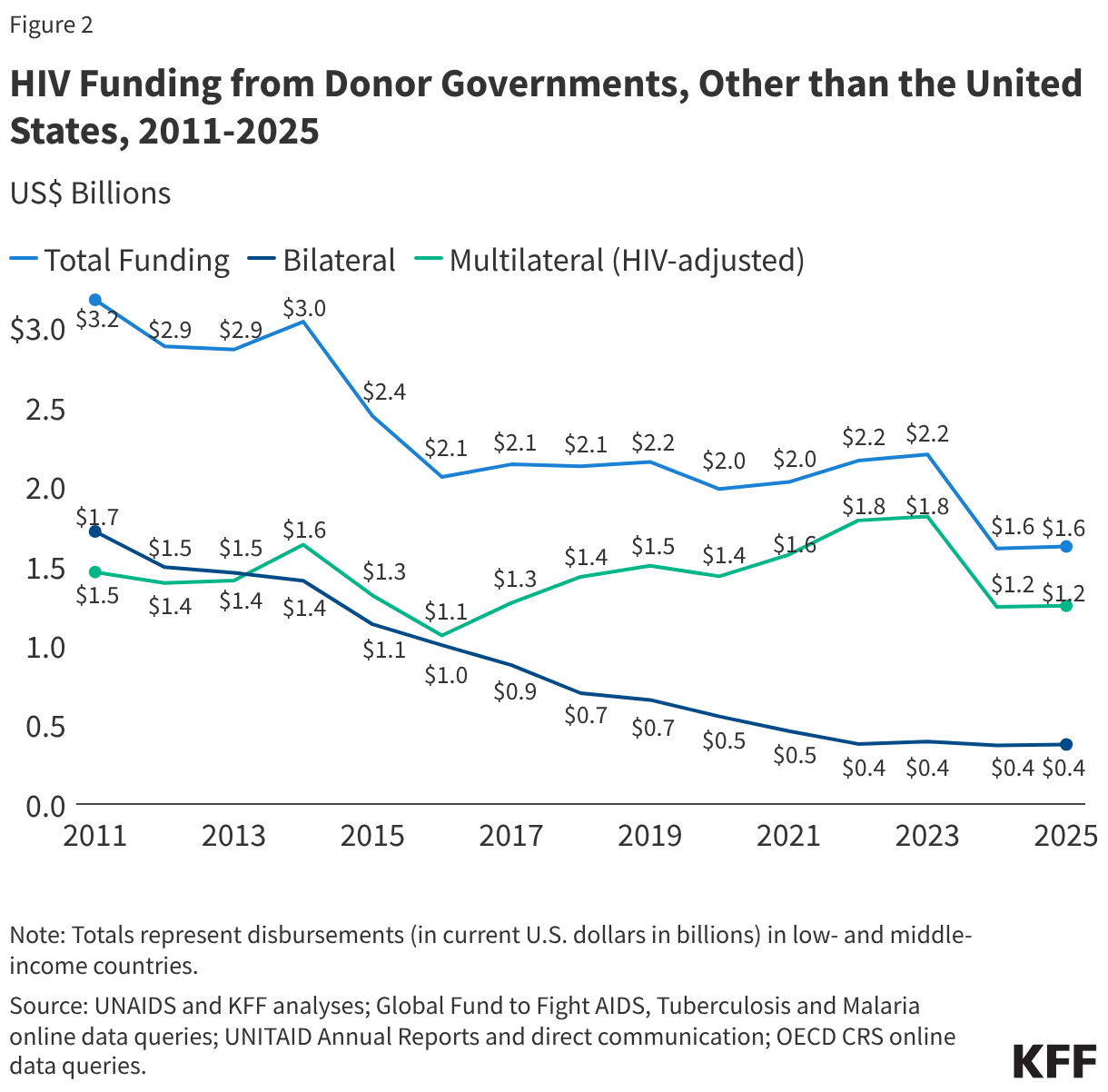
Although there were some fluctuations by other donors, in the aggregate, their HIV funding remained flat in 2025 (US$1.6) compared to 2024. Still, when the U.S. is removed, the longer trend shows that funding for HIV provided by other donor governments has been on the decline and is significantly below funding provided in 2011 (US$3.2 billion), a decrease of nearly 50%, largely due to declining bilateral support from other donor governments (See Figure 2).8
Despite the decline, the United States continued to be the largest donor to HIV efforts, providing US$4.6 billion and accounting for 74% of total donor government funding in 2025.9 The second largest donor was France (US$280 million, 4%), followed by the U.K. (US$213 million, 3%), Japan (US$202 million, 3%), and Germany (US$200 million, 3%).10,11
Bilateral Disbursements
Bilateral disbursements for HIV – that is, funding disbursed by a donor on behalf of a recipient country or region – totaled US$4.3 billion in 2025, a decrease of US$1.5 billion (-26%) compared to 2024 (US$5.8 billion). The decline was due to decreased bilateral funding by the U.S., which disbursed US$3.9 billion in 2025, a decline of US$1.5 billion (28%) compared to 2024 (US$5.4 billion). As noted above, while the U.S. Congress has continued to appropriate funding for HIV, and the administration could choose to disburse additional funds in the future, the extent to which this will occur is unknown (See Figure 3).12,13
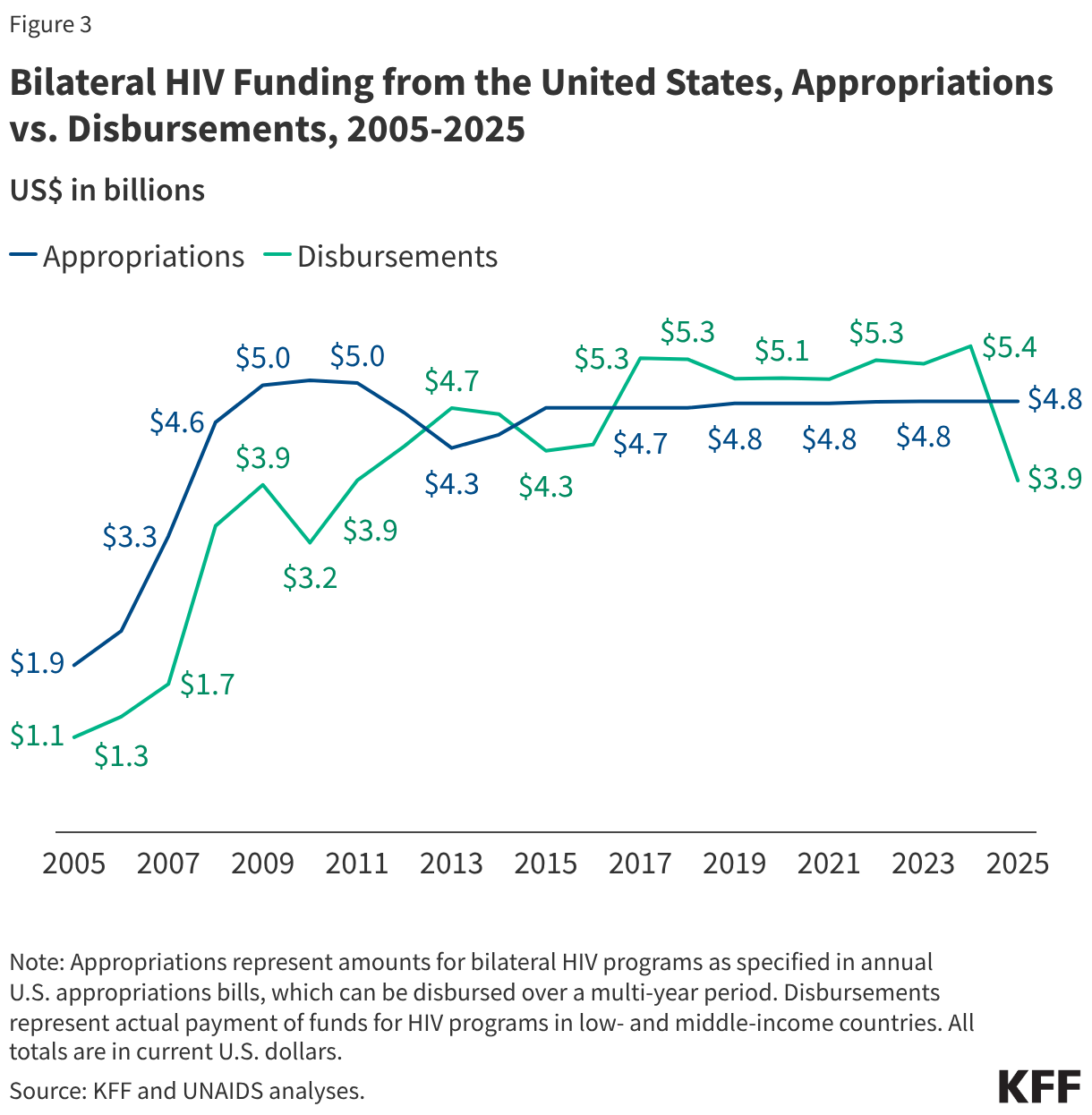
When the U.S. is removed, bilateral disbursements from all other donor governments totaled US$373 million in 2025, a slight increase compared to 2024 (US$368 million). Almost all other donor governments either increased slightly (Australia, Canada, Italy, Norway, Spain, and Sweden), or remained flat (Denmark, Ireland, Japan, the Netherlands, and the U.K.); bilateral funding from France and Germany declined. These trends were the same after accounting for exchange rate fluctuations.
Looking more broadly, bilateral funding from these donor governments (excluding the U.S.) declined by US$1.3 billion, or 78%, between 2011 (US$1.7 billion) and 2025 (US$373 million) (See Figure 2).
Multilateral Contributions
Multilateral contributions from donor governments to the Global Fund, Unitaid, and UNAIDS for HIV – funding disbursed by donor governments to these organizations which in turn use some (Global Fund and Unitaid) or all (UNAIDS) of that funding for HIV – totaled US$1.9 billion in 2025 (after adjusting for an HIV share to account for the fact that the Global Fund and Unitaid address other areas). This represents a decrease of US$581 million (23%) compared to 2024 (US$2.5 billion).14,15 While contributions to the Global Fund accounted for most of this decline – decreasing by US$470 million (21%) between 2025 (US$1.8 billion) and 2024 (US$2.3 billion), funding for UNAIDS was reduced by US$109 million (65%) in 2025 (US$60 million) compared to 2024 (US$169 million) as several donor governments eliminated or significantly reduced support; contributions to Unitaid were flat (US$57 million in 2025 compared to US$59 million in 2024).
The decrease in 2025 multilateral disbursements was primarily driven by the U.S., which provided US$672 million in 2025, a decline of nearly half ($588 million or 47%) the amount provided in 2024 (US$1.3 billion). This decline was due in part to the timing of U.S. payments to the Global Fund (per U.S. policy requirements, U.S. contributions cannot exceed 33% of total contributions to the Global Fund, resulting in significant year-to-year differences depending on the amounts other donors have provided),16 but also to a reduction in U.S. payments to the Global Fund last year, even where they were matched by other donor contributions. The U.S. also eliminated its support to UNAIDS in 2025 (U.S. funding totaled US$50 million in 2024). As with bilateral support, appropriated funds remain and the administration could choose to provide this funding in the future (See Figure 4).17
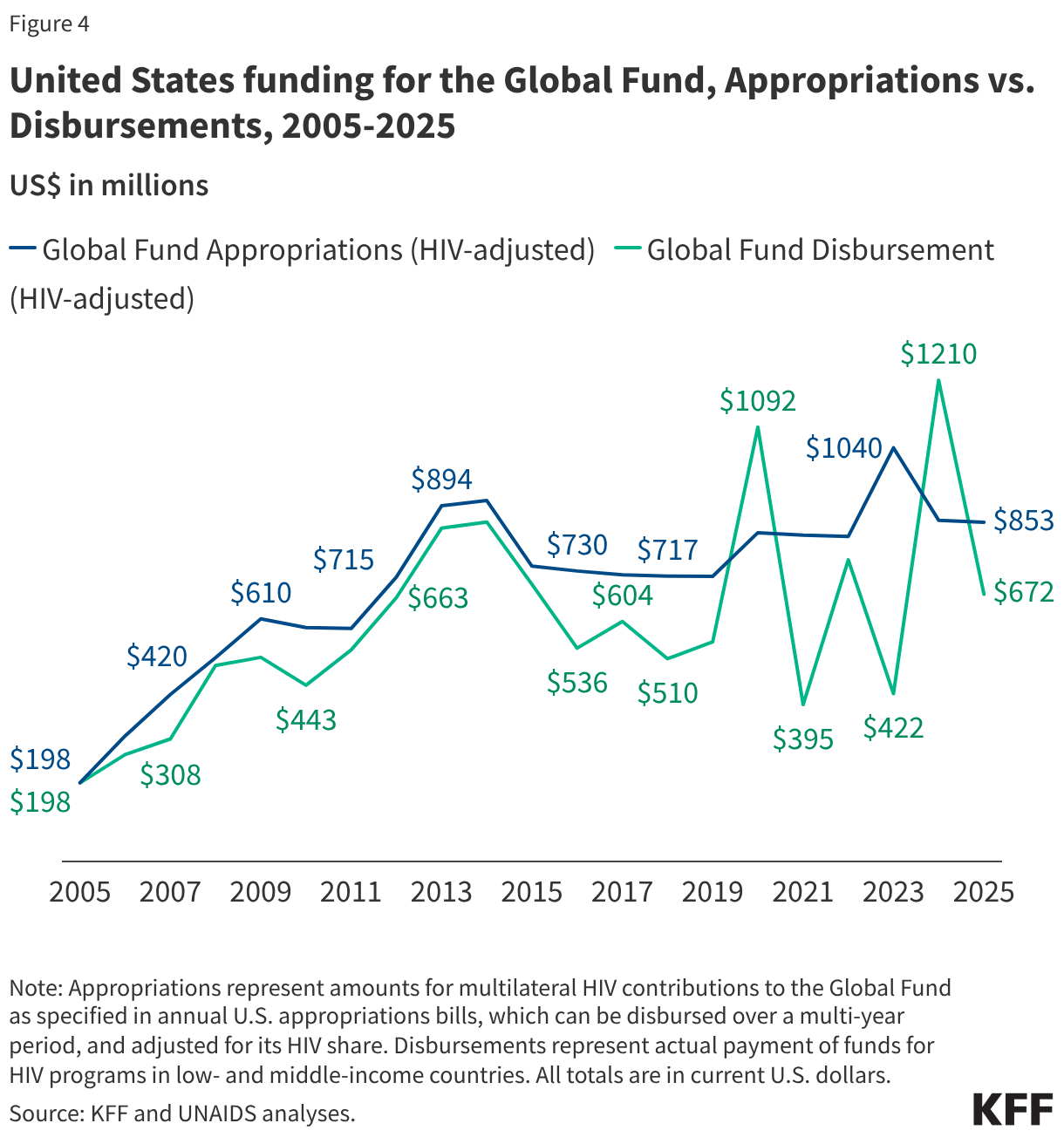
While there were fluctuations among some of the other donor governments, these changes were largely due to the timing of payments to the Global Fund that coincide with pledge periods and donor decisions about when to fulfill pledges. When the U.S. is removed, multilateral funding from all other donor governments totaled US$1.2 billion in 2025, matching the prior year level.
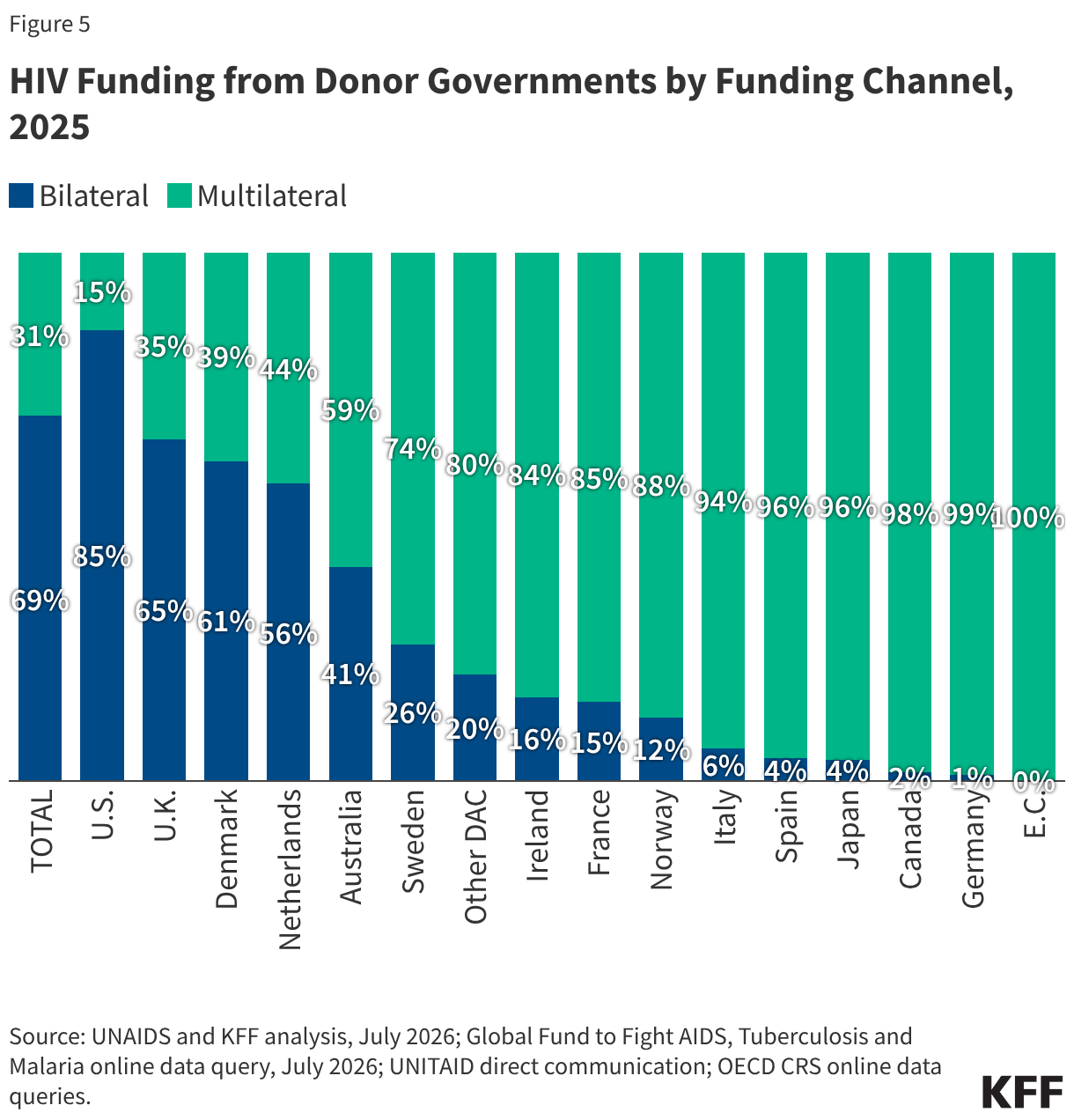
Most donor governments (eleven of the fifteen profiled in 2025) provide the majority of their HIV funding through multilateral organizations. Only Denmark, the Netherlands, the U.K., and the U.S. provide a larger share bilaterally (See Figure 5). While the U.K. provided most of its HIV funding bilaterally in 2025 (and 2024), this was entirely due to the timing of payments to the Global Fund. The U.K. fulfilled almost its entire pledge to the Global Fund for 2023-2025 in 2023 resulting in significantly lower levels of multilateral funding in both 2024 and 2025. In fact, between 2019-2023, most HIV funding from the U.K. was provided through multilateral channels.
Fair Share
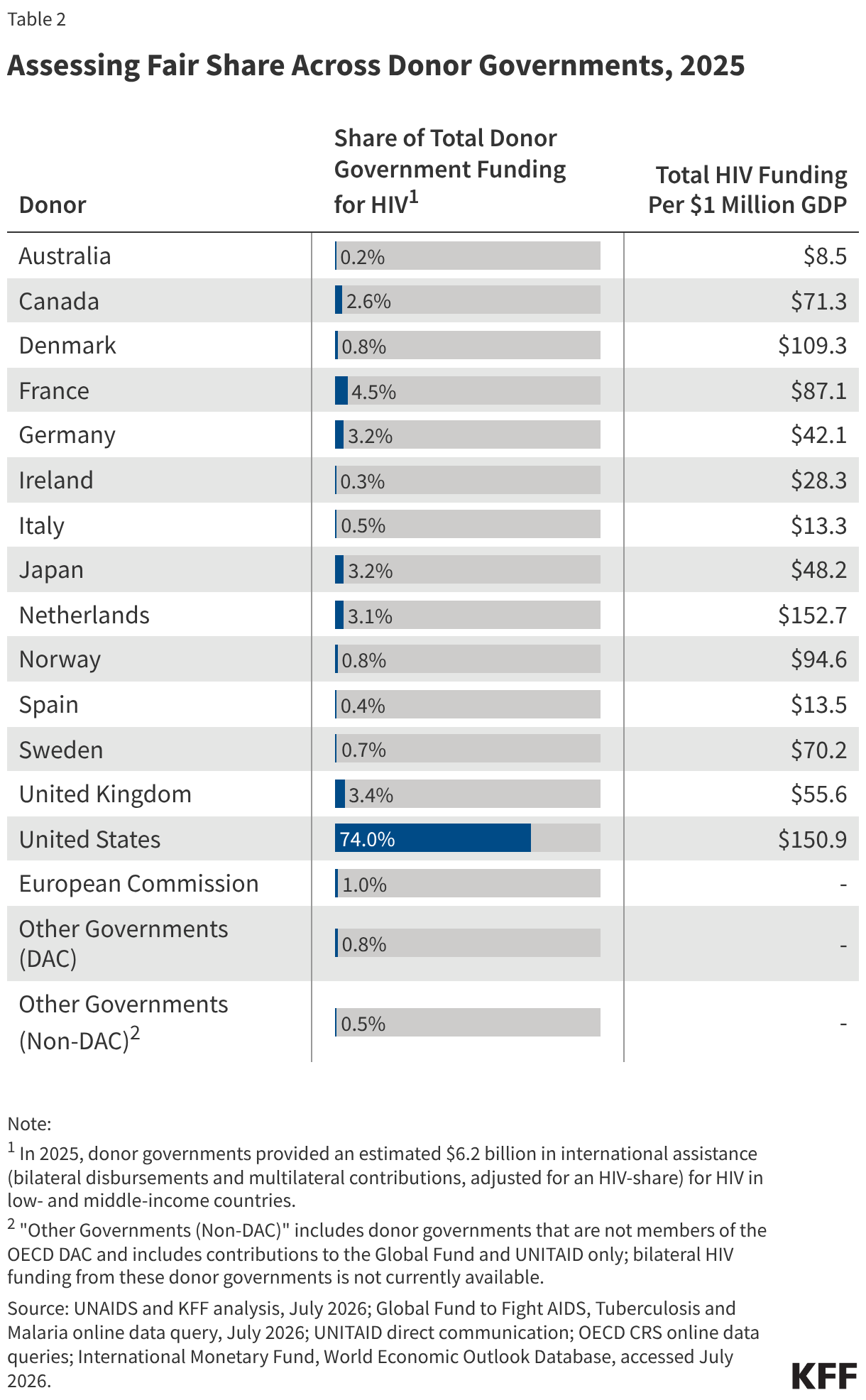
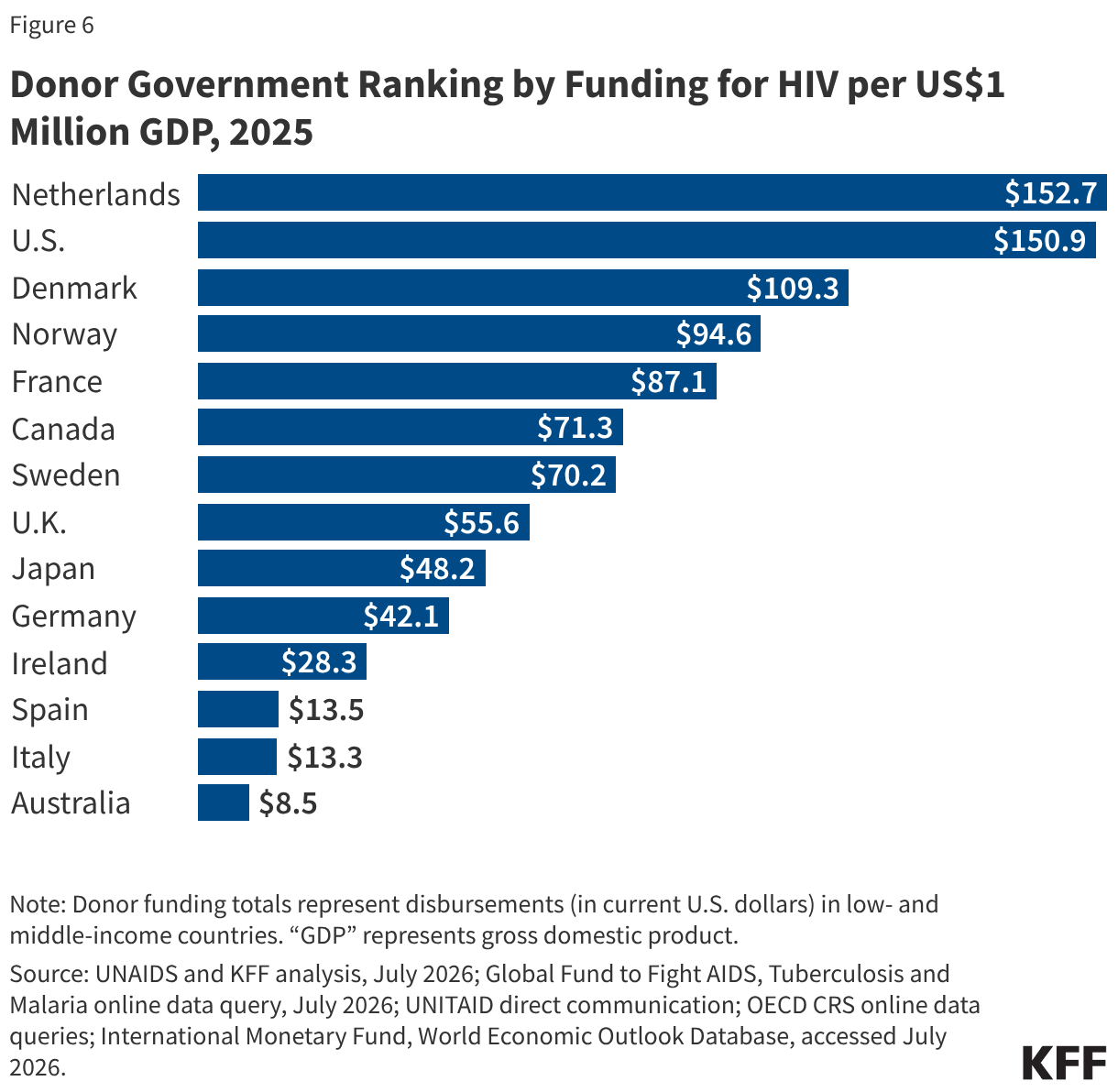
There are different ways to measure donor government contributions to HIV, relative to one another. While the U.S. government provides the largest amount of funding for HIV, for example, it also has the largest economy in the world. To assess relative contributions, or “fair share”, two measures were used: ranking by overall funding amount and ranking by funding for HIV per US$1 million GDP, to adjust for the size of donor economies (See Table 2):
- Rank by share of total donor government funding for HIV: By this measure, the U.S. ranked first in 2025, followed by France, the U.K., Japan, and Germany. The U.S. has ranked #1 in absolute funding amounts since tracking efforts began.
- Rank by funding for HIV per US$1 million GDP: By this measure, the Netherlands ranks first, followed by the U.S., Denmark, Norway, and France (See Figure 6).18
Looking Forward
Future funding prospects are uncertain. While the current administration could choose to disburse additional funds, the extent to which they will do so is unclear. Moreover, the stated strategy of the administration is to reduce, and in some cases eliminate, U.S. funding to countries as these countries take on an increasing level of financial and operational responsibility. More broadly, the OECD DAC reported a 23% decrease in official development assistance (ODA) in 2025 and is projecting further decreases in 2026; while largely driven by the U.S., other donor governments have also reduced their development assistance.
This work was supported in part by the Joint United Nations Programme on HIV and AIDS (UNAIDS) and the Bill & Melinda Gates Foundation. KFF maintains full editorial control over all of its policy analysis, polling, and journalism activities.
Adam Wexler, Jen Kates, and Stephanie Oum are with KFF. Joint United Nations Programme on HIV and AIDS (UNAIDS).
Global Health Policy,HIV/AIDS,Financing,Global Fund,Global Health Budget,Infectious Disease,PEPFAR,Sexually Transmitted Infections (STIs)Financing,Global Fund,Global Health Budget,Infectious Disease,PEPFAR,Sexually Transmitted Infections (STIs)#Donor #Government #Funding #HIV #MiddleIncome #Countries1785173960
