


RIO DE JANEIRO – The United States has conceded that the HIV epidemic cannot be stopped “unless we have services for all people at risk” at a major event on the eve of the International AIDS Conference.
Dr Rebecca Bunnell, deputy head of implementing the US President’s Emergency Plan for AIDS Relief (PEPFAR), made the remark at a US government event to explain the new “America First Global Health Strategy”.
“We can’t forget any group because if we do, we will fail,” added Deputy Assistant Secretary Bunnell, a deputy assistant secretary who is second in command to the US global AIDS coordinator.
She was responding to a question about how to include “key populations” – groups most at risk of HIV, including sex workers, men who have sex with men and people who inject drugs – who have been excluded from the new US approach to HIV, which prioritises preventing HIV in mothers and babies.
‘Key population’ exclusion
A new study released last week reported on huge disruptions to HIV treatment throughout the world following the Trump administration’s changes to PEPFAR.
Some 1,714 HIV service sites had closed, including over 1,000 public health facilities, according to the PEPFAR Pulse Study conducted by the Foundation for AIDS Research (amfAR).
“Partners were most likely to have permanently stopped providing services for key populations, the groups most vulnerable to HIV. Among partners providing HIV treatment, more than one in five (21%) had permanently stopped at least one HIV clinical care activity,” according to the International AIDS Society, which released the research.
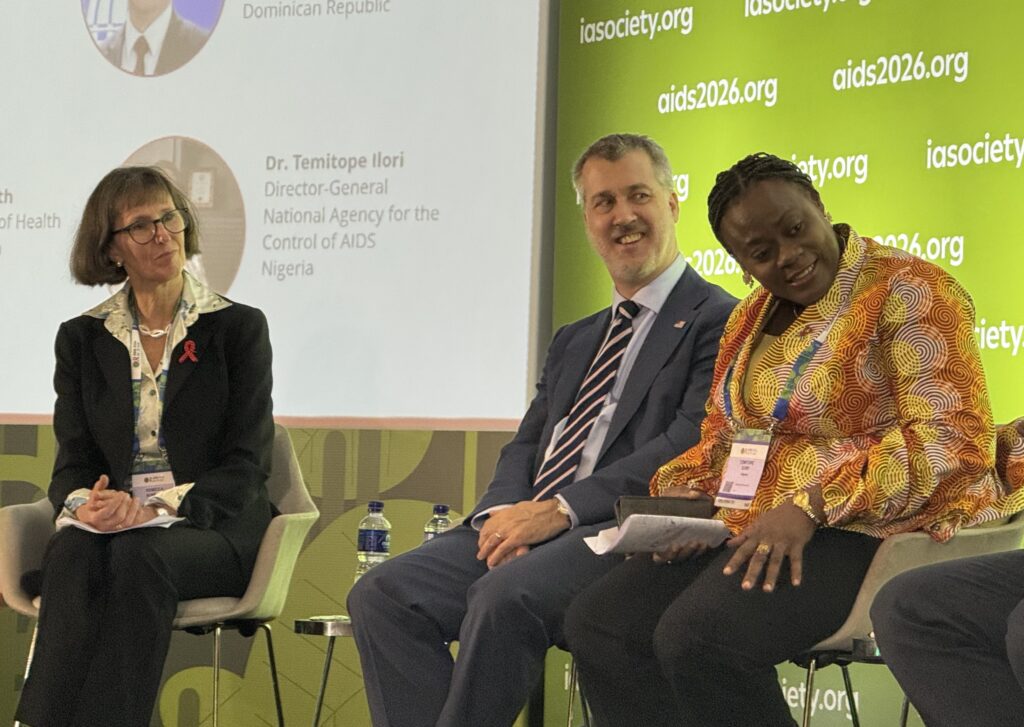
Dr Temitope Ilori, Director General of Nigeria’s National Agency for the Control of AIDS, told the session that “the new policy” had disrupted some programmes aimed at key populations but several of these had been integrated into government programmes.
‘You lie, people die’
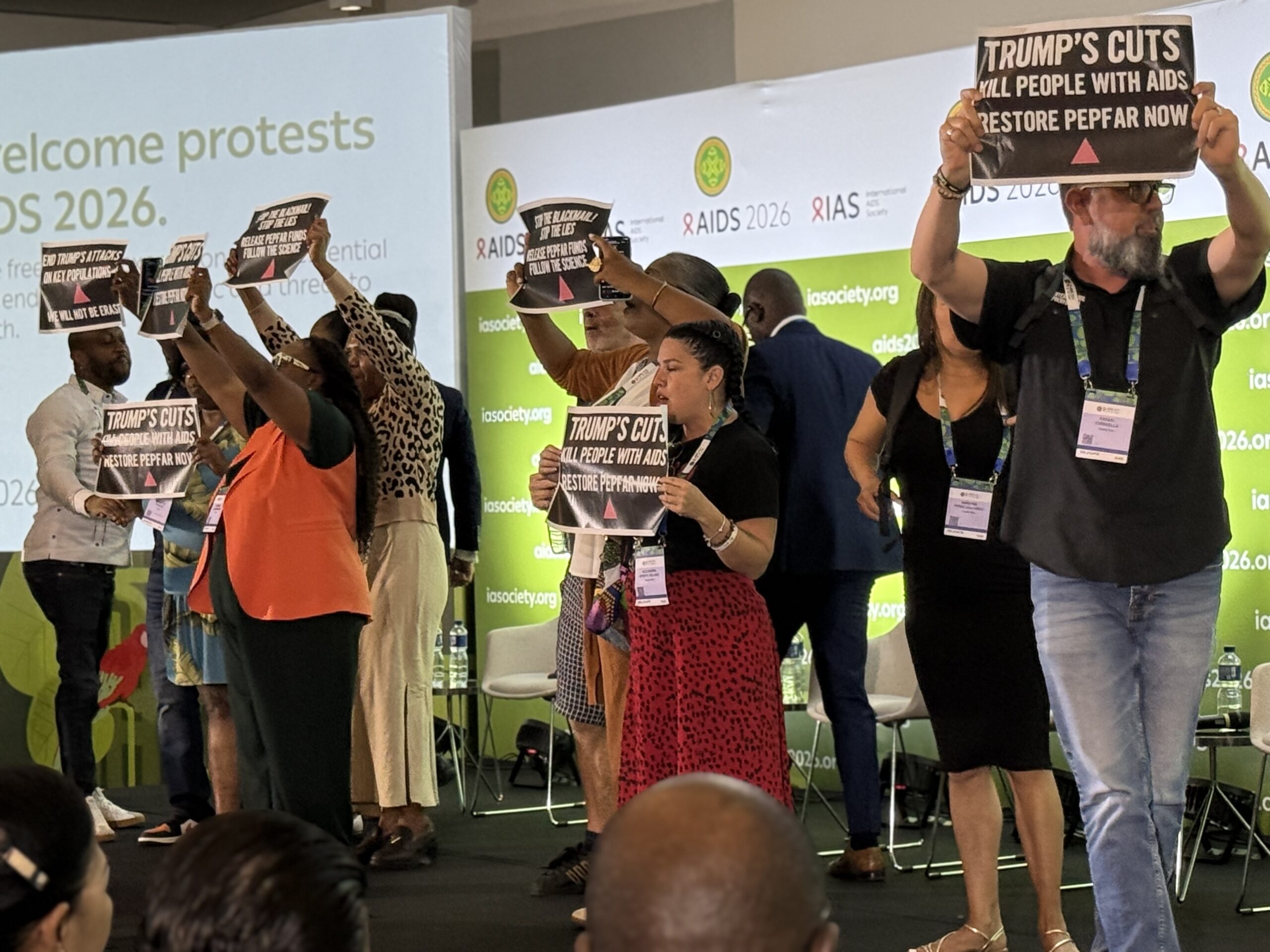
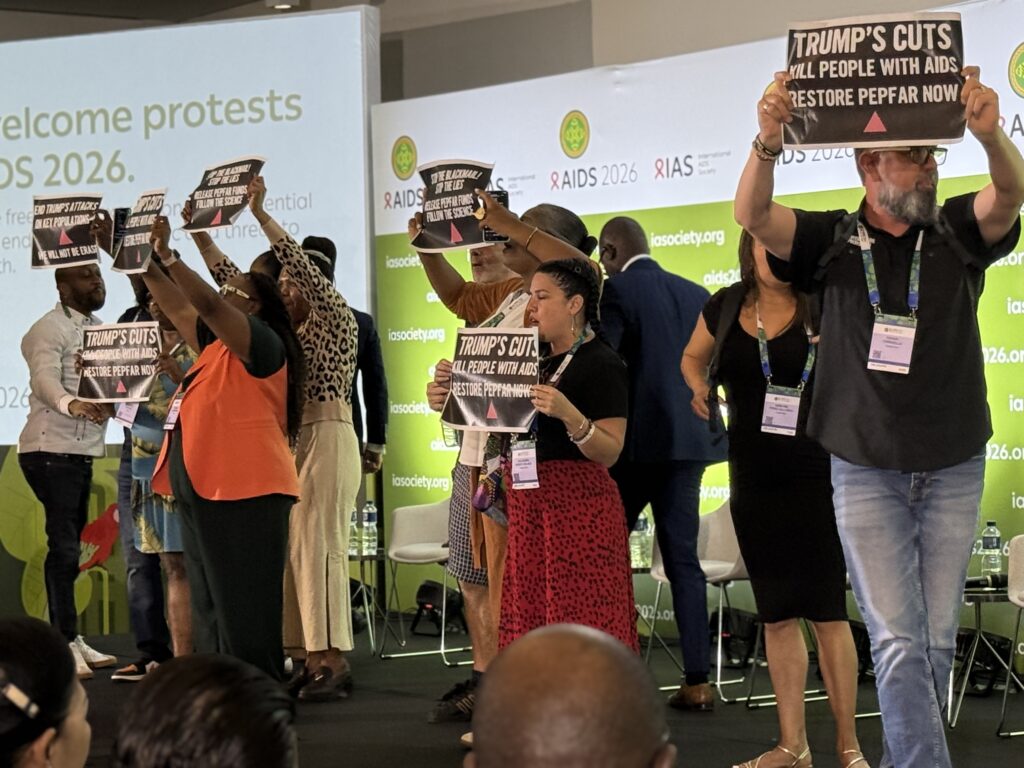
Earlier, the US government session had been interrupted by HIV activists blowing whistles and chanting: “You lie, people die. Restore PEPFAR now.”
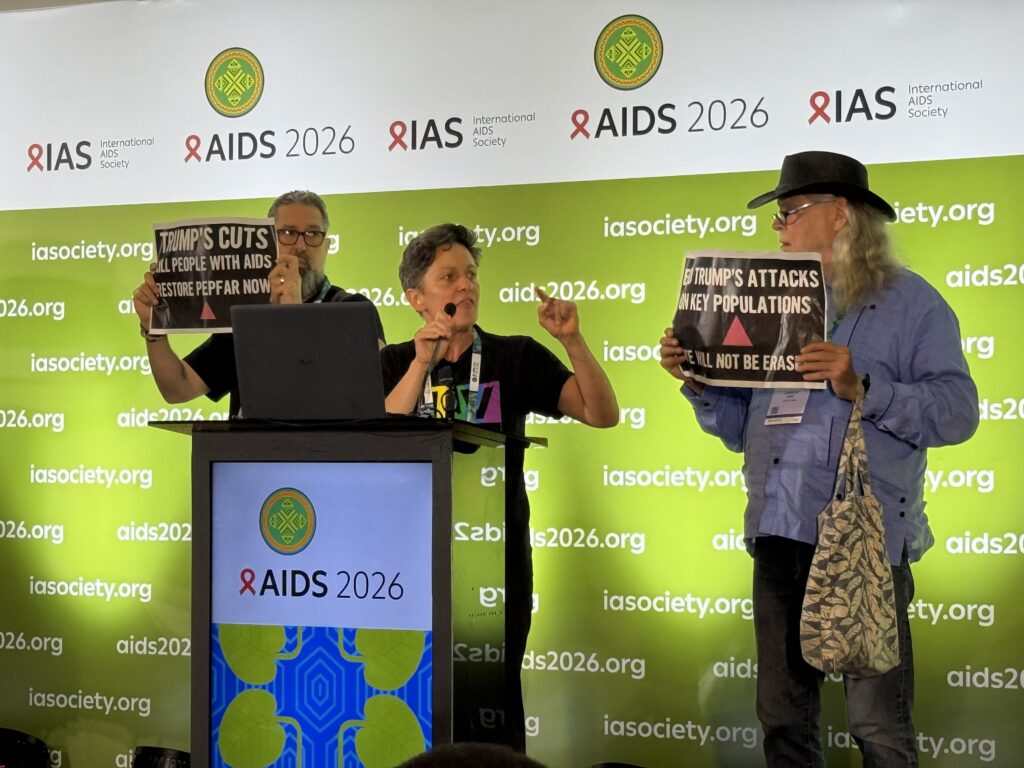
“For months, there has been a public health emergency caused by your government’s deadly disruptions in PEPFAR programming and global health aid, and we will not allow this fact to be erased. We will not allow our communities to be erased by your anti-science, anti-LGBTQ, anti-participation agenda,” said HealthGAP’s Asia Russell, who had taken the microphone from Jeff Graham, the acting US global AIDS co-ordinator.
“Today, you’re talking about memoranda of understanding with nice words like country ownership and self-reliance. But let’s be honest. These are coercive bilateral deals that expel people with HIV from the negotiating table on purpose in order to try to extract mineral wealth, to try to extract data, to extract whatever the Trump administration wants,” added Russell.
Graham later told the meeting that, while the MOUs had been linked to access to countries’ assets including critical minerals, “there are no critical minerals mentioned in any MOU”.
However, some of the health MOUs – notably with the Democratic Republic of Congo (DRC) and Guinea – were signed alongside mineral deals. Meanwhile, the US MOU with Zambia reportedly fell apart as the two countries could not agree on US terms for mineral access.
All MOUs involve co-financing from partners. In Nigeria’s case, it is investing $3 billion to the US investment of $2 billion.
Graham said that while the MOUs were “non-binding”, if a country did not live up to its co-financing promises, “we will have to assess that because we’re trying to make progress together”.
He described co-investment as a positive because if countries were able to finance their own health response, that “ultimately is a good thing”.
Several of the MOUs envisage a rapid path to government self-reliance, but Graham said that a transition resilience fund would assist if countries ran into trouble.
Combat the infodemic in health information and support health policy reporting from the global South. Our growing network of journalists in Africa, Asia, Geneva and New York connect the dots between regional realities and the big global debates, with evidence-based, open access news and analysis. To make a personal or organisational contribution click here.
Africa,Content type,HIV and AIDS,Infectious Diseases,News,Regional Policy,America First Global Health Strategy,HIV,Jeff Graham,key populations,MOUs,Rebecca Bunnell,Trump#Row #Exclusion #Concedes #HIV #Approach #Include #People #Risk1785090497
