




The Global Diabetes Compact aims to improve diagnosis, care, and access to life-saving medications for those with diabetes. Already, countries in high-burden regions have improved along these key metrics. But as the number of people living with diabetes is projected to increase nearly 50% globally by 2050, much more needs to be accomplished.
In a Toronto hospital 105 years ago, scientists racing against the clock injected a 14-year-old boy dying from diabetes with insulin. Leonard Thompson’s dangerously high blood glucose levels dropped to within normal levels–becoming the first person to receive a dose of the hormone–the result of medical innovations and decades of research.
Despite this breakthrough over a century ago, some 40 million people still lack access to the life-saving medication, mostly in lower-and-middle income countries. The South-East Asian region alone requires 170 million vials of insulin each year, yet with the least costly human insulin options ranging from $6 to $20 per vial, the medicine still remains unaffordable for the most vulnerable.
“Science gave us insulin, and more than a century later, we still owe its promise to millions of people,” said Dr Catharina Boehme, officer-in-charge of the South-East Asian region with the World Health Organization (WHO). “And five years ago, the Global Diabetes Compact (GDC) was created to fulfill this promise and give what we owe people with diabetes.”
She was speaking at an event Monday on the margins of the World Health Assembly, marking five years since the Member State body endorsed the Global Diabetes Compact.
The landmark WHO initiative aims to ensure several key diabetes targets by 2030. These include 80% coverage of diagnosis for people with diabetes and 80% of those diagnosed have good control of glycaemia and blood pressure. The Compact also aims for 60% of people with diabetes 40 years or older to receive statins, and that 100% of people with type 1 diabetes have access to affordable insulin and blood glucose monitoring.
‘Brilliant’ goals

“Even if they sparked debate, they are brilliant goals,” said Professor Peter Schwarz, president of the International Diabetes Federation.
He and other leaders in the global diabetes community gathered in Geneva to mark the fifth anniversary of the Global Diabetes Compact.
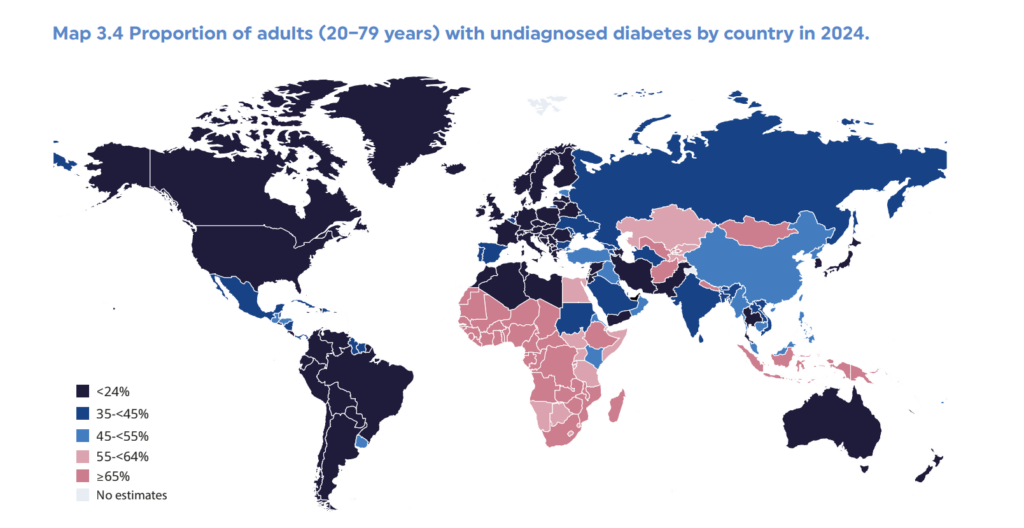
In particular, he is pleased that the Compact includes a target that 100% of people worldwide with type I diabetes have access to affordable insulin and blood glucose self-monitoring by 2030. The present state of play, in which an estimated 43% of people with diabetes remain undiagnosed and without insulin, is a “severe ethical issue,” he observed.
In the five years since the Compact was launched, awareness of the needs and access gaps is ”improving worldwide,” declared Schwarz, whose organisation, along with other civil society actors and WHO, acts as a voice for the global diabetes community. By 2030, he hopes to see big leaps forward in the implementation of the access goals.
“We’ve succeeded in gathering stakeholders around a common agenda,” said Dr Bianca Hemmingsen, the WHO’s technical lead on the project. This means convening a diverse group of people in civil society groups, people living with diabetes, and governments.
Hemmingmen was speaking at this week’s anniversary event staged in a modest garden cafe along a well-trod path between WHO and the Palais des Nations, where formal WHA debates are taking place.
‘First’ for global diabetes coverage targets
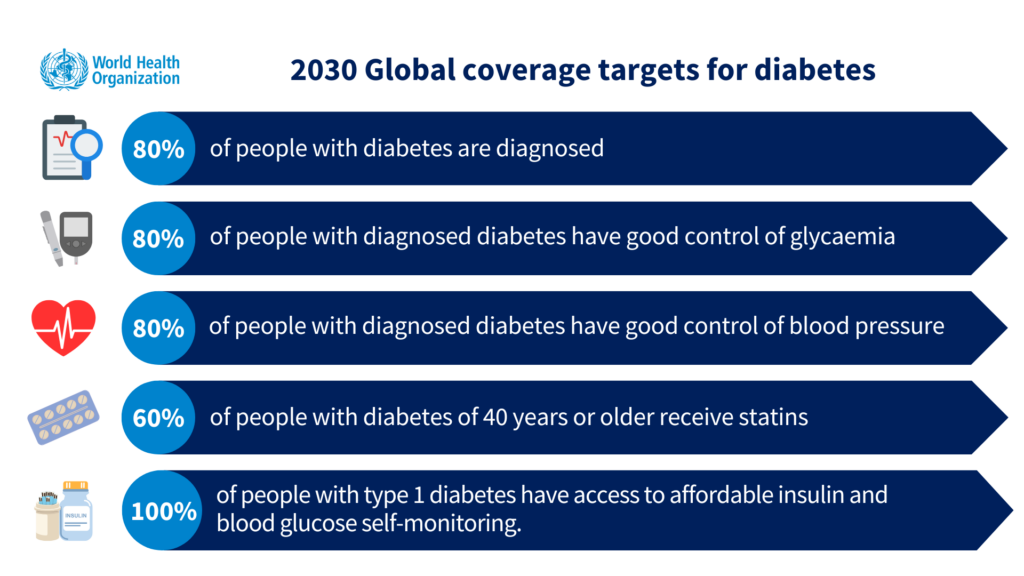
The Compact marks the first time there has ever been global diabetes coverage targets and a clear operational agenda for access to essential diabetes medicines and technologies.
That has included the progressive inclusion of insulin analogues into the WHO Essential Medicines List (EML), a compilation of drugs which guides countries on treatments to include in national health services. Last year, the popular drug class GLP-1, which supports type 2 diabetes management, was also added to the EML.
And in May, WHO invited manufacturers to submit generic versions of semaglutide and rapid-acting insulin products for review and approval in its prequalification process. The calls, following on from the inclusion of other insulin products over the past seven years, is part of a broader initiative to increase access to diabetes care in lower-and-middle income countries.
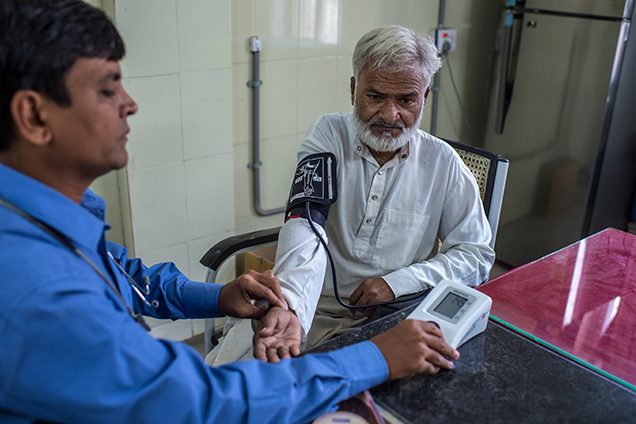
Since the GDC, there has also been stronger integration of diabetes services in primary health care in places like India. But even as the diabetes burden grows, most low- and middle-income countries have yet to integrate diagnosis and care into primary health care systems, and ensure access to treatment for the hundreds of millions of people who are living with diabetes without knowing it.
A century after insulin discovery
The genesis of the Compact began during the COVID-19 pandemic in the lead-up to the 100th anniversary of the discovery of insulin – truly a “gift from science,” as Dr Bente Mikkleson, board member of the World Diabetes Foundation and former WHO director for noncommunicable diseases (NCD) department, described it.
But it took months of concerted effort by WHO and IDF, the World Diabetes Foundation, and other civil society groups to generate sufficient political momentum towards member state commitment of the Global Diabetes Compact.
Until very recently, the overwhelming focus in low- and middle-income countries has been infectious disease killers like malaria, HIV/AIDS and TB, as well as neglected tropical diseases – although noncommunicable diseases increasingly represent a ‘double burden.’
The fact that diabetes is a complicated NCD to diagnose and treat made it an even bigger challenge, Schwarz said. “It’s not like with many infectious diseases, where you can provide a singular vaccine.”
Critical moment for moving ahead
Mikkelson, who was head of the WHO’s NCD Department when the GDC was first approved, said she is “incredibly excited” to see the initiative live beyond the initial stage of the resolution’s approval and further into the implementation phase.

The anniversary comes at a crucial moment. The most recent WHO estimates hold that more than 830 million adults were living with diabetes in 2022. Although IDF has a more conservative estimate of 589 million, Schwartz attributes the differences to discrepancies between researchers in their definition of diabetes. Moreover, he believes that both are, in fact, underestimates of the true proportion of cases.
Either way, the burden is particularly worrisome in lower-and-middle income countries, where 90% of the people with undiagnosed cases live.
And in terms of insulin production, while the number of generic producers has increased over the past few years, the world’s leading manufacturers have also begun to discontinue key products. Sanofi discontinued a line of its human insulin Insuman® in 2023, and more recently, Novo Nordisk will be withdrawing its Levemir® insulin.
This worries WHO. As cases accelerate, the actual proportion of people able to access insulin products worldwide appears to be lagging. The Institute for Health Metrics and Evaluation (IHME), the authoritative body for global disease burden estimates, found only a single-digit percentage point increase in the number of people receiving diabetes care globally.
Misdiagnoses, data gaps, and social stigma

Fundamental barriers to diabetes care and diagnosis continue to distort the true picture of the condition. For instance, data on the prevalence of type I diabetes, which is effectively an autoimmune disorder inhibiting the body from producing insulin, may appear much lower in the Global South due to data gaps. But this is misleading, argues Schwarz.
“The prevalence appears much lower compared to the Global North. But when the health system improves, the prevalence increases to about the same levels as in Europe, the US and Middle America,” he explained.
“The assumption is that children are dying young–they are not being diagnosed and not surviving to adulthood. We don’t have numbers or statistics to address this tragedy. This, again, is an ethical failure,” he said, expressing hope that in the coming years, more harmonized diabetes definitions, better access to diagnostics and health worker training can help change these hard realities.
The stigma of diabetes and its risk factors – and sometimes lack thereof – also presents a challenge for quality patient care. In parts of Africa, for example, an obese person may often be perceived as someone without HIV (which untreated is associated with weight loss) , which carries a larger stigma than obesity. “This is why education is such a key issue here,” said Schwarz.
The lack of structured education is compounded by a lack of access to basic medicines like insulin, diagnostic tools, and logistical challenges like insulin storage.
Caring for the entire patient
“It’s not just about high blood pressure or diabetes, it’s about the people living with these conditions,” said Dr Tom Frieden, president and CEO of Resolve to Save Lives and a former CDC director. With an increasing number of innovations in chronic disease care–including SGLT-2 inhibitors and the hugely popular GLP-1 drugs–Frieden argued for collaboration to “get the basics right.”
Yet the popularity of these innovations–especially for weight-loss in high-income countries–is in stark contrast with the lack of access to medicines in the rest of the world.
A mere 1% of diabetes care investment is directed to the African region, IDF data reveals. The group predicts a more than 140% increase in the number of people living with diabetes by 2050, reaching 60 million people. Of all regions, the proportion of undiagnosed diabetes is also highest in Africa at an estimated 72.6%.
“Political ambition and commitment and targets are hugely important to drive the agenda forward,” said Sanne Frost Helt, a senior director at the World Diabetes Foundation. “But they become meaningless if we don’t have action on the ground.”
South East Asia- on a ‘shocking trajectory’
South East Asia is a particular area of concern with diabetes. Boehme, of the WHO, described the increasing number of those living with diabetes in the region as on a “shocking trajectory.” Already, one in five adults in the region lives with diabetes, or roughly one-third of the global total.
The number of people with diabetes in the region – which includes India, Bangladesh, Nepal, Bhutan, among others – is expected to reach 320 million by 2030, according to WHO projections. Even now, only one in three adults with diabetes in the region receive treatment – and less than 15% have their blood glucose levels adequately controlled.
“Health systems are just not geared to tackling such a surge in diabetes,” warned Helt of the World Diabetes Foundation. “Not from a prevention point of view, not from an early detection point of view, and not from a care perspective.”
‘Tremendous innovation’
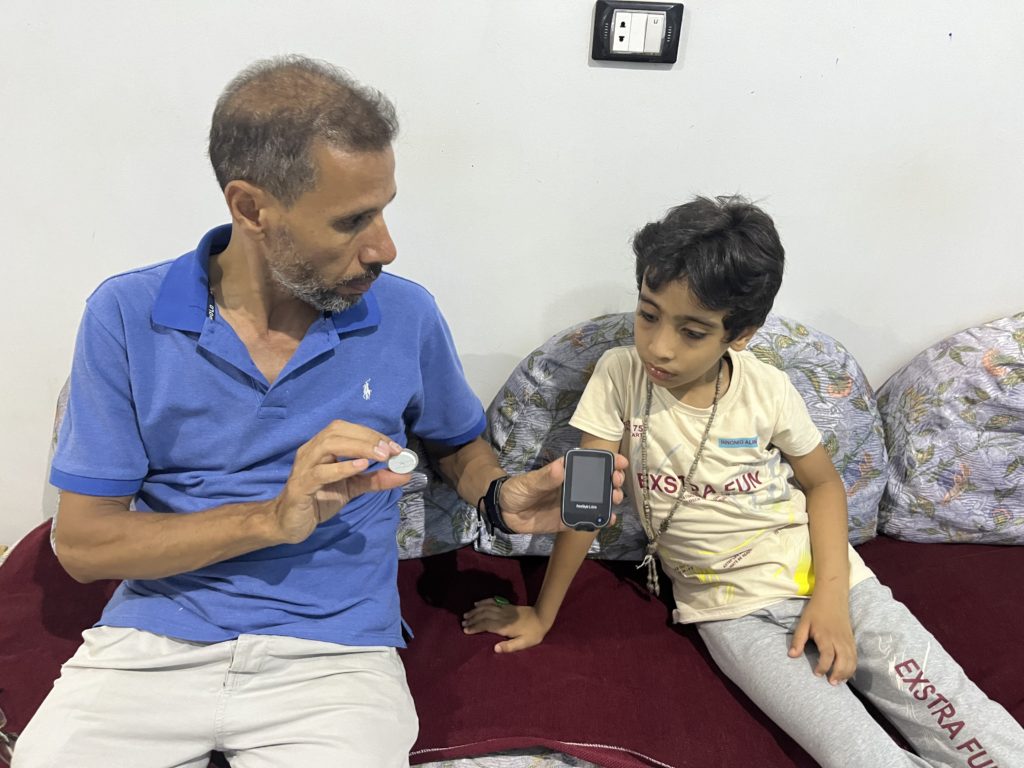
Yet despite this spiking trend, Boehme is hopeful about the future.
She describes the “tremendous ambition and innovation” in the region, such as
The SEAHEARTS initiative, which integrates cardiovascular disease and diabetes care into primary health care systems, has already enrolled 43.5 million patients across 180,000 health care facilities.
The goal of the initiative is to place 100 million on protocol-based diabetes management by 2030, with 50 million achieving glycemic control.
The endorsement by WHO member states of a 2024 roadmap for strengthening diabetes prevention and control, the Colombo Call for Action, is another bright spot. It provides guidance for the region’s member states to reduce type 2 diabetes risks from factors such as unhealthy diet and physical inactivity, as well as expanding access to diagnosis and care.
And at the country level, diabetes care and education are improving due both to top-down initiatives and grassroots advocates. For example, the World Diabetes Foundation is working with Bangladesh to recruit religious leaders in the predominantly Muslim country to raise awareness of diabetes and provide community support.
“People seek advice from Imams about all sorts of matters and trust them with personal and family issues. There is a great opportunity to seek the influence of Imams in creating community awareness about the prevention of diabetes and other NCDs,” said Dr Bishwajit Bhowmik from a World Diabetes Foundation partner organization.
Boehme credits partnerships like these with creating a space for change for those living with diabetes: “[This] is an opportunity not only to celebrate five years of partnership, but to renew our shared commitment to delivering diabetes care at scale, for everyone who still lacks access today.”
Image Credits: UC Davis health, G Lontro/ NCD Alliance, WHO, International Diabetes Federation , E. Fletcher/ HPW, E. Fletcher/HPW, S. Samantaroy/HPW, WHO/A. Loke.
Combat the infodemic in health information and support health policy reporting from the global South. Our growing network of journalists in Africa, Asia, Geneva and New York connect the dots between regional realities and the big global debates, with evidence-based, open access news and analysis. To make a personal or organisational contribution click here.
Cardiovascular Diseases,Content type,Drug & Diagnostics Development,Health Systems,Medicines & Vaccines,News,Non-Communicable Diseases,Nutrition & Physical Activity,Regional Policy,South-East Asia,access to medicines,Diabetes,essential medicines list,Global Diabetes Compact,glucose monitoring,insulin,South East Asia,WHO#Years #Landmark #Diabetes #Initiative #Celebrate #Accomplish1780939556
