


The 79th World Health Assembly adopted the first-ever resolution on steatotic liver disease (SLD) last week. For those people working outside hepatology, the moment may have seemed unremarkable. In reality, it marks an important shift in how the global health community understands chronic disease, metabolic health and prevention.
SLD affects an estimated 1.7 billion people globally and is closely linked to obesity, type 2 diabetes, cardiovascular disease and alcohol-related harm.
But liver disease matters not only because of its scale. Fat accumulation in the liver is one of the earliest measurable signs of metabolic dysfunction. Long before many people develop cirrhosis, cardiovascular complications or advanced diabetes, the liver is often already signalling that something is wrong.
Importantly, these warning signs can be detected through tools available in routine care: standard blood tests, non-invasive fibrosis scores such as FIB-4, and imaging technologies that can identify fibrosis before symptoms emerge.
In that sense, SLD functions as an early-warning system for the metabolic crisis reshaping societies worldwide – and provides health systems with a critical opportunity to intervene earlier, while disease trajectories can still be changed.
From siloed specialties to integrated care
Yet despite this opportunity, liver health has remained largely absent from noncommunicable disease (NCD) strategies, primary care systems and prevention frameworks.
That omission has consequences. Across countries, liver disease is often identified only after advanced fibrosis, cirrhosis or liver cancer develops. Opportunities for prevention and timely action are frequently missed.
A person attending routine diabetes care may already show elevated fibrosis risk or mildly abnormal liver tests years before serious liver disease develops. Yet these findings often remain disconnected across primary care, endocrinology, cardiology and hepatology.
The problem is not that we lack the tools; what we lack is integration. Much of this earlier risk assessment and intervention could occur in primary care, where obesity, diabetes and cardiovascular risk are already being managed, instead of waiting until people present to specialist clinics with advanced disease.
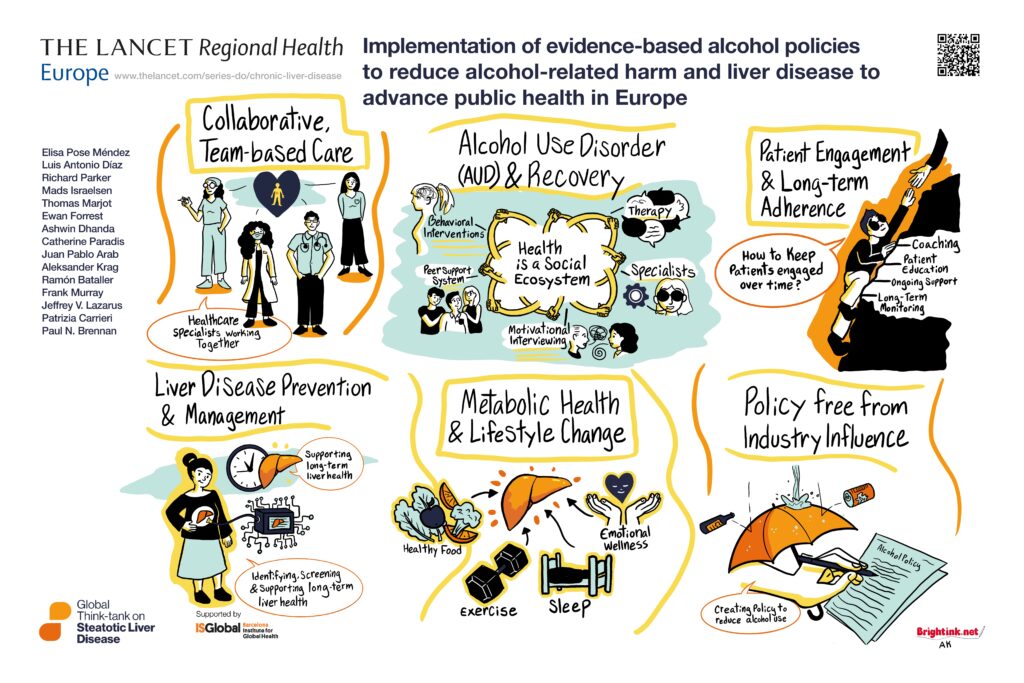
Recent work from the Global Think-tank on Steatotic Liver Disease and collaborators across Europe has highlighted both the scale of the challenge and the opportunities for action.
A new Lancet Regional Health – Europe Series shows that Europe’s policy readiness to address metabolic dysfunction-associated steatotic liver disease (MASLD) remains low, even though the condition affects roughly one in three adults and is deeply intertwined with obesity and diabetes.
At the same time, the series demonstrates that many of the tools needed for earlier identification already exist: non-invasive fibrosis testing, automated diagnostic pathways, integrated models of care and digital health systems that make risk stratification increasingly feasible outside hepatology clinics.
Challenge of implementation
The policy challenge now is implementation. That means integrating liver health into national NCD plans, embedding fibrosis risk assessment into obesity and diabetes care, strengthening multidisciplinary care pathways, and measuring late diagnosis so health systems can identify missed opportunities for timely care.
Done effectively, this could reduce avoidable hospitalisations, liver cancer and downstream cardiovascular complications while improving long-term population health.
These themes were central to discussions held this week in Barcelona at the flagship annual meeting of the Global Think-tank on Steatotic Liver Disease, where clinicians, researchers, policymakers, civil society representatives and people with lived experience met to discuss the future of integrated metabolic health policy.
What emerged clearly was that liver disease is not a niche hepatology issue. It is a visible manifestation of a much wider failure to address metabolic risk early and coherently across health systems.
Prevention, preparedness and political choices
This broader perspective matters especially at a moment when global attention is once again focused on epidemic preparedness following the WHO declaration last week of a public health emergency of international concern (PHEIC) related to Ebola.
The nature of preparedness differs, of course, for acute infectious disease outbreaks and slower-moving chronic diseases. But they often share an uncomfortable reality: societies frequently fail to align policy and resource allocation with the evidence available to them.
That is particularly true for steatotic liver disease.
Too often, global health debates are framed as a choice between responding to acute infectious threats or investing in chronic disease prevention. That is a false dichotomy.
Healthy populations create wealth. Prevention reduces long-term healthcare costs, strengthens productivity and supports more resilient societies. Health economics models repeatedly demonstrate the significant returns associated with timely intervention, innovation and reduced disease burden.
The WHA resolution matters not simply because it acknowledges the gravity of SLD, but because it creates a foundation for integrating liver health into the global NCD response alongside obesity, diabetes and cardiovascular disease.
The liver is already sending early biological signals about the global metabolic health crisis. The question for us now is whether governments and health systems are willing to act while those signals still point to diseases that can be reversed, delayed, or prevented entirely.
Jeffrey Lazarus is Professor of Global Health at CUNY SPH, head of the ISGlobal Public Health Liver Group and Director of the Steatotic Liver Think Tank
Image Credits: Liv Hospital, The Lancet Europe.
Combat the infodemic in health information and support health policy reporting from the global South. Our growing network of journalists in Africa, Asia, Geneva and New York connect the dots between regional realities and the big global debates, with evidence-based, open access news and analysis. To make a personal or organisational contribution click here.
Content type,Inside View,Uncategorized,fatty liver,liver,Liver disease,steatotic liver disease,World Health Assembly#Margin #Mainstream #Liver #Health #Sit #Centre #Global #NCD #Response1779774885
