


For decades, malaria has been one of Africa’s most persistent health challenges. In Ghana, it was once the leading cause of death for children under five. Bed nets and antimalarial drugs reduced deaths substantially, but by the mid-2010s, the pace of improvement had declined.
Climate change was altering the length and intensity of transmission seasons. Resistance to the insecticides used on bed nets and to the drugs used to treat infection was spreading. The tools that had driven earlier progress were becoming less reliable.
Then, between 2019 and 2024, under‑five malaria deaths fell by 86%. This did not happen by chance.
With strong support from government, local leaders and technical partners, and a willingness to learn and adapt to changing needs, Ghana is showing that sustaining impact is possible.
Three things drove the decline in Ghana’s under-five malaria deaths: redesigning vaccine delivery around the needs of families in high-burden areas, activating trusted voices to counter misinformation at every level, and layering the vaccine with other proven tools rather than treating it as a standalone solution.
Together, these approaches offer a practical model for how African countries can protect millions of children from malaria. However, across sub-Saharan Africa, progress against malaria is under threat as shrinking development budgets put life-saving programmes at risk.
Comprehensive prevention strategies
Facing a high burden of malaria and backed by a strong pharmaco-vigilance system and robust immunisation systems, Ghana is showing what can be achieved.
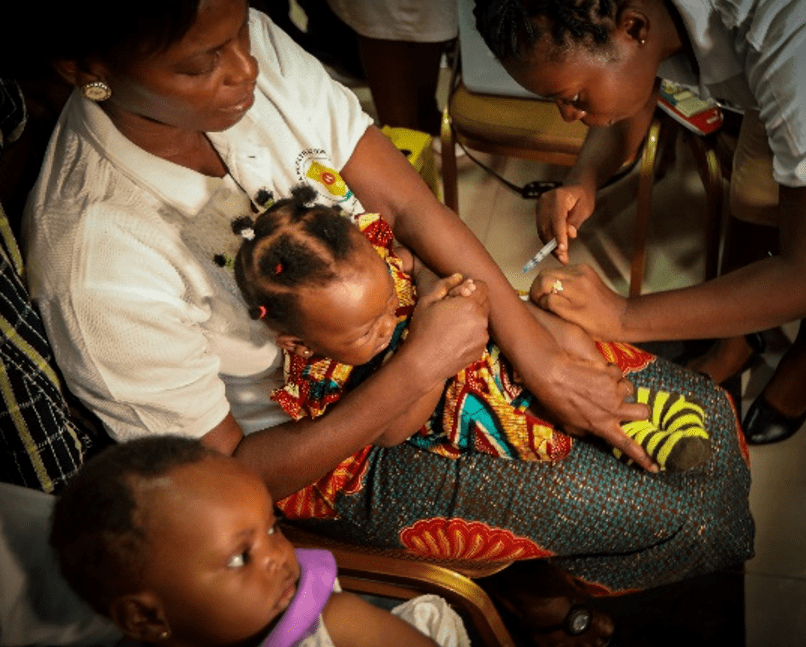
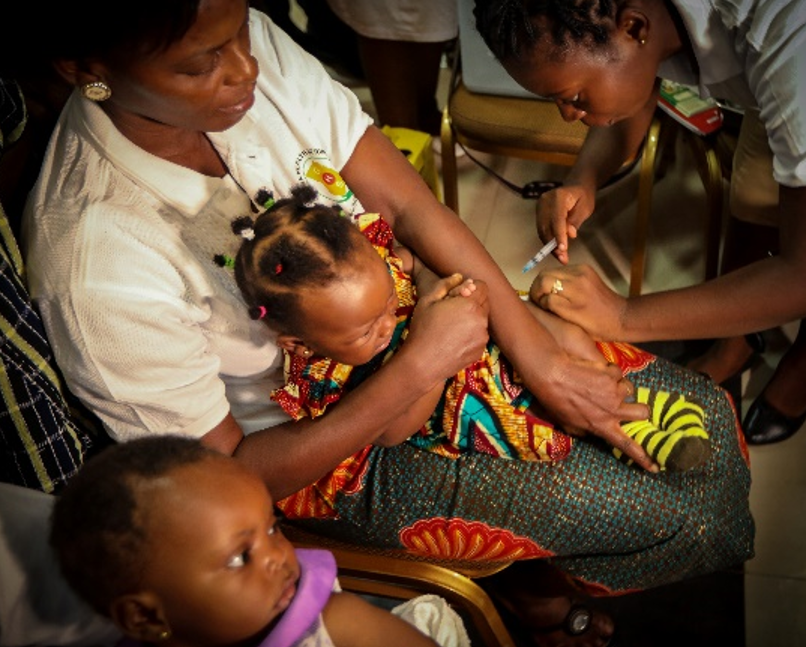
We joined the Malaria Vaccine Implementation Programme in April 2019, becoming one of the first three countries to pilot the vaccine together with Kenya and Malawi. The programme has since expanded across 11 regions in Ghana, protecting an estimated 4.8 million children.
Ghana’s results reflect the impact of combining vaccination with other proven tools, such as insecticide-treated bed nets, indoor residual spraying, and prompt diagnosis and treatment to reduce transmission and prevent deaths.
Layering interventions protects children at multiple points – from preventing infection to reducing the severity of the disease and lowering the risk of death, especially in high-transmission settings where no single tool is enough.
The original dosing schedule consisted of a three-dose primary series, followed by a fourth dose 18 months after the first dose, requiring additional facility visits beyond routine immunisation and wellness touchpoints.
Many families in high-burden settings live far from primary health care centres, and many children missed the fourth dose because the system was not designed around the families it serves.
We addressed this by adjusting the malaria vaccination schedule to 6, 7, 9 and 18 months, aligning the fourth dose at 18 months alongside other Year 2 vaccines, including meningitis A and the second measles dose.
In high-transmission districts, bed nets and vaccine boosters are also delivered at that same visit, maximising protection through a single point of contact. Co-delivery of interventions reduces the burden on families by limiting trips to health facilities, often located far away.
It also helps health workers deliver more per contact, improving efficiency and reach. By designing primary healthcare services around families’ realities, Ghana is improving coverage and completion, especially for later doses, so more children receive maximum protection.
Trusted voices counter misinformation
Communities initially met the vaccine with curiosity and cautious optimism, alongside some hesitancy. We quickly learned that misinformation was a major challenge, and our early communications underestimated how fast rumours could spread on social media.
Ghana Health Service (GHS) deployed teams to track and counter false and misleading narratives circulating across social and traditional media.
At the same time, in-person feedback gathered in areas where the malaria vaccine is used provided valuable insights into community perceptions of the vaccine. Based on that information, the GHS then activated trusted voices to share clear and consistent information and address concerns directly.
First, we trained frontline health workers to answer questions clearly and confidently during household visits and outreach sessions.
Second, the GHS broadcast discussions on TV and radio in local languages, with live phone-in sessions that allowed community members to raise concerns and get immediate clarification from experts. In parallel, we trained radio talk show hosts and journalists to provide consistent, fact-based coverage and to invite health experts to debunk rumours live on air.
Finally, we developed evidence-based infographics and other visual materials to counter misinformation and shared them widely across social media platforms. All this would not have been possible with a strong network that included community health workers, chiefs, religious leaders and civil society organisations.
As families began to notice fewer malaria hospitalisations and deaths, trust and demand steadily grew. This is when we expanded the anti-misinformation campaign nationwide, including in areas where rollout was phased, and reinforced confidence through robust safety monitoring with Ghana’s Food and Drugs Authority.
The voices, channels and assets cultivated throughout the campaign played a crucial role in educating caregivers about the safety of the vaccine and countering rumours and misinformation. This effort has now been integrated into broader EPI communications activities.
Political will and peer learning
Sustaining progress will take political commitment and predictable financing. This is the core of the Accra Reset: African governments setting the agenda, prioritising proven tools and investing in the community workers who deliver them, with Gavi, the Global Fund and other donor mechanisms reinforcing country-led plans.
This is no small undertaking, considering the competing priorities in health financing. Similarly, efforts such as the adoption of the Economic Community of West African States (ECOWAS) Regional Malaria Elimination Framework, which places malaria elimination at the top of regional health priorities, reflect that our leaders are committed to increasing domestic financing, strengthening accountability and supporting progress beyond donor funding.
Collaboration across countries is just as critical. Leaders should share successful delivery strategies, align supply chains and exchange lessons on community engagement and countering misinformation.
With malaria vaccine rollout underway in more than 25 African countries, the experience exists. Now, let’s use it to move faster.
Ghana is committed to sustaining these achievements as we work toward full domestic immunisation financing by 2030. Our results show what is possible when evidence, partnerships, and community trust align.
Every child in Africa deserves the opportunity to grow up free from the threat of malaria.

Dr Selorm A Kutsoati is a medical doctor and head of the Immunisation Programme at the Ghana Health Service. She currently leads Ghana’s malaria vaccine implementation effort, which has led Ghana’s malaria vaccine rollout since its inception in 2019.
Image Credits: WHO/Fanjan Combrink.
Combat the infodemic in health information and support health policy reporting from the global South. Our growing network of journalists in Africa, Asia, Geneva and New York connect the dots between regional realities and the big global debates, with evidence-based, open access news and analysis. To make a personal or organisational contribution click here.
Africa,Child & adolescent health,Content type,Infectious Diseases,Inside View,Malaria & Neglected Diseases,Public Health,Regional Policy,Uncategorized,child health,child mortality,Ghana,malaria#Ghana #Slashed #Child #Malaria #Deaths1782224640
