


Key Takeaways
- Adults in the U.S. are turning to social media and AI to advise them on health issues. KFF’s latest Tracking Poll on Health Information and Trust finds three in ten adults (31%) using social media at least monthly for health information and advice. This is similar to the share (29%) who now say they use AI tools or chatbots for health information monthly, a number that has nearly doubled in the past two years – up from roughly one in six (17%). Still, majorities say they either “never” or only “occasionally” use AI tools (71%) or social media (69%) for health information.
- Although some people turn to both social media and AI for health information, the two audiences are demographically distinct. While younger adults are more likely than older adults to use social media and AI for health information, the youngest cohort is much more likely to rely on social media while 30 to 49 year olds are more likely to turn to AI. Additionally, social media tends to attract lower-income adults, while AI use is more common among those with higher incomes or more advanced education. Hispanic adults stand out as notable adopters of both platforms for health information, unlike White adults, who are less likely to use either as a source of information.
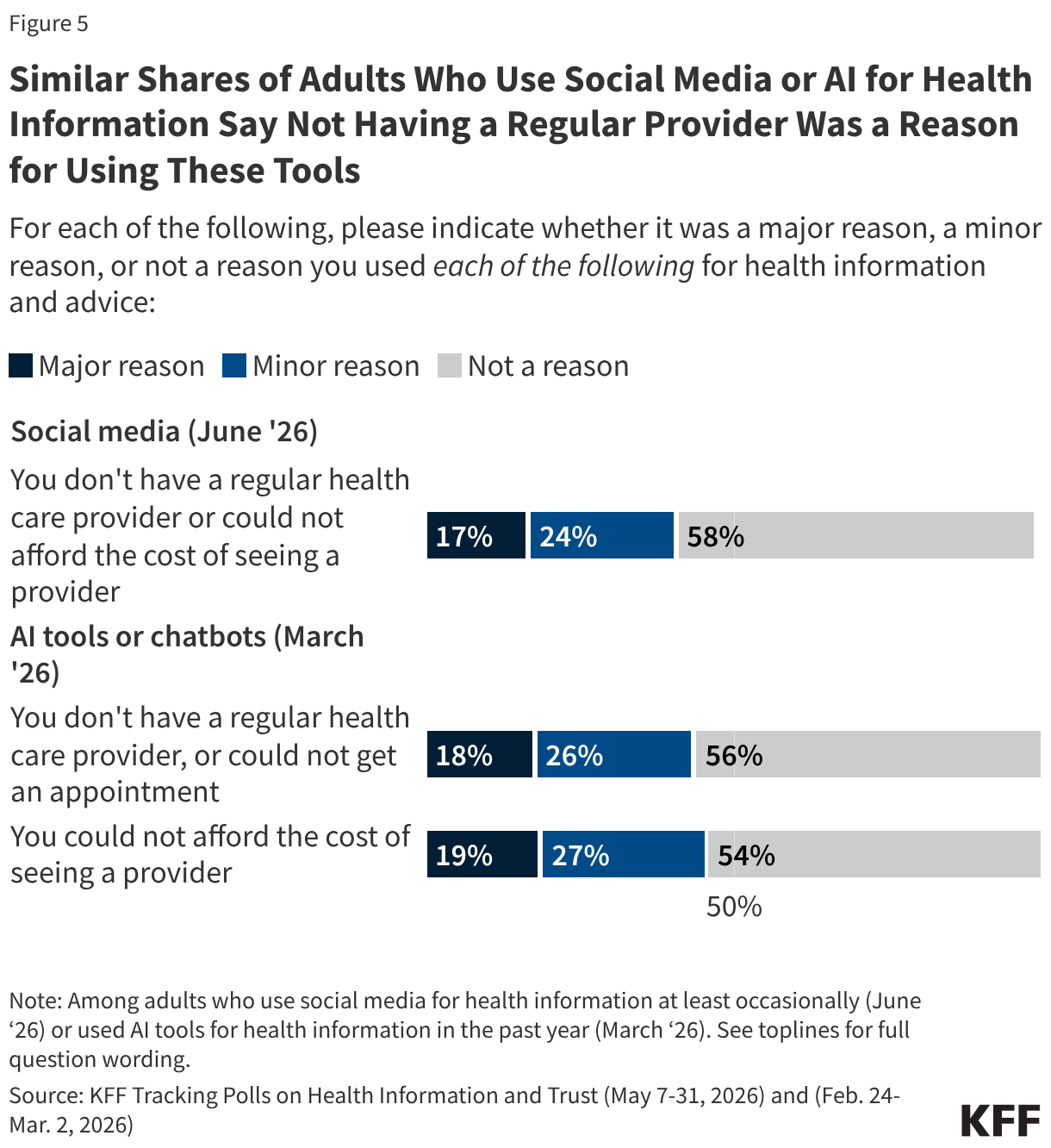
- Need for community and immediacy of information drives use of social media for health information and advice. Over a third of those who use social media for health information and advice report that wanting to learn from people with the same health condition or similar experiences is a “major reason” (36%) they turned to social media. A similar share (35%) say it is because they want immediate information or support. While fewer (17%) say that not having a regular health care provider or not being able to afford the cost is a “major reason” for turning to social media, that number rises to a third among adults without insurance and LGBT adults. Notably, similar shares say not being able to afford the cost of seeing a provider (19%) or not having a regular health care provider (18%) are both a “major reason” why they used AI tools for health information in KFF’s March 2026 Tracking Poll on Health Information and Trust as said the same for a reason why they used social media in this poll.
- The majority of social media and AI users are confident in their ability to parse true or false information, which is perhaps why few take steps to validate the information either from a doctor or some other source. Less than four in ten adults who use social media for health information follow up with a doctor at least most of the time (36%), consult another online source like WebMD (35%), or check with health agency websites, like the CDC (21%).
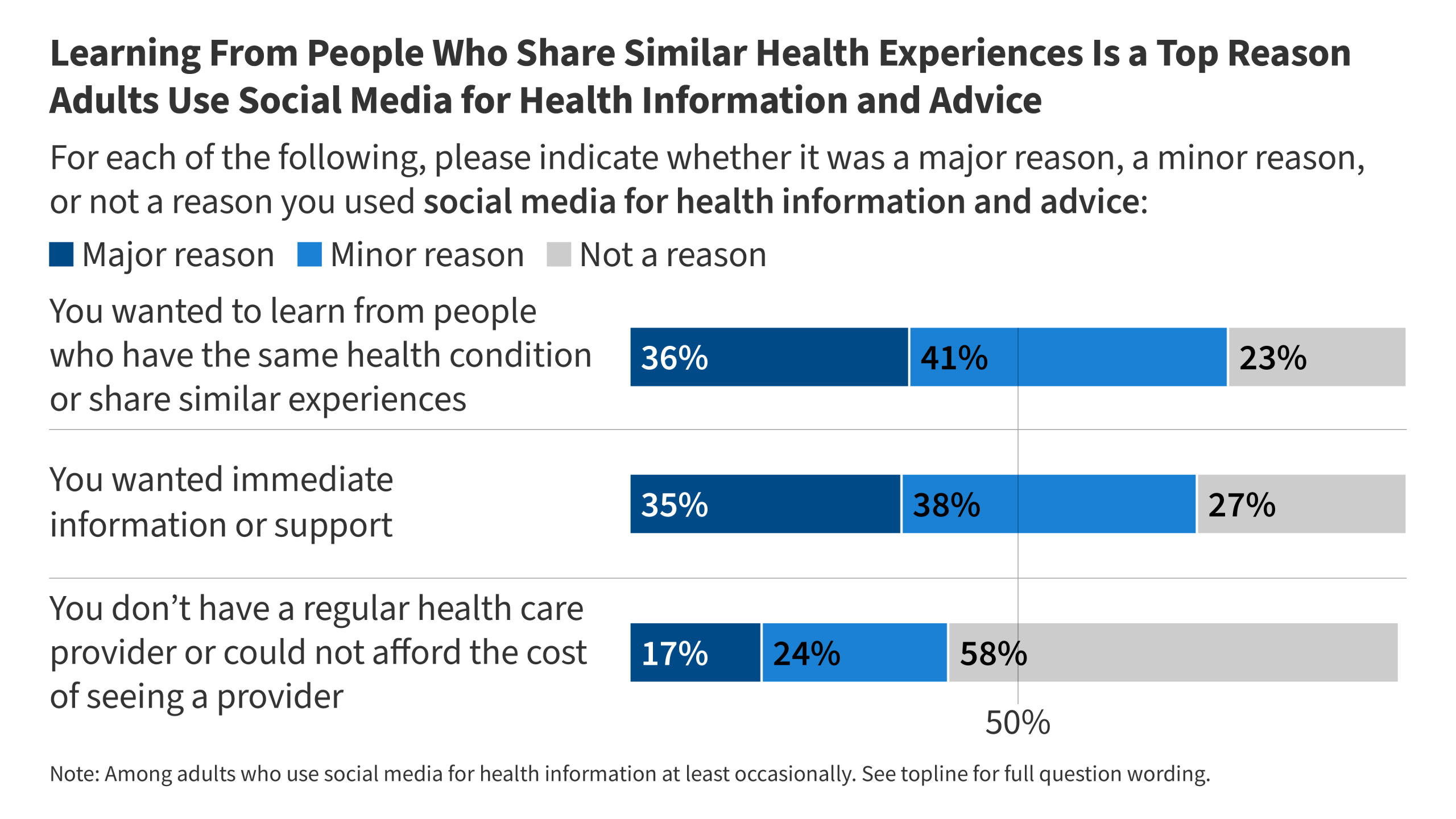
Three in ten adults report using social media for health information or advice at least once a month. This includes about one in six (16%) who say they use it “every day.” Similarly, three in ten (29%) adults now say they use artificial intelligence (AI) tools or chatbots like ChatGPT, Google Gemini, or Claude for health information and advice monthly, nearly doubling in the past two years, up from roughly one in six (17%) in June 2024. Though they provide health information in different ways, the growing use of these technologies suggests that adults are looking beyond traditional health care sources. Still, a majority of the public say they either “never” or only “occasionally” use AI tools (71%) or social media (69%) for this.
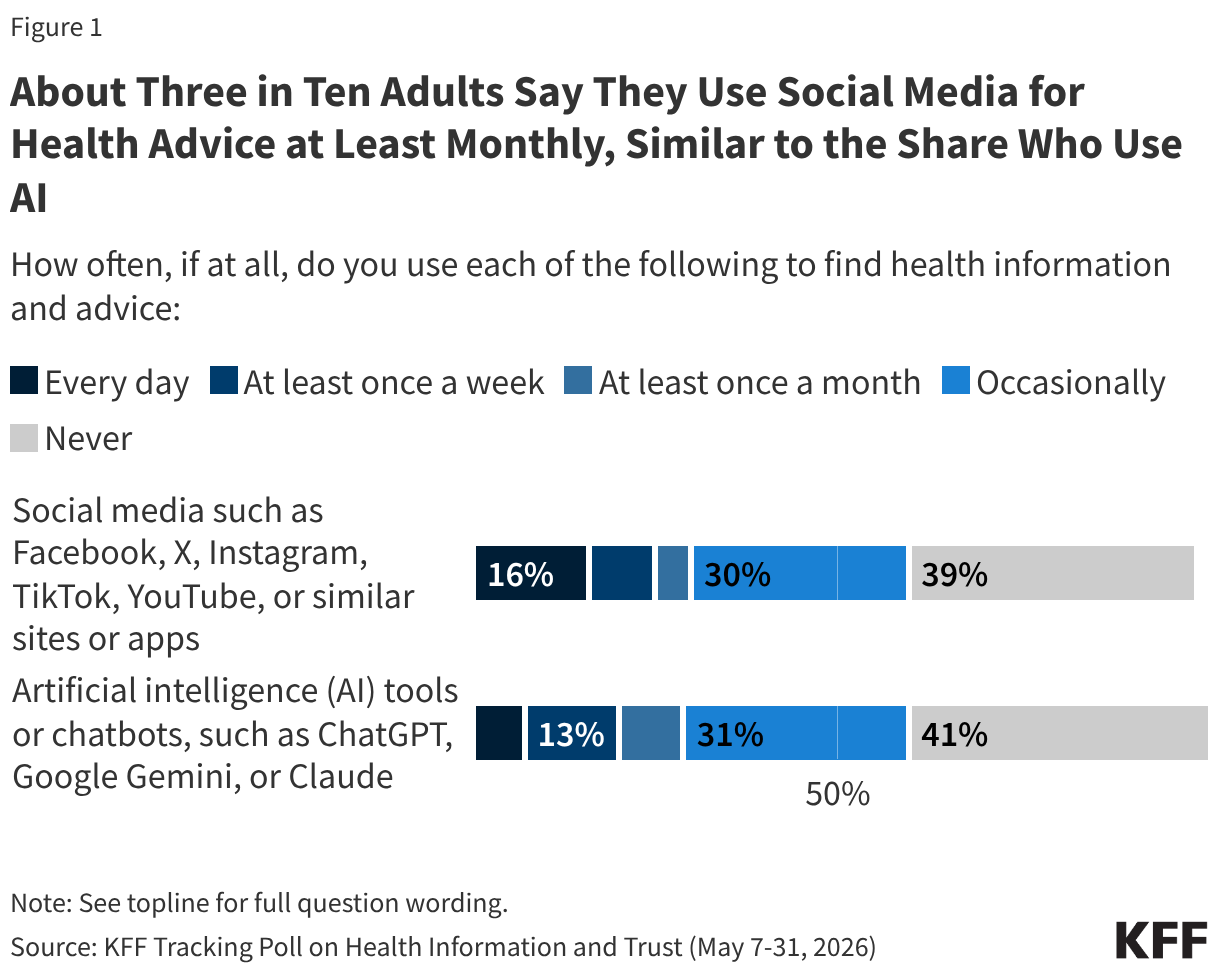
Younger adults (ages 18 to 29), Hispanic adults, Black adults, and those with lower incomes are among the most likely groups to use social media for health information. About four in ten Hispanic adults (42%), those with incomes of $40,000 or less a year (40%), adults under the age of 30 (40%), and Black adults (39%) say they use social media for health information at least monthly.
On the other hand, AI use for health information is common among the youngest cohort (ages 18 to 29) as well as those ages 30 to 49. While those with lower levels of education and income are more likely to go to social media for health information, there is less variation with reliance on AI with about three in ten across income and education groups reporting using it at least monthly. Notably, larger shares of Hispanic adults report using both social media and AI for health information, compared to White adults.
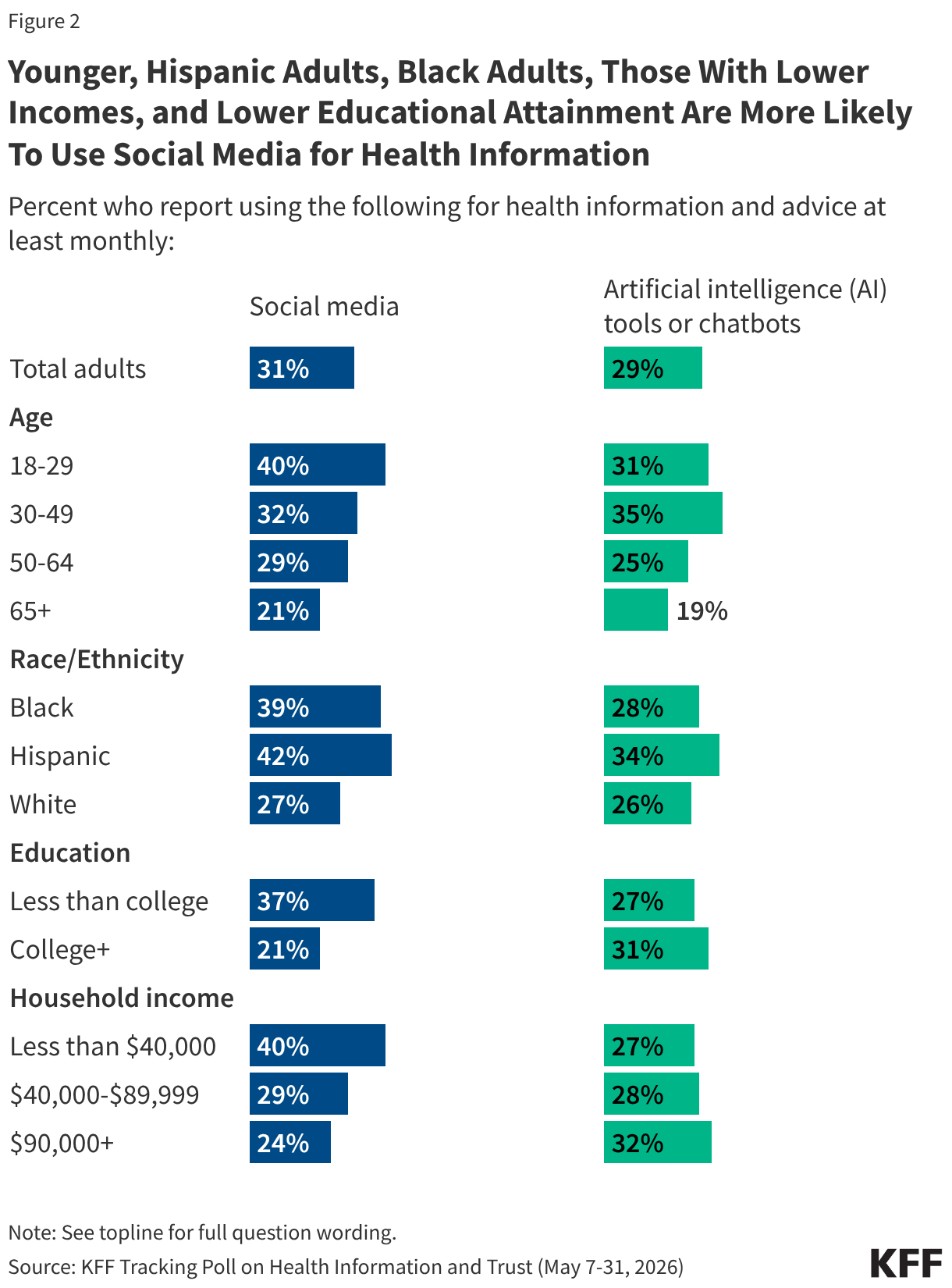
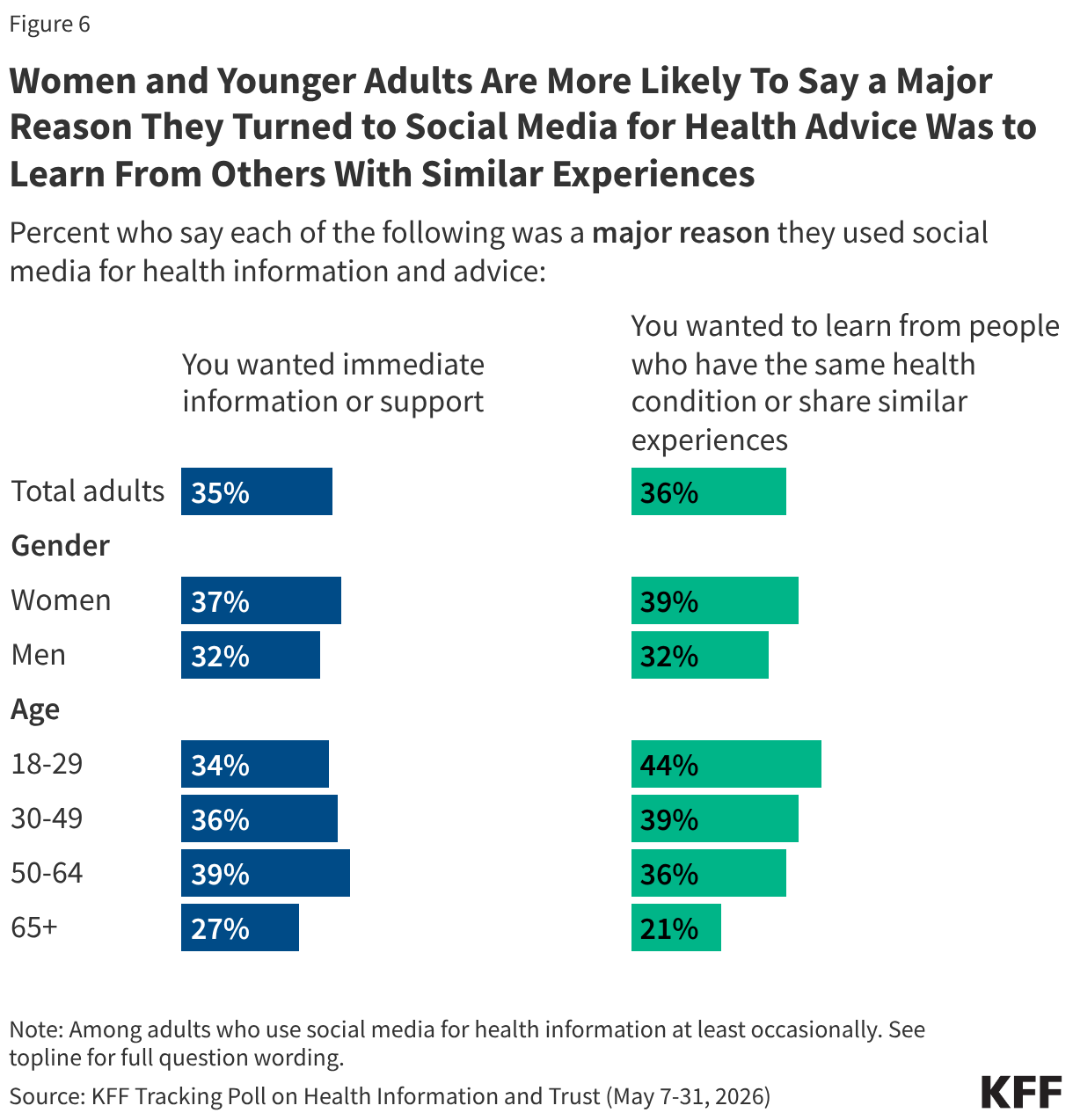
People report using social media for health information for a variety of different reasons. Among those who use social media for health information and advice (60% of total adults), over a third (36%) say that wanting to learn from people who have the same health condition or share similar experiences is a “major reason” why. A similar share (35%) says a “major reason” was wanting immediate information or support. Fewer (17%) say that not having a regular health care provider or not being able to afford the cost of seeing a provider is a “major reason” why they turned to social media for health information, though about four in ten (42%) say that it is a reason.
The use of social media for health information and advice because of a lack of a regular health care provider or not being able to afford the cost is higher among groups that have historically had a harder time accessing health care. Among social media users, roughly three in ten uninsured adults (32%) say this was a “major reason” and another four in ten (37%) say it is a “minor reason” they turned to social media. Adults with lower incomes are more likely than those with higher incomes to report that not having a regular provider is a “major reason” for using social media for health information, with a quarter of those with an income of less than $40,000 a year saying so, compared to two in ten (19%) of those with an income of $40,000 to $89,999, and less than one in ten (6%) of those with a yearly income of $90,000 or more. LGBT adults are also more likely to say this is a reason they used social media, with three in ten LGBT adults reporting this was a “major reason” and a quarter (24%) saying it’s a “minor reason.” LGBT adults are also more likely to have lower incomes generally, possibly explaining some of the access issues they report, though they may lack a provider due to stigma and discrimination related issues.
Additionally, larger shares of Hispanic adults (29%) and Black adults (23%) report that not having a regular provider is a “major reason” for seeking advice through social media than White adults (12%).
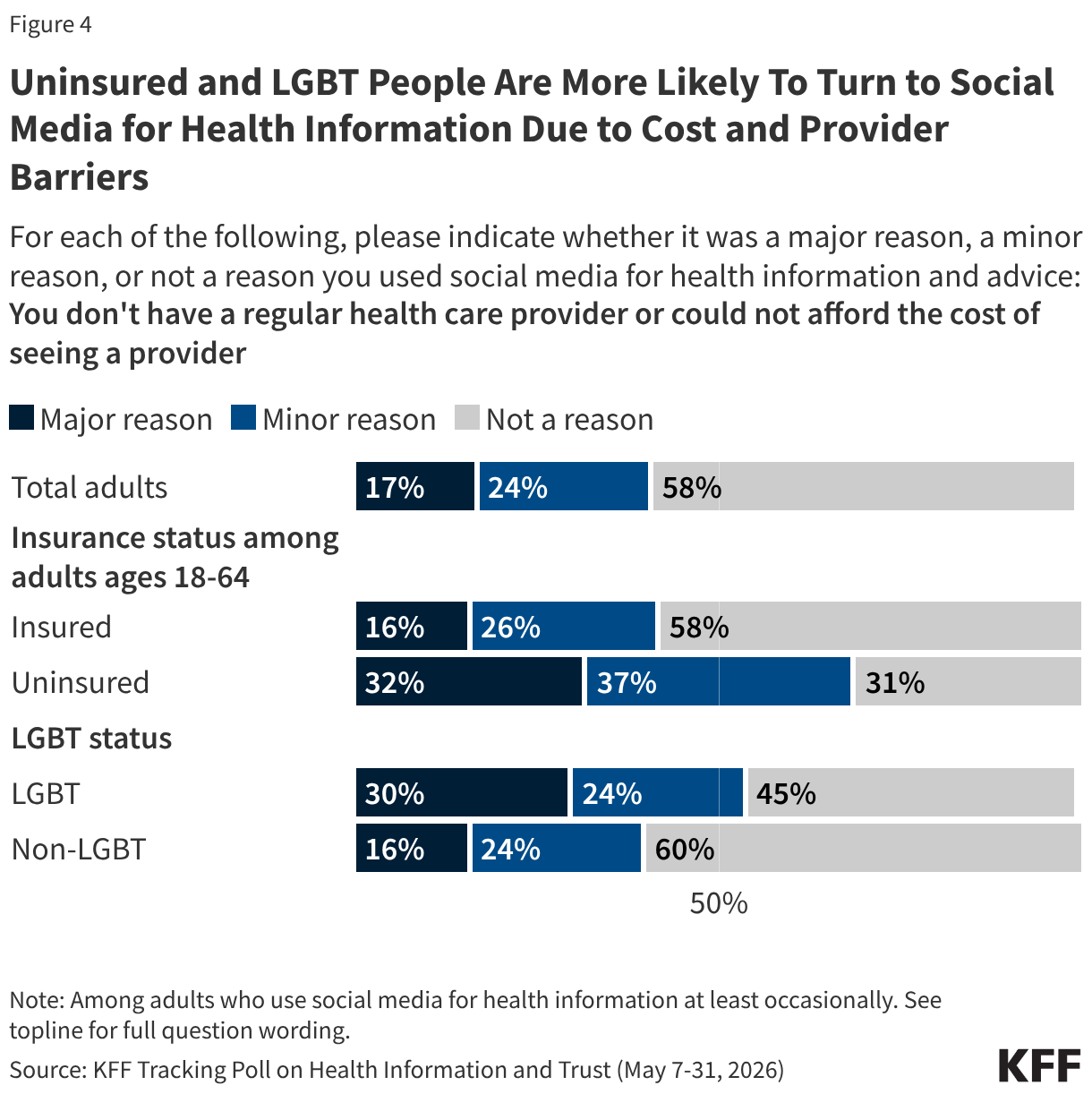
Notably, similar shares said not being able to afford the cost of seeing a provider (19%) or not having a regular health care provider (18%) were both a “major reason” why they used AI tools for health information in KFF’s March 2026 Tracking Poll on Health Information and Trust as said the same for a reason why they used social mediain this poll (17%).
Women are more likely than men to say that they wanted to learn from people who have the same health condition or shared similar experiences (39% of women v. 32% of men). Young adults under the age of 30 are also among the most likely to say wanting to learn from people with the same condition or experiences is a “major reason” why they sought out health information on social media (44% of those ages 18 to 29 v. 21% of those ages 65 and older).
Confidence in Discerning True or False Information
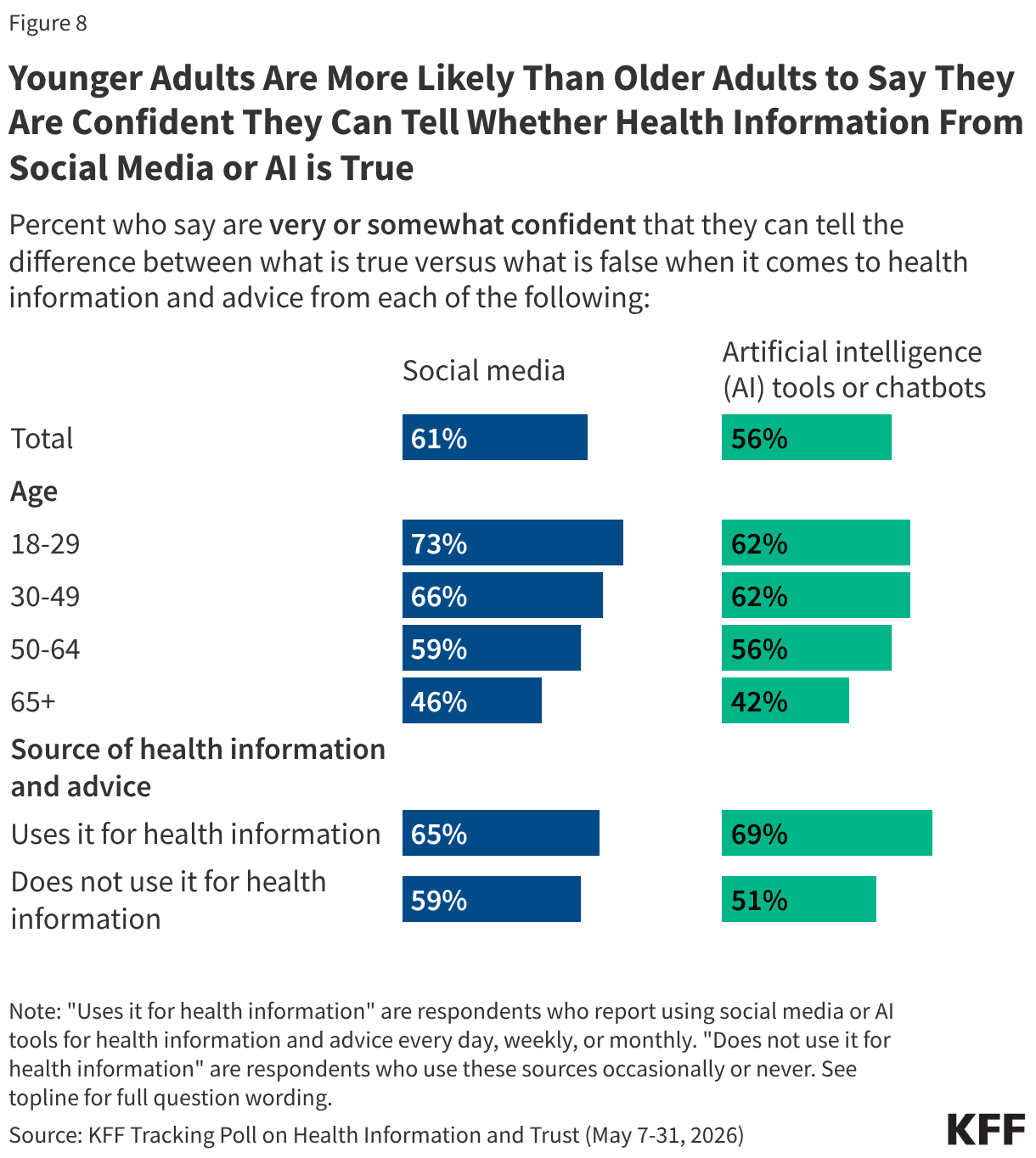
Slim majorities of adults say they are confident in their ability to tell what is true or false when it comes to health information from social media (61%) or AI chatbots (56%). In fact, roughly four in ten adults overall say they are “not too” or “not at all” confident in their ability to tell whether health information from AI chatbots (44%) or social media (39%) is true or false. Larger shares are confident when the information comes from more personal sources, with eight in ten saying they are confident they can parse information from a doctor or other health care provider (80%) or their family and friends (77%).
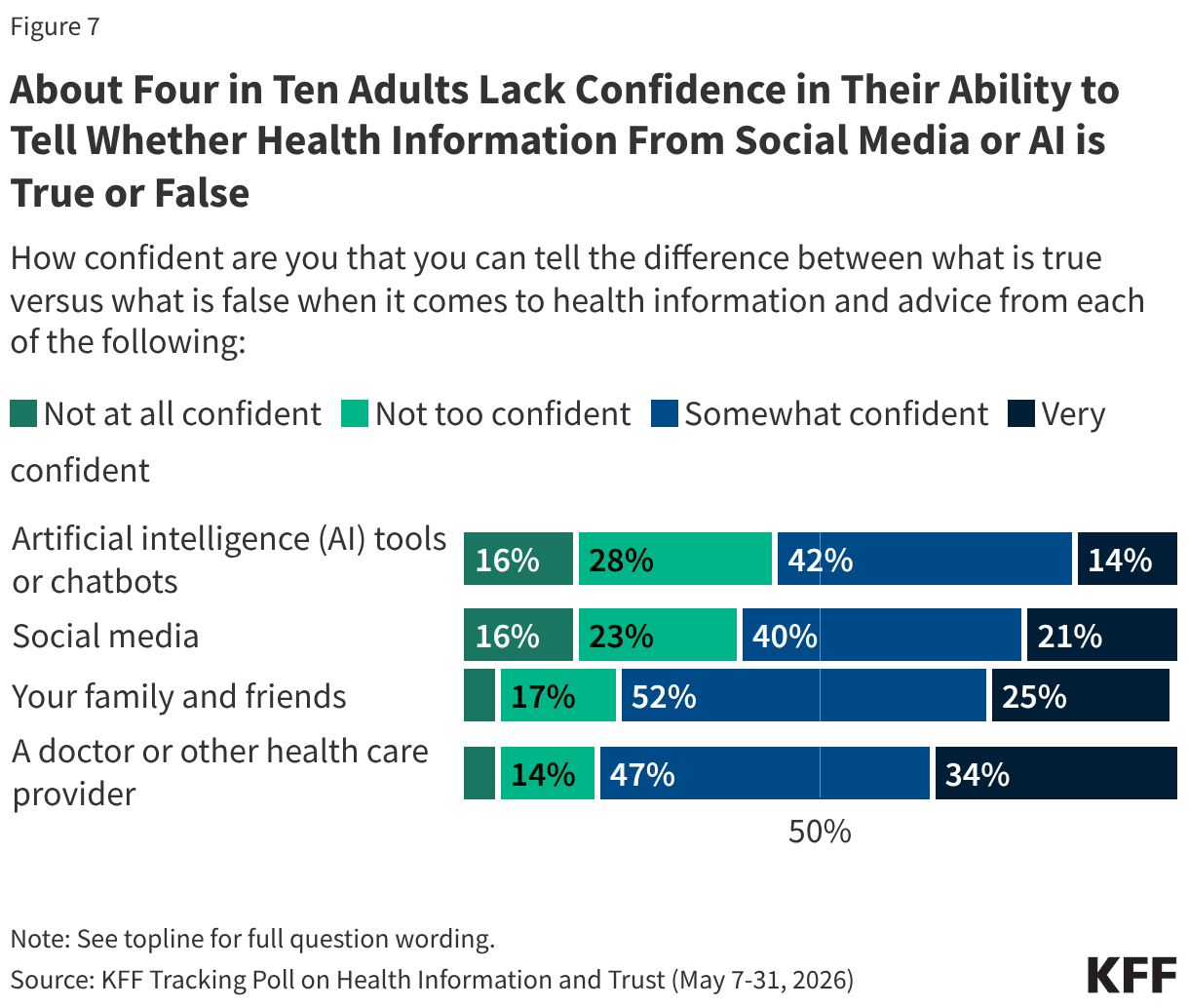
Younger adults are more likely to express confidence in their ability to tell whether health advice is true or false on both social media and AI tools or chatbots than their older counterparts. In addition to young adults, adults with a college degree or higher education and those with incomes of $90,000 or more a year are more likely than their counterparts to say they are confident they can tell the difference between true and false health information from social media and AI chatbots.
People who use AI for health advice are more likely than those who do not use it to be confident in their ability to discern what is true when using these tools. However, the difference is less pronounced when it comes to social media. Roughly seven in ten (69%) of those who use AI at least monthly are confident in being able to decipher the truth from that source, compared to half (51%) of those who use AI for health information “occasionally” or “never.” Similarly, a slightly larger share of those who use social media at least monthly say they can tell what is true or not from the health information they find on social media – around two-thirds (65%), compared to six in ten (59%) who don’t use social media for health information.
KFF’s March 2026 Tracking Poll on Health Information and Trust found that trust in AI for reliable health information was largely predicated on use, with most users saying they trust AI for health information compared to few non-users.
Following Up With Other Sources
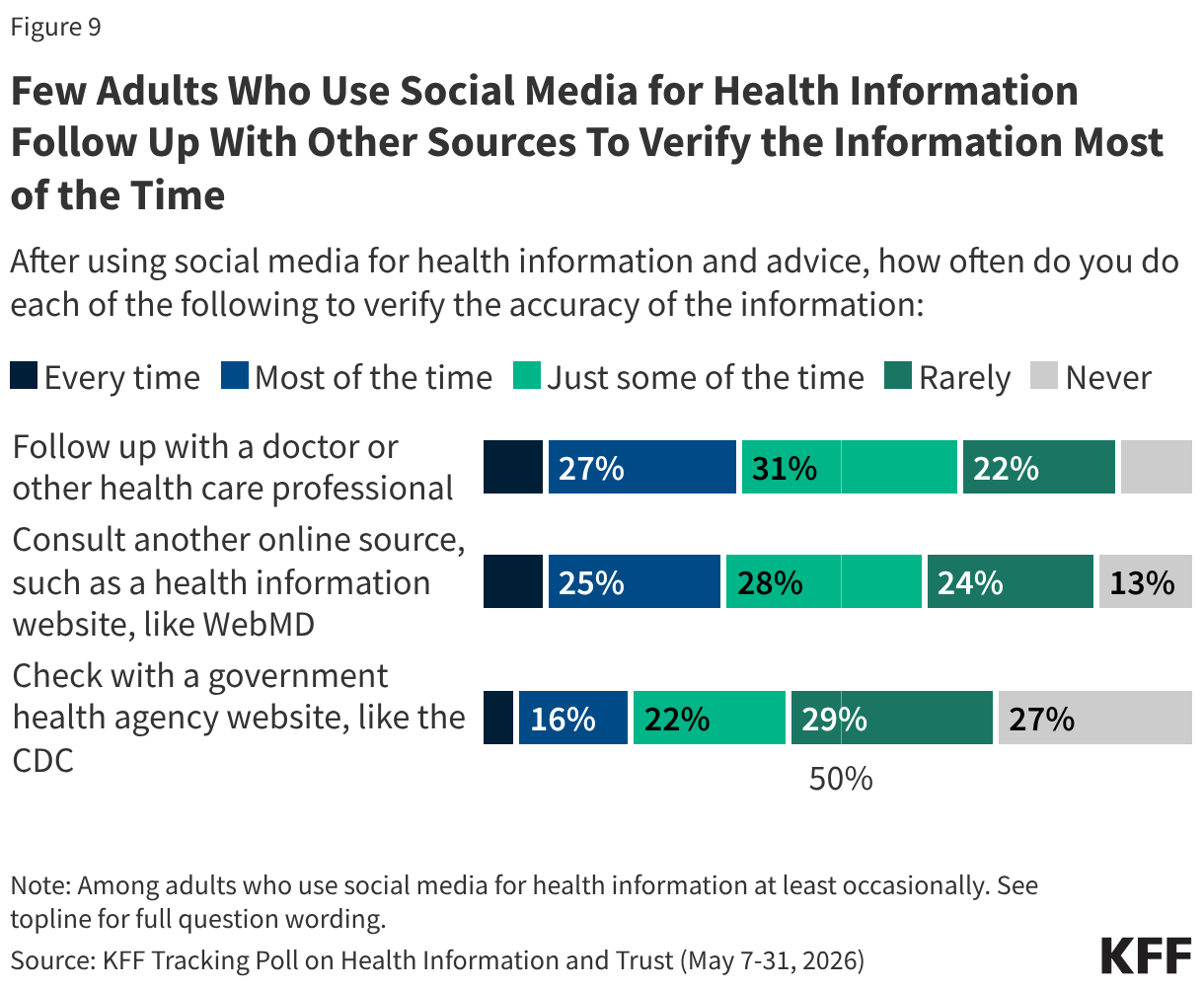
While not every health-related social media query requires a follow-up with a doctor or health care professional, few of those who seek health information on social media say they regularly consult any other source for information. Roughly a third of adults who use social media for health information and advice say they followed up with a doctor or other health care professional (36%) “every time” or “most of the time” to verify the accuracy of the information they see on social media. A similar share (35%) say they consulted another online source, such as health websites, like WebMD after using social media for information, and an even smaller share (21%) say they checked with health agency websites, like the CDC, “every” or “most of the time” after using social media for health information and advice in order to verify the accuracy of the information.
In fact, a majority of social media users say they either “some of the time,” “rarely,” or “never” followed up with a health care provider (64%), consulted another online source (65%), or checked a government health agency website (78%) after using social media for health information.
Health Information and Trust,Public Opinion,Access to Care,Artificial Intelligence,Public Health,Social MediaAccess to Care,Artificial Intelligence,Public Health,Social Media#KFF #Tracking #Poll #Health #Information #Trust #Social #Media #Health #Information #Advice1781703946
