


In May, authorities confirmed an Ebola outbreak centered in the Democratic Republic of the Congo (DRC), which has since grown to become the third largest Ebola outbreak on record, causing more than 2,000 cases and 750 deaths as of July. The State Department has announced the U.S. would provide “$270 million in direct Ebola response funding” and other support to assist the international response. This response from the Trump administration, however, comes amid a changed global and domestic health landscape, marked by reduced U.S. foreign aid funding and the dissolution of USAID, as well as cuts to domestic public health programs.
The latest KFF Health Tracking Poll finds many adults have yet to form an opinion on the U.S. government’s response to the Ebola outbreak in the Democratic Republic of the Congo, though among those with a view, more say the government is falling short than say it is doing enough.
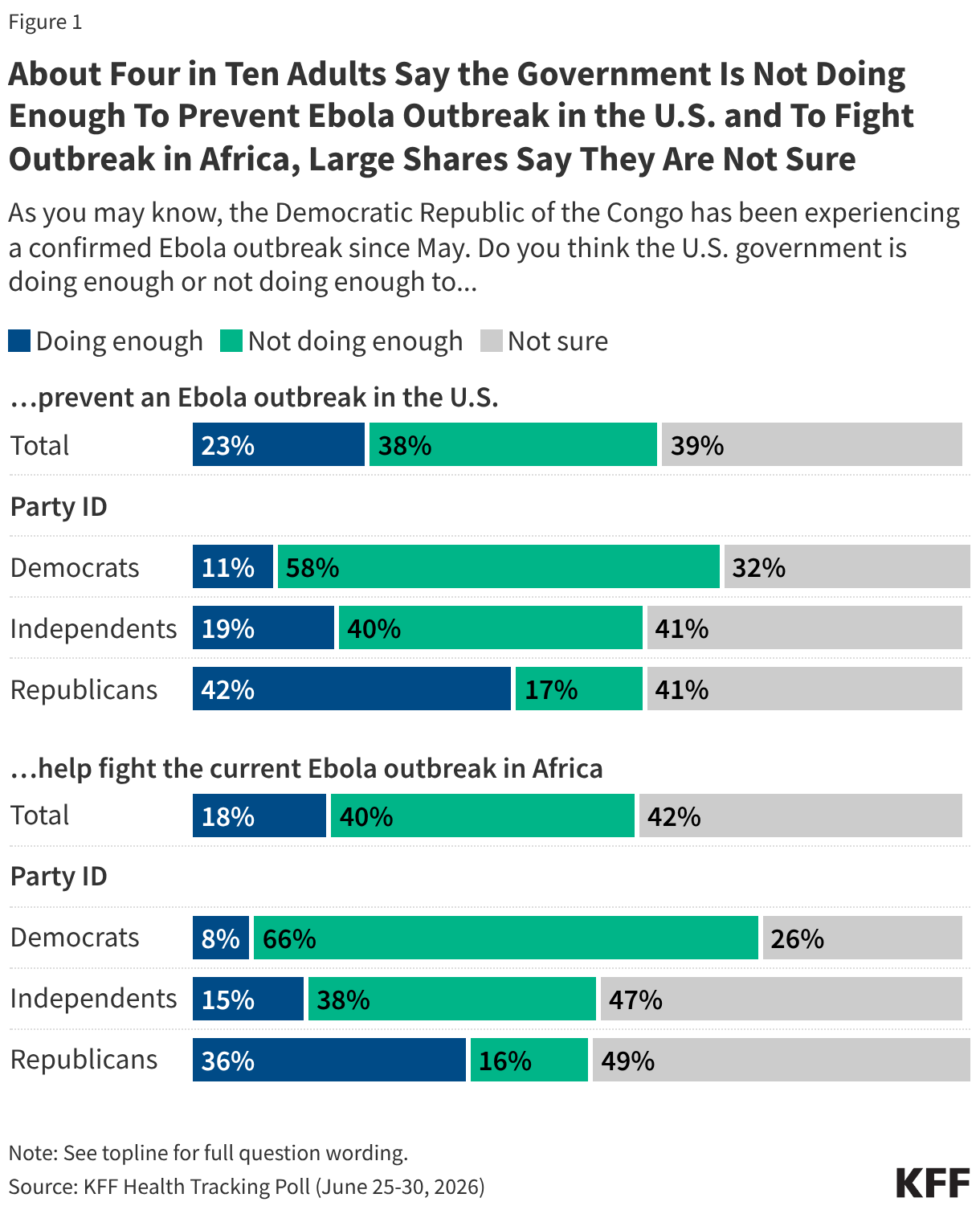
About four in ten adults (38%) say the U.S government is not doing enough to prevent an Ebola outbreak in the U.S., while one in four (23%) say the government is doing enough and 39% say they are not sure. Views are similar when it comes to the U.S. role abroad, with four in ten (40%) saying the government is not doing enough to help fight the outbreak in Africa, while one in five (18%) say the government is doing enough and 42% say they are not sure.
Across partisans, Democrats are more critical of the U.S. government’s Ebola response with majorities saying it is not doing enough to prevent an outbreak in the U.S. (58%) nor to help fight the outbreak in Africa (66%). Notably, about four in ten independents and Republicans say they are not sure if the U.S. is doing enough to prevent an Ebola outbreak in the U.S. and about half of both groups are unsure if the government is doing enough to help fight the outbreak in Africa.
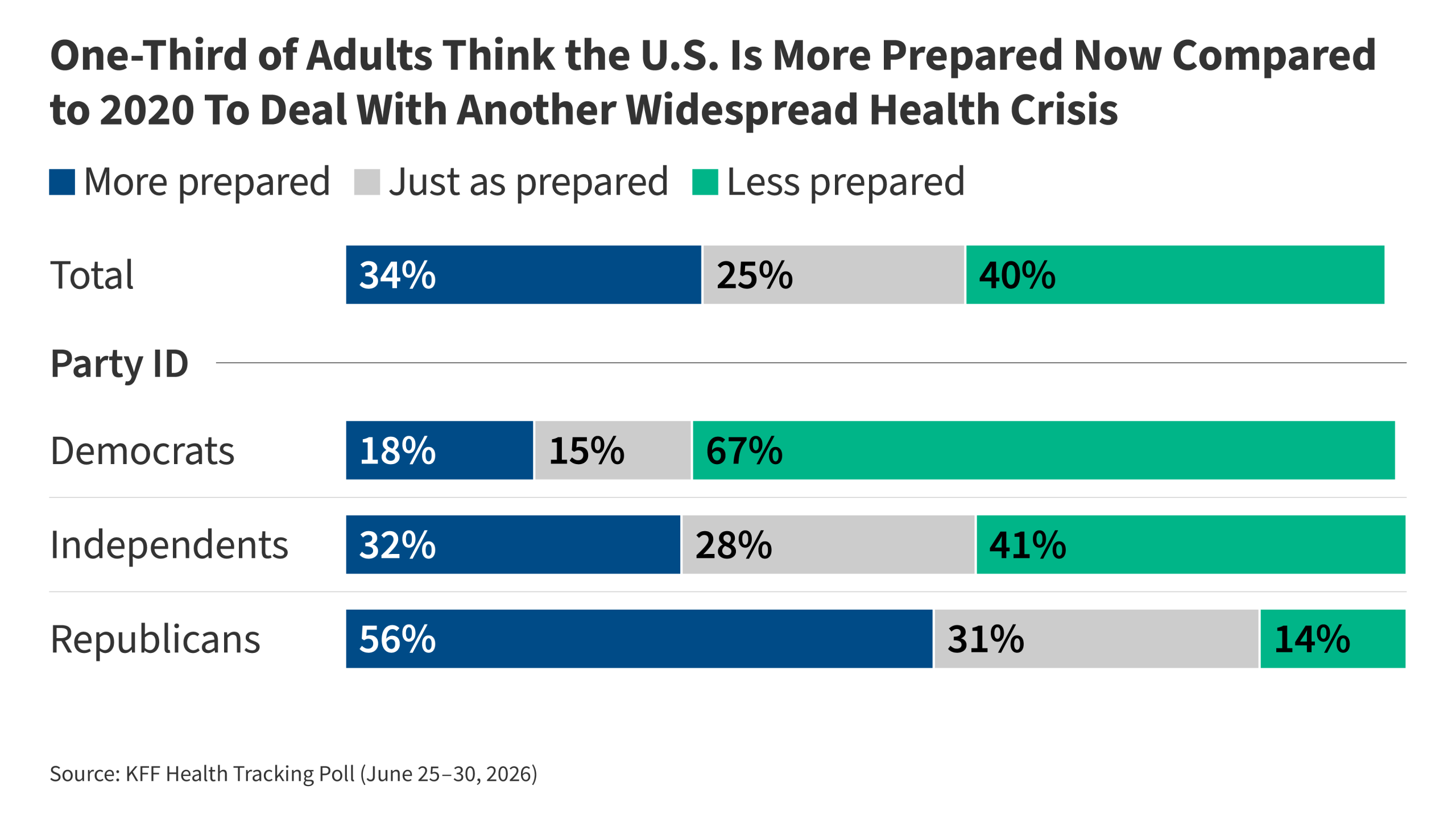
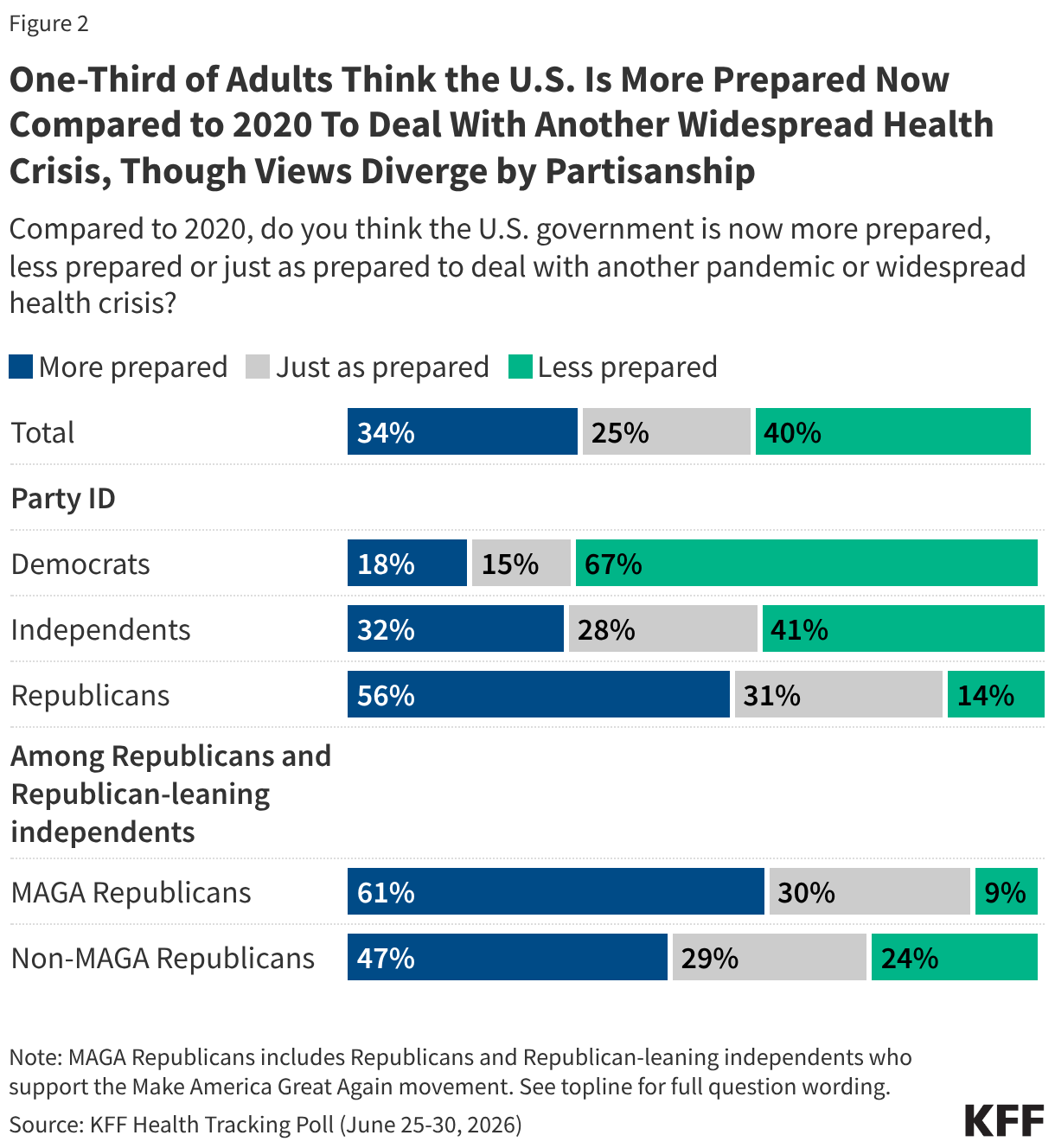
Several years after the height of the COVID-19 pandemic and amid recent changes to federal health agencies and global health engagement during President Trump’s second term, the public holds mixed views on whether the U.S. government is prepared for another pandemic or widespread health crisis. A plurality of adults (40%) say the U.S. government is “less prepared” to deal with a pandemic now than it was in 2020, while about a third (34%) say the government is now “more prepared,” and one in four say it is “just as prepared” as it was in 2020. Views are divided across partisan lines. While two-thirds of Democrats (67%) say the U.S. government is now “less prepared,” a majority of Republicans (56%) say the country is now more prepared for a pandemic. About four in ten independents (41%) say the U.S. is “less prepared” for a pandemic compared to 2020, while about a third (32%) say it is “more prepared.”
Republicans and Republican-leaning independents who identify as supporters of the Make America Great Again (MAGA) movement are the most confident; six in ten (61%) of them say the U.S. is “more prepared” to deal with a pandemic now than in 2020, compared to about half (47%) of their non-MAGA counterparts who say the same.
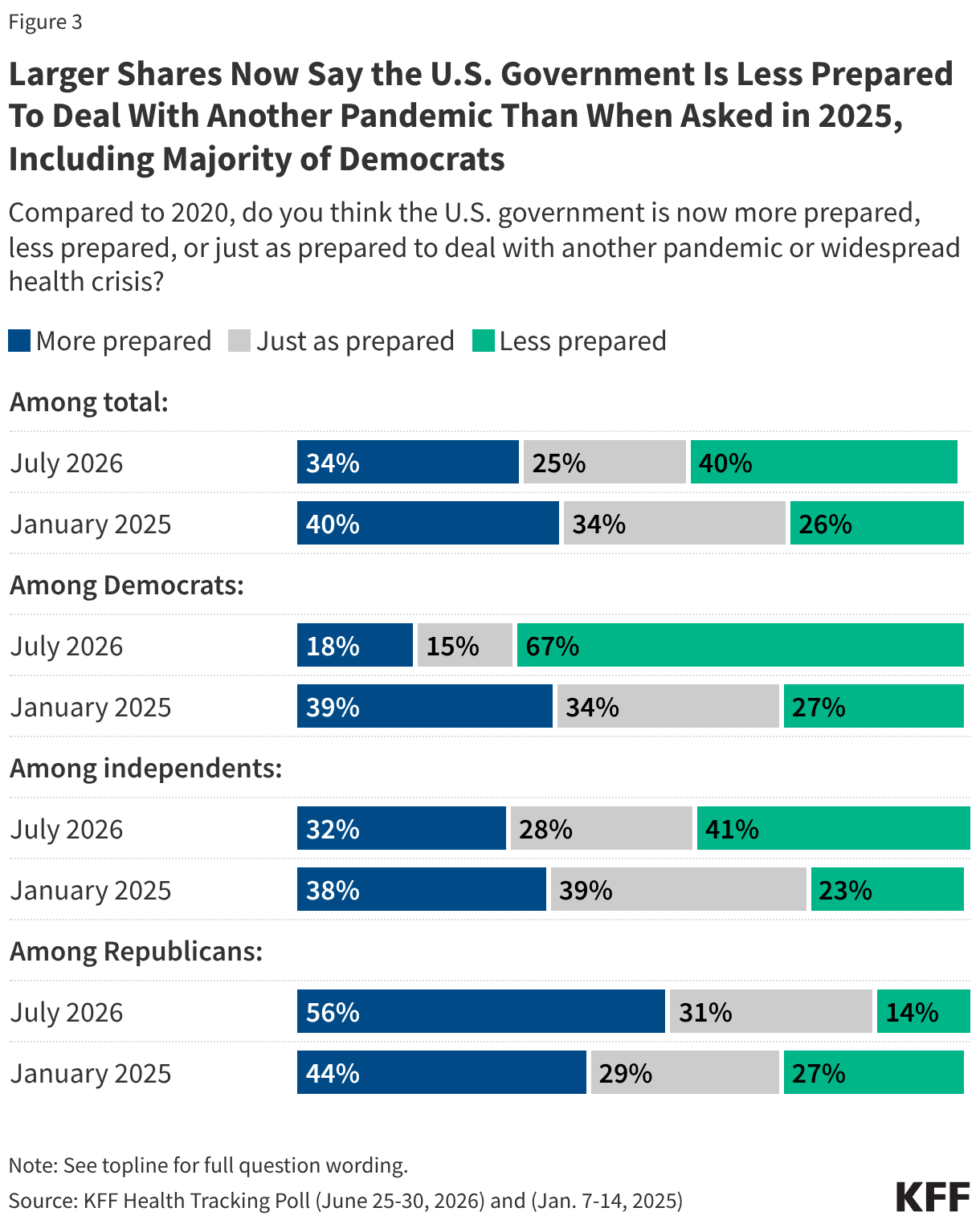
Compared to views shortly before the start of the second Trump administration, the public overall now takes a dimmer view of the U.S. government’s pandemic preparedness, though Republicans’ views have moved in the opposite direction. The share of the public who say the U.S. government is now less prepared to deal with another pandemic than it was in 2020 is up 14 percentage points since January 2025, before the Trump administration made significant changes to U.S. foreign aid efforts (40%, up from 26%). This increase is driven largely by Democrats, two-thirds (67%) of whom now say the U.S. is “less prepared” — an increase of 40 percentage points from early last year. Independents are also now more likely to say the U.S. is “less prepared” (41%, up from 23% in January 2025).
Republicans’ views, on the other hand, have shifted in the opposite direction. The share of Republicans who say the government is “more prepared” for a pandemic has increased 12 percentage points since January 2025 (56%, up from 44%), while fewer Republicans now view the U.S. as “less prepared” (14%, down from 27%).
Global Health Policy,Public Opinion,Ebola,Infectious Disease,Prevention,Public Health,U.S. Global Health InitiativeEbola,Infectious Disease,Prevention,Public Health,U.S. Global Health Initiative#KFF #Health #Tracking #Poll #Ebola #amp #Pandemic #Preparedness1785241742
