



Three emerging threats to health: the commercial, digital, and climate determinants of health played centre stage at an event 40 years after a WHO charter shifted the focus of health from individual lifestyle choices to broader social and environmental determinants. Commercial formula company practices are just one case study of how structural factors like marketing can determine health across the life span.
GENEVA– New frontiers have emerged since the 1986 optimism of a global health document tackling the world’s health inequities: commercial, digital, and planetary health determinants.
“The world has gotten more unequal,” asserted Ilona Kickbusch, one of the architects of the Ottawa Charter and a renowned global health expert. She pointed to the Charter as a political turning point–one that clearly defined health as a product of political actions and the first WHO document to do so.
The 1986 document named peace, shelter, education, food and nutrition, income, stable ecosystem, social justice and equity as the key drivers of health–and attempted to usher these principles into action. “And of course, in the present geopolitical situation, these drivers become particularly clear,” Kickbusch said in reference to the conflicts in Iran, Israel, Sudan, and Ukraine.
Experts within public health repeatedly point to structural determinants of health as the real reasons for overburdened healthcare systems and ballooning national debt.

“If you think health is just what happens in hospitals, you are simply wrong,” said Dr Maria Neira, former WHO director for the department of Public Health, Environment and Social Determinants of Health, at an event at the annual Geneva Health Forum.
Neira also challenged health ministers to focus on the causes of illness, not just the outcomes–diseases. Doing so is proven to be more cost effective as health systems spend billions on hospitals and tertiary care.
“Governments need to stop mopping the floor and turn off the tap,” said Allison Cox, policy director at the NCD Alliance, who alluded to the benefits of prevention at a separate World Health Assembly side event on metabolic conditions.
Both comments pointed to the idea of prevention–tackling upstream determinants of health and changing the environments that lead to disease–as fundamental to a robust public health. Health promotion aims to address the root causes of illness such as environmental, social, and economic factors.
The convening at the Geneva Health Forum, held on the side of the World Health Organization’s annual Assembly, discussed the gap between the Ottawa Charter’s political discourse on the determinants of health and the reality of implementing them through funding, governance, accountability, and mediating commercial interests.
The fight to protect infant health
Since the signing of the Ottawa Charter, Kickbusch underscored that three emerging issues now fundamentally shape health: those of commercial, digital, and climate influences.
Exactly how corporations influence health is none more clear than the case of the aggressive marketing of infant formula, argued Patti Rundall, Policy Director of IBFAN Global, a leading international coalition dedicated to improving maternal and child health through breastfeeding. Her organization, founded in 1979, has fought to regulate the marketing of breastmilk substitutes in light of troubling data on infant health.
“I couldn’t sleep when I found out about this. At that point 1.5 million babies were dying because they were not breastfed,” said Rundall, referencing UNICEF statistics that babies who are not breastfed at all are 14 times more likely to die than those who are fed only breastmilk.
The UN agency also notes that “any amount of breastmilk reduces a child’s risk of death,” and that “babies who received no breastmilk at all are seven times more likely to die from infections than those who received at least some breastmilk in their first six months of life.”
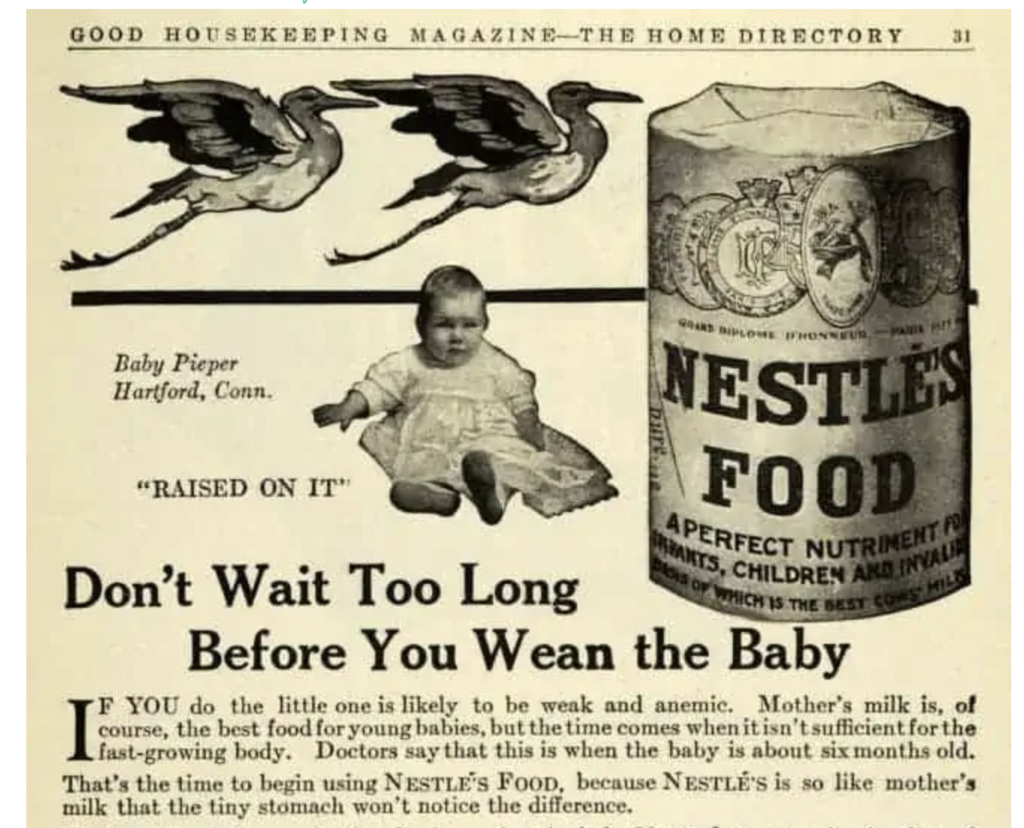
It is structural issues, like the “unrelenting” marketing of infant formula giants, most notably by Nestle, that Rundall points to as undermining a baby’s first few days.
“All over the world, women are impeded from protecting their own and their babies’ health–and often survival, because of factors beyond their control.” Rundall quoted the author and activist Gabrielle Palmer, to an audience at a large lecture hall at Geneva’s Campus Biotech.
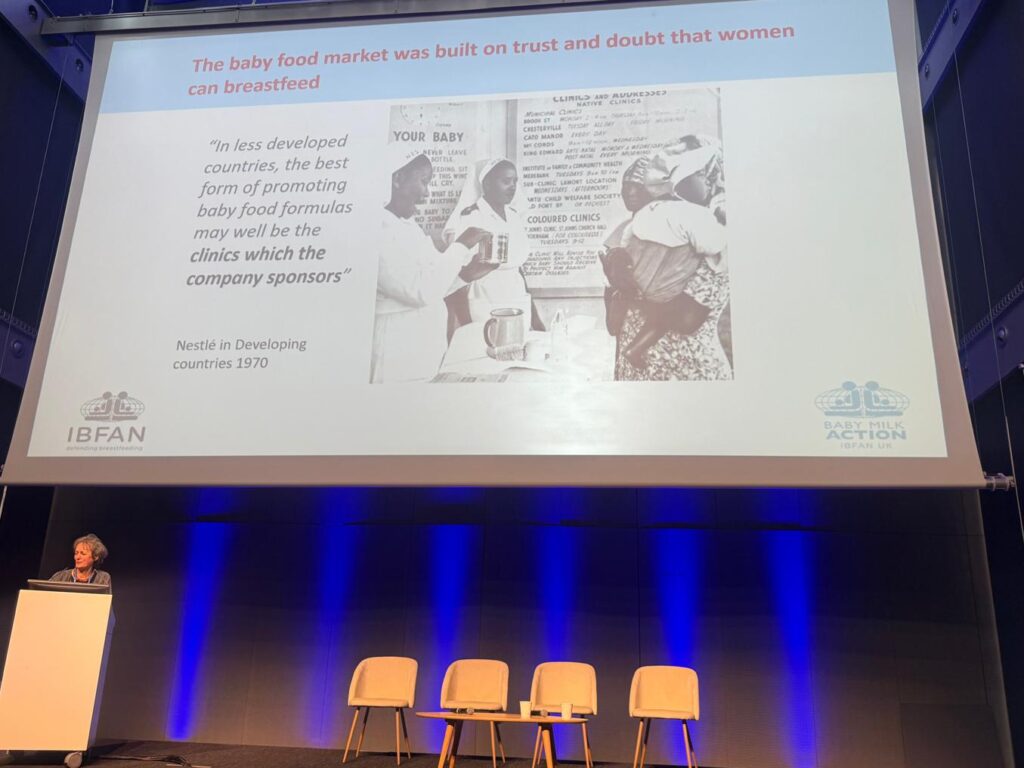
“We have to remember that a lot of the blame is put on parents for not doing the right thing. But these are things that are not in a parent’s control–there are structures around women that prevent them from breastfeeding,” Rundall said. She displayed pictures of formula nurse representatives in a developing country in the 1970s with Nestle’s company policy at the time was to provide medical aid if the clinic would promote their products.
The civil society outrage and boycott of Nestle that ensued fueled the first consumer protection code against these harmful marketing practices in 1981.

But the discussion around marketing, lobbying, and other forms of influence bans continue. Last year, the World Health Assembly adopted a resolution calling for regulation of the digital marketing of breast milk substitutes. Rundall called it “controversial” but important.
The resolution expresses “deep concern over inappropriate digital marketing strategies used by manufacturers and distributors of breast-milk substitutes, feeding bottles and teats, and food for infants and young children to target pregnant women, parents and carers, as well as health professionals, including with personalized content.”
Furthermore, conflict and humanitarian settings are often the most vulnerable to corporate influence. In Gaza, Ukraine, and Sudan, donated baby products falsely advertise unfounded health benefits of breastmilk substitutes. Rundall called the practice “just nonsense. Those babies are now more likely to die.”
Because of these practices, 148 countries have laws that to some extent incorporate the original 1981 code protections.
“The industry continues to fight the legislation,” noted Randull. “We need people on the ground to close all the loopholes–because it’s very clear that in places with good legislation, breastfeeding rates are higher.”
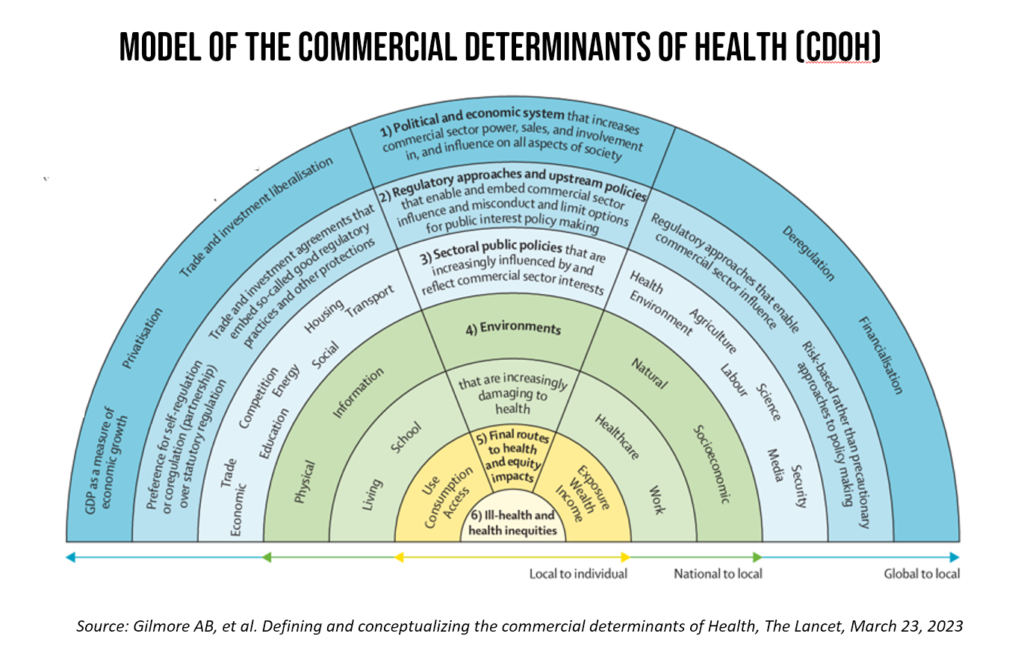
Other kinds of commercial determinants continue to shape health: notably the tobacco, alcohol, ultra processed food, and fossil fuel industries.
“We know early childhood conditions have life long consequences,” Kickbusch said. But she pointed out that translating evidence into policy action–and overcoming commercial and political resistance– remains difficult.
The political elements of health

The shift in understanding that health is more than the sum of individual choices but the result of policies and environments is political, the panelists argued.
“We understood very clearly that health is political,” Kickbusch said. “What we now call the ‘political determinants of health’ was actually at the basis of our work of the Charter,” she explained. These political determinants, as Kickbusch and others recalled, include power, poverty, and other social issues.
Data from the US demonstrates that being born into poverty is directly correlated with a host of poor health outcomes. “Across the lifespan, residents of impoverished communities are at increased risk for mental illness, chronic disease, higher mortality, and lower life expectancy,” the US Office of Disease Prevention and Health Promotion states.
Ottawa Charter – four decades of evolution
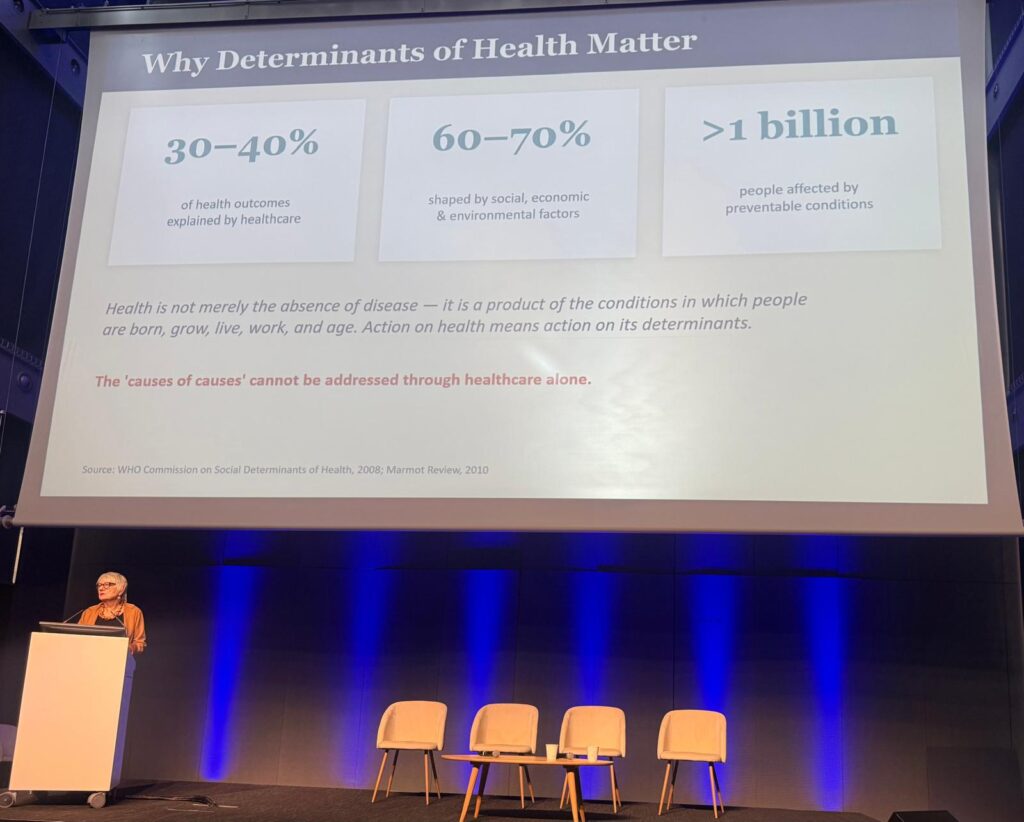
Since the Ottawa Charter outlined that health is often a result of structural, social, economic, and environmental conditions, the WHO established a commission on social determinant of health (CSDH) that paved the way to another important political declaration in Rio more than two decades ago.
The text, which emphasizes collective action and the injustice of health inequities, seems at odds with the current geopolitical context. It expresses what it terms a “global political commitment” for reducing health inequities through a social determinants lens.
Still, “four industries kill an estimated 7,400 people in our region every day,” said Dr Hans Henri P. Kluge, WHO regional director for Europe in reference to the tobacco, ultra-processed foods (UPFs), fossil fuels, and alcohol industries. “The same large commercial entities block regulation that would protect the public from harmful products and marketing, and protect health policy from industry interference,” he added in a WHO statement.
Kickbusch and others point to the important role of litigation against companies as driving the health promotion agenda forward. Lawsuits against tobacco companies, opioid manufacturers, and even social media companies for wrongful deaths have resulted in settlements and meaningful policies.
See related article:
Image Credits: FDA, The Lancet, S. Samantaroy/HPW, World Health Summit.
Combat the infodemic in health information and support health policy reporting from the global South. Our growing network of journalists in Africa, Asia, Geneva and New York connect the dots between regional realities and the big global debates, with evidence-based, open access news and analysis. To make a personal or organisational contribution click here.
Child & adolescent health,Content type,Geneva Health Forum,Geneva Health Forum 2026,Health Systems,Institutions,News,NGOs,Non-Communicable Diseases,Public Health,World Health Assembly 79,World Health Organization,breastfeeding,commercial determinants of health,Disease Prevention,Health promotion,IBFAN,infant health,NCDs#Decades #Ottawa #Charter #Determinants #Health #Question #Combating #Commercial #Influences1779745561
